
Today, if any famous politicians smoke, they prefer not to advertise it. For instance, most of humanity learned that there were cigars in the Oval Office of Bill Clinton from the testimony of Monica Lewinsky. And those cigars, according to the same testimony, were used for purposes other than their intended one. Who today, following the sybaritic Gavriil Derzhavin, can repeat with sweet bliss: 'But I, having slept until noon, smoke tobacco and drink coffee, turning weekdays into a holiday'? But it's not just about image. Politicians, it seems, have decided to marginalize smokers. And not out of malice. Tobacco smoking causes too much damage to the coffers of medical and social insurance. Therefore, from exhortations and scare tactics, leading countries of the world have moved in recent years to bans. Often total bans.
The Penultimate Bastion
Last week, the European Commission presented to the public the so-called 'Green Paper'. It outlines five possible strategies for creating a 'Europe without tobacco'. Among them: legislative measures, non-binding recommendations from the European Commission and the Council of Europe, and methods for coordinating national legislation in the fight against smoking. The task set is to reduce the number of European smokers to 20% of the total, and ideally to make all of Europe a smoke-free zone. EU governments, non-governmental organizations, consumer associations, and representatives of the tobacco lobby of 27 states will be able to express their views on the 'Green Paper' by May of this year.
Then, after summarizing these results, the European Commission will present final recommendations at the beginning of next year. However, even today it is clear that these recommendations will be aimed at making the life of a smoker practically unbearable, because by the time the paper is published, smoking in public places across most of the European Union will be strictly prohibited. Moreover, the European authorities are armed not only with the support of the majority of political forces on the continent, but also with statistics. It's no wonder: according to EU statistics, 79,000 Europeans die each year from diseases caused only by 'passive smoking'.
Thus, the American anti-tobacco fever, which old Europe had long ridiculed and laughed at, has successfully landed in Europe. Ireland fell first, followed by Italy, Sweden, and Malta. Almost all of Western Europe followed. From today, smoking is prohibited in public places in France, where a layered and well-organized defense against the 'American infection' allowed smokers to hold out longer. And they negotiated the right to smoke in cafes and restaurants, bars and discos, hotels and casinos at least until the end of this year. From January 1 next year, smoking will be prohibited there as well. On February 1, a complete ban on smoking in public premises and workplaces came into effect. In addition, smoking is completely banned in all means of transport. The ban regarding educational institutions (schools, lyceums, colleges) is especially highlighted – there you cannot smoke not only inside but also outside. If you really need to, then please go beyond the school yard.
Throughout Europe, these bans are not just on paper, except in Germany, where smoking is not yet a crime, and perhaps in Greece, where laws have been passed but absolutely no one obeys them. So if a summer vacation is impossible for you without smoking, plan it either at home, or in Greece, or somewhere in Asia.
The Price of a Puff
France is not Greece. There they prepared thoroughly for the entry into force of the new laws. 175,000 anti-tobacco special agents are ready to go into battle, issuing fines left and right. From February, smoking in a public place will cost the violator €68. And it doesn't matter whether you manage to take a puff or not – a lit cigarette in your hand, and you are €68 poorer. The law states that for 'a cigarette lit outside the smoking zone, a fine of the third class of the fine scale is imposed'. Today it's €68, and tomorrow it won't get cheaper. It will get more expensive. If anyone is confused by the expression 'smoking zone', I will explain that on the streets you can still smoke for now, but you don't rewrite the law every time the anti-tobacco zones expand, and there is no doubt that they will expand.
Yesterday I called a Parisian friend of mine, a long-time smoker who works at the Maison de la Radio on Quai du Président Kennedy. 'So what are you going to do?' I ask. A stream of foul curses was my answer. 'Can you imagine,' she says, 'only outside. And that from the sixth floor. They've put up some ashtrays the size of barrels around the place, and God knows what else. And as for breaking the rules, you know, you'll be left without pants.'
They even fine for improper organization of smoking where it is still allowed. At the end of January, one of the most famous casinos in Nice, 'Rul', was fined €10,000 for violations and customer smoking in a smoke-free zone. The complaint against the casino management was filed by the institution's employees.
But in response to complaints about the high cost of fines, supporters of the bans can present another figure: annually, the French healthcare system spends €18 billion on treating smoking-related diseases. Tobacco ranks first in France on the list of causes of so-called 'avoidable mortality' – 66,000 deaths per year.
The Fight for Youth
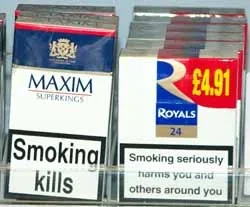
The authors of the law do not hide that the new draconian rules are aimed primarily at preventing young people from getting used to smoking. It is known that teenagers have always been the focus of tobacco manufacturers as future clients of the smoke industry. For quite a long time, French teenagers were the heaviest smokers in Europe. Measures taken in recent years, such as increasing tobacco prices, banning sales to those under 16, well-designed awareness campaigns, and stark warnings on cigarette packs, have already led to a reduction in the number of young French smokers. The new law will surely accelerate this trend. High school students simply won't have time during the break to run outside the schoolyard and have a smoke. Moreover, Europe is being overtaken by another American fad—a healthy lifestyle.
If in 2000 nearly 15% of French adolescents aged 12 to 15 smoked occasionally, by last year that number had almost halved to 8%. There is no doubt that things will move even faster. The same trends are seen in all other European countries, or almost all.
Smokers may sigh and complain as much as they like that the smoking ban will make French bars and cafés lose their charm, their familiar smoke-filled atmosphere. France itself will change, after all, cafés and bars are the soul of France. And now they are wounding that very soul. Well, France resisted longer than its neighbors. About ten years ago, a poorly worded law was passed requiring all cafés and restaurants to display clearly visible signs indicating smoking-free zones. In many drinking establishments, in full compliance with the letter of the law, signs pointing to the exit and bearing the inscription 'For non-smokers' appeared.
Yes, France will now change. But it would have changed anyway.