
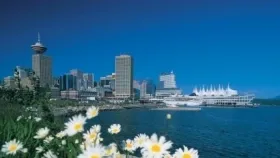
Canadian metropolises coexist with pristine nature
From wine country in the south to golden beaches in the west, from mountain meadows in the east to forest thickets in the north, Vancouver Island, the largest of the Pacific islands in North America, is as big and diverse as most countries. In fact, extending 460 kilometers from tip to base, it is comparable in area to Belgium.
Most people live in Vancouver and around Victoria County, the provincial capital in the southern part of the island, and in small towns located along the east coast northward up to Campbell River.
The southeast is the green part of the island, where Canada's mild climate promotes winemaking and organic farms. On the East Coast, sheltered by sandy beaches, there are ideal family vacation spots, and in the northeast, near Campbell River and Quadra, there is a high-tech base where solar water heating batteries, infrared heaters, and other modern technologies are developed.
To the north lies the historic village of Telegraph Cove, which is a base for whale watching in Johnstone Strait, one of the richest places for whale populations. Port Hardy, located near the northern part of the island, stretches to the middle of the North Coast, where the mountain center of Vancouver Island is located, famous for its excellent trails. For the Winter Olympics, the entire infrastructure of the center was updated. More than 2,000 cottages with all amenities were built. The residential buildings have hot water, radiators for heating, and even internet, which is not easy in mountainous terrain. Vancouver's mountain resort can compete with renowned European ski centers.
Also here, in the two villages of Ucluelet and Tofino, there is the Long Beach unit of the Pacific Rim National Park, where 22 km of sandy beaches stretch, backed by the old-growth forests of the Pacific coast.
The Vancouver Island region also includes hundreds of islands located in the Strait of Georgia, between the island and the mainland. This region is known for its ruggedness and separates a huge part of the mainland between Powell River and River Inlet. This place is accessible only by helicopter or boat. But 'it is worth it' – a huge variety of fish attracts adventurous boaters, and pristine rainforests attract travelers.
It is worth visiting Vancouver and its surroundings to see how nature coexists with inhabited areas.
_