
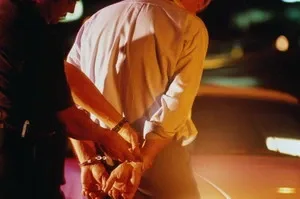
Hundreds of 'doubles' are sitting in correctional facilities. Most of these prisoners owe money to crime bosses for drugs and are now helping the 'bosses' avoid punishment," says Henrik Larsen, the authorized representative of prisoners in the administration of one of the Danish prisons.
Becoming a 'double' of a criminal in Denmark is not difficult - private advertisements for such services are published in advertising newspapers. For minor offenses (drunk driving, hooliganism, fights and theft), the court allows future prisoners to remain free for several days before they are taken into custody. But by the time specified in the court summons, 'doubles' come to the prison. At the entrance to the correctional facility, they present a social security card belonging to the real criminal. 'The "doubles" take advantage of the fact that the cards do not have a photograph. When we ask our "clients" to show a driver's license with a photo, they say they do not have such a document. The law does not allow us to demand other identification documents,' explain the prison authorities. They blame law enforcement agencies, which have restricted correctional institutions' access to police files with portraits of criminals.
The Danish Ministry of Justice recognizes the presence of 'doubles' in prisons as a serious problem. But it is in no hurry to draw conclusions, seeking to assess the scale of the phenomenon. 'We help criminals change their lives, relying on the principles of humanism,' says Annette Esdorf, deputy director general of the correctional system. Anyone can learn about how the Danes understand prison humanism, which in official documents is referred to as 'normalization,' on the Ministry of Justice website, where instructions for serving prison sentences are provided in 17 foreign languages, including Russian. The meaning of normalization in Danish is that the civil rights a person enjoys at liberty should, in their main provisions, coincide with their rights behind bars.
For example, the administration of a pretrial detention center or prison can open a prisoner's mail only in the prisoner's presence. An inmate is allowed to bring a radio and television into prison. For vegetarians or members of religious communities who follow special diets, food is prepared separately. In a conflict situation, guards use force 'only when absolutely necessary.' Prisoners have the right to free medical care, including outside the correctional facility. In 'open' prisons with a lenient disciplinary regime, where 90% of Danish criminals serve their sentences, every three weeks a prisoner can go out into the city without escort for eight or twelve hours. Or go home for the weekend. Moreover, inmates are allowed to accumulate vacation days to later use this time for longer holidays.
However, the Ministry of Justice's rules and the country's legislation do not provide for fingerprinting or retinal scanning to identify prisoners - with such a proposal came the heads of Danish prisons to the government. But the Ministry of Justice understands that the introduction of new methods of monitoring prisoners' attendance at prisons will require additional financial investments. There is no money for these purposes in the budget. Humanism is not cheap for the Danes: keeping a criminal costs 80 euros a day in an 'open' and 150 euros in a 'closed' prison (an institution where dangerous repeat offenders are held). Therefore, prisoners in Denmark usually serve only two-thirds of their sentence, and then the court releases them on parole.
Recently, Denmark's Minister of Economy, Benn Bentsen, stated that in the near future the government will reduce the state's financial obligations to the prison administration. It will even carry out a partial 'privatization' of correctional institutions. Moreover, some Danish politicians believe that the existence of 'doubles' does not pose a threat to society: criminals who managed to avoid prison through substitution do not commit new offenses while free during their supposed incarceration.