
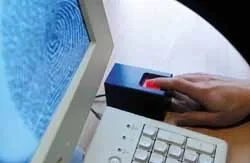
The use of scanners will make it possible to ensure that the person boarding a plane departing from Heathrow is the same person who checked in for the flight, and will also strengthen border control and prevent the use of forged documents by passengers arriving in the UK.
Although the government's program did not include fingerprinting and other biometric tests, the British Home Office said that such measures are not ruled out. In the future, electronic components and radio parts will be used for citizen checks everywhere. According to The Daily Telegraph, this initiative has alarmed civil rights organizations. 'I fear this is all connected to the current projects of total surveillance,' said Guy Herbert, general secretary of the NO2ID group, which opposes the introduction of electronic passports and biometric scanning. 'It seems that the authorities have gone mad over fingerprinting, photographing, and collecting dossiers. In the end, this could lead to all sorts of problems.'
The widespread introduction of scanners and iris recognition devices could take up to ten years, but the UK Home Office has already involved airlines in working together on this project. British embassies have begun issuing biometric visas containing a fingerprint. For now, these fingerprints are not checked at the airport upon arrival, but they are stored in the immigration service.
Volunteers - passengers of Emirates and Cathay Pacific - will take part in the experiments at Heathrow Airport. Two scanning schemes will be tested. Under the miSense scheme, passengers will be asked to provide a fingerprint of the right index finger and a scanned copy of their passport. This information will be stored in the UK immigration service. Passengers will then be able to enter the departure lounge by placing their index finger on a scanner and passing their boarding pass through a reader. During boarding, they will have to undergo the same procedure and present their passport. To encourage passengers, the time for completing formalities at the airport will be minimized.
The second scheme, called miSense-plus, involves fingerprinting all ten fingers, iris scans of both eyes, and photographing. Experiment participants will have to consent to a check against police databases. In return, upon arrival in Dubai or Hong Kong, they will benefit from accelerated border control procedures, and upon returning home they will also quickly go through all formalities. In addition, passengers who consent to the storage of their iris scan will be at the front of the line for border control.
These two projects at Heathrow are part of a program to simplify passenger movement, aimed at reducing the time between check-in and boarding, which currently, especially on long-haul flights, can be up to two and a half hours.
The use of fingerprints will complement other innovations, such as online check-in and sending electronic boarding passes to the passenger's mobile phone, which are read at the airport by a special scanner.
But another goal of the voluntary experiment is to test the technology on a large number of people, especially in light of the introduction of biometric passports in the EU. Passengers flying to the US already undergo iris and fingerprint checks upon arrival at their destination.
David MILLWARD.
Translated by Gzt.