
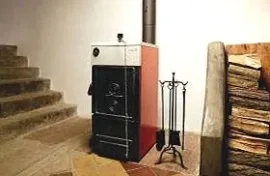
By reducing gas consumption, the population is forced to switch to universal heating
However, there is a way out: one should turn to nature. We have all noticed that, being on the sunny side, even at a temperature of +15-16 degrees, we feel quite comfortable. This principle was applied in the development of infrared heaters. Their main difference from the traditional convection option lies in the special mechanism of achieving the set temperature and distributing heat.
For example, heating boilers operating on solid or liquid fuel, as well as electricity, create a thermal cushion at the top of the room, thereby causing uneven heating. This, in turn, leads to significant heat loss and financial costs.
In infrared heating, heating occurs mainly due to radiant heat exchange among heat sources located in the serviced area. When radiation hits them, it is both absorbed and reflected, generating secondary radiation. Unlike convection heating, where a universal boiler is used, the temperature on the surface of objects under infrared rays exceeds the ambient air temperature by 1-5 degrees, depending on the material.
One of the most advanced infrared heaters today are carbon ones. They use cords and twisted tapes made of carbon fiber as a heating element, which have excellent electrical conductivity. The use of this material has reduced electricity consumption by 45%, increased heat output by almost three times compared to systems where heating boilers are the basis. And most importantly, the radiation spectrum of the device is almost identical to sunlight, without the ultraviolet range.
The use of local or general heating zones by installing infrared heaters has made it possible to successfully apply them in large industrial premises with minimal costs. This creates conditions close to natural ones.
Summing up, it should be recognized that heat from an infrared heating system, unlike the traditional one where the main place is occupied by a single heat source (universal boiler – electric, gas, coal), is delivered directly to the required zone. Thereby reducing costs and lowering the heat loss of the room.
_