
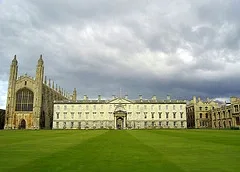
Cambridge is one of the most renowned universities in the world
Times have changed, the 'Iron Curtain' collapsed, the Soviet Union disintegrated into independent states, and the opportunity arose to go abroad, not only for vacations but also for permanent residence, work… And then it turned out that diplomas issued by 'remarkable' Soviet universities were not recognized in Europe, let alone overseas. A holder of a diploma, say, as an engineer, in Europe could only hope for a position as a technician at best. And even then, with luck. Soviet diplomas are not accepted there, even if the document was translated by the best translation bureau and has a fancy stamp called 'apostille'.
However, a solution, as always, was found. You can enroll in a foreign university, graduate, get a specialty and diploma, and work in Europe despite having a Ukrainian or Russian passport. Provided you find a job, of course.
One of the countries whose higher education has always been held in the highest regard is Great Britain. Who hasn't heard names like Oxford or Cambridge? But besides these renowned and widely known institutions with a rich history, England has many universities that provide an excellent education.
Why England? Well, probably first of all because the English language, which has long and irreversibly become a means of international communication, is a prerequisite for successful work abroad. And where better to learn it than in its 'historical homeland'? A one-year English language course for foreigners at any of England's universities will allow you to claim that you are fluent in English, without lying. Here they do not teach technical translation or document translation. Here they teach you to think in English.
A typical class goes like this: students gather in a room where there are no desks, only comfortable chairs arranged in a circle. Some come early, some a little later. In one of the chairs sits the teacher, usually young. He greets those who enter, invites them to sit down, and a small talk begins, waiting for those who haven't arrived yet. The conversation is on any topic; someone talks about a show they watched the previous day, someone about an incident on the street they witnessed. Late students arrive, join the conversation… and don't immediately realize that the lesson has already started!
Of course, that's not all; they teach seriously here, assigning substantial essays that later need to be defended in front of the group. In English, of course; they don't speak any other language there.
How else? That's the only way to learn a language!