

At the highest political forum of the European Union, out of 15 EU member states, the following were included in the euro zone: Austria, Belgium, Germany, Ireland, Spain, Italy, Luxembourg, the Netherlands, Portugal, Finland, and France. The United Kingdom, Denmark, Sweden, and Greece were not among the initial participants of the euro zone. Moreover, only Greece was unable to do so for objective reasons: the country's macroeconomic indicators turned out to be unsuitable. As experts note, this primarily concerned inflation, which, according to the conditions of the EU member states, should not exceed 3% per annum.
Greece switched to the single euro currency only in 2002. The others refrained from introducing the euro as a result of referendums and have not given up their national currencies to this day.
The euro replaced the ECU, which was a weighted basket of currencies of the countries in the European Monetary System. The ECU appeared in 1979 to measure and control fluctuations in European currencies relative to each other and existed for almost 20 years.
However, the decision taken in May 1998 at the EU political forum did not mean an immediate transition of the above countries to transactions in euros. The actual start of euro circulation was Monday, January 4, 1999. Then the euro currency was first used in non-cash payments. And the population of the participating countries got the opportunity to pay in cash euros only from the beginning of 2002.
To date, Slovenia, Malta, and Cyprus have also switched to using the euro. Thus, the euro zone has expanded to 15 countries.
Record for the anniversary 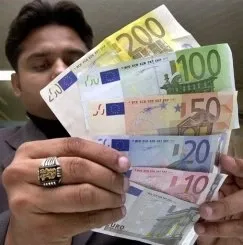
Since its creation, the euro exchange rate has experienced significant fluctuations, but the steady growth of the European currency against the dollar in recent years indicates its stable position in the international currency market. Initially, the euro exchange rate was $1.18. But the military actions in Yugoslavia that followed immediately after the introduction of the European currency, as well as the overall weakening of the European economy, led to the euro falling to $0.83 against the dollar by October 2000. Then, the efforts of central banks to maintain exchange rate stability, as well as gradually growing confidence in the stability of the new entity of European countries, first caused the euro to return to its initial level and then continue its growth.
Over the past year, the trend of the euro strengthening against the dollar has noticeably intensified due to the mortgage crisis that affected mostly the American financial system. As a result, at the end of April, for its anniversary, the euro updated another historical high, rising to the level of $1.6, however, this was followed by a correction, and now the euro is trading at $1.54.
Nevertheless, the forecasts of the world's largest banks are not optimistic about the future prospects of the euro. Expectations of a slowdown in European economic growth following the problems in the US and, as a result, a loosening of the European Central Bank's monetary policy, according to analysts, will cause the euro to decline already in the coming year. Global investment banks Merrill Lynch and UBS forecast that the euro exchange rate against the dollar by May 2009 should fall to $1.4, Citigroup evaluates the prospects of the European currency higher and expects $1.53. The average estimate of bank analysts for the euro-dollar pair is $1.45. But a significant decrease relative to the current exchange rate of the European currency cannot undermine confidence in the euro, since breaching this level occurred only in November last year.
Nostalgia for the Currency
Despite all the successes of the euro in its market battles with the dollar and other currencies, not all residents of the eurozone are happy with the appearance of the euro in their lives. For example, in 2002, about a third of Germans missed the deutsche mark. And in a recent poll conducted by the German Banking Federation BdB, it turned out that about 34% of Germans still want to abandon the euro and return to the mark. According to the poll, more than half of respondents believe that the euro is to blame for the rise in prices in recent years.
Initial exchange rates against the euro (May 1998): Austria, schilling, exchange rate to euro - 13.760300; Belgium, franc, exchange rate to euro - 40.339900; Ireland, pound, exchange rate to euro - 0.787564; Spain, peseta - 166.386000; Italy, lira - 1936.270000; Luxembourg, franc - 40.339900; Germany, mark - 1.955830; Netherlands, guilder - 2.203710; Portugal, escudo - 200.482000; Finland, markka - 5.945730; France, franc, exchange rate to euro - 6.559750.