
Unlike similar documents of the Soviet era, which instructed our fellow citizens not to enter into direct contact with foreigners and not to leave the plainclothes guide, the new memo rather resembles a modified short course on the basics of life safety, which high school students are introduced to in a simplified version at school. The memo provides step-by-step instructions on what to do during an earthquake or any other natural disaster, how to behave if you are taken hostage or kidnapped, as well as during a special operation to free you.
To protect yourself from criminals, the Foreign Ministry recommends going on foot walks "in pairs or in a group, choosing well-lit and fairly crowded places, and carrying a city map." It is not worth, the memo notes, lingering for a long time at shop windows and having conversations with clearly unhealthy people, vagrants, beggars. You should wait for a bus or taxi at well-lit stops. Well, if someone nearby begins to behave defiantly or commits hooligan acts, the Russian tourist is instructed to "immediately leave this place."
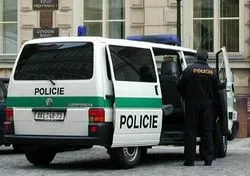
In addition, fellow citizens are offered a pattern of behavior when meeting with the law enforcement agencies of a foreign country. Ministry officials warn that detention or arrest may be a provocation, so one should not offer resistance, as this can only aggravate the situation. One should not communicate with representatives of local law enforcement before the arrival of consular officials. Also, until their arrival, one should under no circumstances sign any documents in a foreign language, "since according to the legislation of a number of countries, these statements can be used as the basis for an accusation of committing a crime."
According to the memo, in order to avoid "unwanted incidents," travelers are expected first of all to "show friendliness towards the local population, take into account their way of life," as well as "be patient, not be rude, not raise your voice, not humiliate the dignity" of the locals. Tourists are advised not to appear in public places or on the street in a state of intoxication, and also "not to allow insulting statements about the leaders of the host country."
Citizens are also advised to be sure to take into account the national characteristics of the host country. For example, if it is a Muslim country, you will have to take a "strict" wardrobe with you: in many places women are forbidden to appear in revealing clothing. For example, in Iran, women must tie a scarf around their heads. In the USA, you can walk around half-dressed, but smoking in restaurants and bars is definitely not recommended. In Singapore, there is a high fine for throwing any trash in places not designated for that.
The diplomatic department focuses on cases where unfamiliar people offer alcoholic beverages, soft drinks, and cigarettes: one should refrain from such drinks, food, or smoking. Robbers or rapists may mix something into food, and a person will lose control of themselves. The Foreign Ministry's instructions also contain a fairly detailed gastronomic memo. In particular, Russians are asked not to drink unboiled water and freshly squeezed juices, not to eat fresh salads (with a special note: "even in five-star hotels"), ice cream, sweets with filling, and not to consume food ice. Tap water should be used only for washing hands, and even brush teeth only with water from factory-sealed bottles.
It is noteworthy that, having fully taken care that nothing spoils the expensive vacation of tourists who diligently follow the instructions, the country's main diplomatic department did not forget about itself either. In particular, in the item on hostage-taking, there is also this advice to victims of terrorists: "immediately after release, it is advisable not to give comments to the media until a conversation with an official Russian representative and until receiving appropriate recommendations from him."