
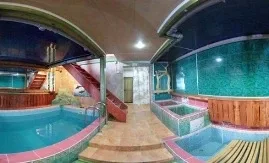
To get into a Turkish hammam, residents and guests of St. Petersburg do not have to leave the city
St. Petersburg's Turkish baths, of course, differ in size from the real Istanbul ones, but nevertheless, all the main characteristics of a classic Turkish "hammam" are necessarily present in them.
The progenitor of the Turkish bath is the ancient Roman therma. Unlike the saunas of St. Petersburg, it is a round room crowned with a domed roof. The hammam is heated by a large stone placed in the middle of the bath, heated to a certain temperature.
The stone is called "chebek-tashi", which literally means "stone for the belly". It is designed to warm various parts of the body. The steam room also contains several jugs filled with cold and hot water. In a modern hammam, as in all saunas of St. Petersburg, there are separate loungers and shower cabins.
Thanks to the unique healing effect obtained in Turkish baths, hammams quickly spread around the world, including Russia. Both ancient physicians and modern medicine have proven that regular visits to a Turkish bath help open skin pores, thereby cleansing the skin and removing toxins from the body. Hammam is an excellent remedy for chronic fatigue syndrome, relieving neurotic conditions, and eliminating insomnia. Turkish baths help normalize the functioning of the gastrointestinal tract and respiratory system.
In a damp and cold climate, hammams, like the saunas of St. Petersburg, contribute to the rapid recovery from colds. Those who choose to visit Turkish baths to combat excess weight achieve amazing results. The healing effect of a Turkish bath is achieved by saturating and washing the body with moisture.
Today, many hammams in St. Petersburg have created conditions as close as possible to a real Turkish bath in terms of humidity and temperature. Their interiors are decorated in the best traditions and in compliance with all the rules of hammam decoration, i.e., without the use of wooden elements, without which neither Russian baths nor Finnish saunas in St. Petersburg can be imagined.
_