
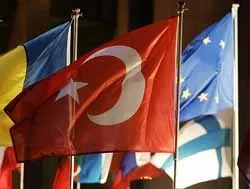
Europeans accuse the Turkish authorities of populism: on the one hand, the second government in a row declares its intention to join the EU, on the other hand, nothing is done to bring Turkey's rules and laws into line with European legislation. At the moment, there are three 'legal' problems: eradicating torture of prisoners, controlling the army, and freedom of speech.
The Turkish authorities do not even try to hide the existence of torture. Until now, all blame has been placed on the perpetrators on the ground. From time to time, a couple of low-ranking police officers are dismissed with a bang, but none of their superiors have ever been held accountable.
The problem with the army is no less serious: it is still impossible to say exactly who controls whom – the government the army, or the army the government. Turkish generals, the true 'architects' of the fall of the last cabinet, feel much more confident than the 'fathers of the nation': they actively influence the formation of the country's political course, something European soldiers would never dream of. Again, feeling the support of NATO behind them, Turkish military men can allow themselves to ride tanks through the streets of Ankara, and no prime minister commands them.
As for human rights, for example, the notorious Article 301 of the Criminal Code 'on protecting the memory of Mustafa Kemal Pasha Atatürk' is still in effect, under which, incidentally, the current Nobel Prize winner in literature Orhan Pamuk was recently convicted. Not to mention the ongoing repression of the Kurdish population of the country.
After Commissioner Rehn's report, the Turkish authorities for the first time at least verbally 'backed down': Prime Minister Recep Tayyip Erdoğan said that his government is ready to make concessions. The death penalty, he stressed, has not been applied in Turkey for seven years, and this type of punishment will likely be abolished soon – as well as punishment for 'unenthusiastic way of thinking' towards Atatürk. He said nothing about the army, limiting himself to general phrases that 'with good will, all problems can be solved.'
However, there remains another obstacle: the island of Cyprus still stands as an insurmountable barrier on Turkey's path to Europe. Last Thursday, the leadership of Finland, which currently holds the EU presidency, invited representatives of both Cypriot republics (the Greek Republic of Cyprus, a member of the EU, and the Turkish Republic of Cyprus, recognized only by Turkey) as well as representatives of the Turkish government to Helsinki to jointly continue the search for a solution acceptable to all. However, the very next day, the Finnish representative in Brussels sadly had to announce that the meeting would not take place, as it proved impossible to seat all parties at one negotiating table. Thus, European diplomats believe, there is an increased danger that at the beginning of next year, negotiations with Turkey on accession to the European Union will be fruitless.
Recent history knows only one example where two countries within the same intergovernmental union do not recognize each other. That is Armenia and Azerbaijan, both members of the CIS and yet constantly squabbling over Nagorno-Karabakh. Europe does not intend to follow this sad example.
Cypriot planes cannot cross Turkey's airspace and have to take a detour to reach Europe. Cypriot ships dare not enter Turkish ports, even if they are in distress. The same rules apply to Turkish ships and planes, with one exception: in case of an emergency on board, Cypriot ports and airports are ready to take in Turks at any moment. Moreover, the entire Cyprus – united and indivisible – is officially listed as part of the European Union.
At the same time, 60,000 Turkish soldiers are stationed in the north of the island. So, in fact, it turns out that a very substantial part of the European Union's territory is under occupation by a foreign state. This legal oddity is usually swept under the rug, pretending that everything is fine: after all, Turkey is a NATO member. However, such a situation is a very unpleasant precedent for the development of Turkish-European relations.
Why did the meeting in Helsinki not take place? Turkish Prime Minister Erdoğan blamed... Greece. 'If the Greek minister does not participate in the meeting of foreign ministers, then there is nothing for us to do there,' he said. This position seems simply absurd to many in Europe: if the Turkish part of Cyprus is under the obvious, factual, and legal protectorate of Turkey, then the Greek Cypriots are a completely independent nation, with no direct relation to Greece. The idea of shifting the blame onto Greece thus looks like an unsuccessful attempt to present Southern Cyprus as the same kind of vassal state as the North. The head of the Greek government, Konstantinos Karamanlis, responded: 'Greece does not aim to disrupt the negotiations on Turkey's accession to the European Union. However, Greece has the same relation to the Cyprus problem as any other EU country. The European community has paved the way for Turkey, but the Turks can only walk that path on their own.'
According to information from diplomatic sources, Finland, as the EU presidency, proposed the following way to solve the Cyprus problem: Turkish troops should leave the port of Famagusta in eastern Cyprus and hand over control to UN Blue Helmets. The government of the Greek part of the island would recognize the right of Turkish Cypriots to trade with the whole world through this port (currently, only Turkey trades with Northern Cyprus). In response, the Turks would allow Greek Cypriots into their ports and airports, and the Greeks would reciprocate with a similar gesture of goodwill. Then it would be possible to raise the question of the island's unification. Until this happens, Turkey will not enter the EU.
Boris Altner.
Rosbalt News Agency