
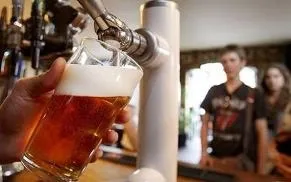
In one evening, the average Briton can easily drink a Spaniard's weekly wine ration
The authors of the report call on the government to raise minimum alcohol prices, increase taxes on spirits, and make it mandatory to include warning labels about the negative health effects of alcohol. According to preliminary estimates, simply introducing minimum alcohol prices could prevent the premature death of three thousand Britons per year.
The parliamentary committee's initiative has, surprisingly, found favor with many. It has been supported at the regional government level in Scotland and in northern England – both regions drink more than the richer and sunnier south. Public opinion polls show that citizens tend to view the idea of setting a minimum price for alcohol favorably – and this in traditionally liberal Britain, where excessive state interference in market mechanisms is disliked.
The five-year "alcohol experiment" produced exclusively negative results. Recall that since January 2005, Britain repealed a law dating back to World War I that required pubs and bars to close at exactly 11 p.m. At the time, London believed that more liberal rules would bring to Britain the so-called café culture of alcohol consumption characteristic of Mediterranean countries. Since then, Britons have indeed started drinking more wine, but the overall drinking culture has remained Northern European – in binge-drinking mode.
Here comes Friday
On Friday evenings, the centers of British cities become alike. In Newcastle and Bristol, Belfast and Cardiff, Glasgow and London, you can see on the streets groups of lightly dressed men and women of all ages – regardless of the season, to save on wardrobe – moving from bar to bar, from pub to pub. The later the hour, the higher the degree of intoxication among revelers, who are not bothered by cold wind, rain, or snow – despite the absence of outerwear. Past midnight, you can easily come across guys lying in a snowdrift in T-shirts. Or girls who have decided to take off their high-heeled sandals and walk through puddles or on the pavement barefoot despite zero-degree temperatures.
According to data from the British National Health Service, 31% of British men and 21% of women drink "dangerously." This means men consume 168 grams or more of pure alcohol per week, and women 112 grams or more. Another 9% of men drink "harmfully" – that is, more than 400 grams of pure alcohol weekly. Among women, those who drink more than 280 grams weekly account for 6%. And these figures are significantly higher than official recommendations: no more than 16 grams of pure alcohol per day for women and 24 grams for men.
The problem is compounded by the fact that Britons prefer strong alcoholic drinks and the way they are accustomed to drinking them. While in traditionally wine-drinking countries – France, Italy, or Spain – residents have a glass with lunch and two with dinner almost every day, Britons drink far from daily. On weekdays, most avoid alcohol because the workday usually starts early, around eight in the morning, requiring an early rise and a clear head. Moreover, while Southern Europeans typically drink simultaneously with meals, Britons, like other Northern Europeans, tend to separate these activities in time.
But then the weekend approaches, and Britons change beyond recognition. Many head to pubs and bars immediately after the workday ends. And they start drinking on an empty stomach, downing one pint (or glass of wine) after another. As a result, in one evening, the average Briton can easily drink a Spaniard's weekly wine ration. And on Saturday, after recovering from a hangover, they go for a repeat of their Friday record. And then throughout Sunday, such a Briton tries to recover to be able to go to work on Monday. A heavy Monday sets Britons on the path to sobriety during the week, and the cycle repeats.
Moreover, while in Continental European countries, a state of intoxication is considered socially unacceptable, in Britain, the "binge-drinking culture" produces the opposite result. The goal of binge drinking on Fridays and Saturdays is often "get drunk and forget." During drinking evenings, Britons experience social pressure from friends and acquaintances – drinking little means standing out from the group.
Alcohol addiction is characteristic not only of youth or adults. Although the legal drinking age in Britain is 18, according to official data, 54% of adolescents aged 15-16 already know what heavy intoxication is. 46% of surveyed teenagers had consumed alcohol at least in the past month.
Like in war
According to official data, alcohol abuse causes $88 billion in damage to the British economy annually. This sum includes temporary loss of productivity, offenses committed while intoxicated, and premature deaths.
In 2008 (the last year for which statistics are available), the number of deaths directly related to drunkenness rose by 9% and exceeded 9,000. Another 40,000 deaths are indirectly caused by alcohol, mainly through the development of chronic diseases such as liver cirrhosis or laryngeal cancer. More than a million visits to emergency rooms annually are linked to alcohol consumption, and in most cities, the busiest periods for ambulance services are Friday and Saturday evenings.
According to police data, more than 80% of offenses on those same evenings are also related to excessive alcohol consumption. Fights are a typical occurrence in the centers of British cities, and in exceptional cases it leads to stabbings and murders. In 2009, the total number of offenses caused by alcohol consumption, according to police, exceeded 970,000. A quarter of British respondents believe that alcohol-induced offenses create dangerous zones in their cities that they try to avoid on weekend evenings.
The number of accidental deaths due to traffic accidents, carelessness with fire and sharp objects also sharply increases on weekends, when a significant portion of Britons go on binges.
“Although the government is investing more and more money in campaigns warning about the harmful effects of alcohol consumption, the problem of drunkenness has sharply worsened in recent decades and continues to worsen,” said Professor Ian Gilmore of the Royal College of Physicians.
Drink More
“In the 1970s, Britain was a very sober country compared to other European states. Perhaps partly this was a legacy of the Second World War: a sense of the need to economize and the residual effect of the temperance movement remained. Beer was drunk in pubs, spirits were very expensive. Wine was also expensive, not very good, and unusual for Britain. But then Britons began to travel to Mediterranean countries and bring back Chianti from their trips,” James Neal, a specialist in economic geography at University College London, told Expert.
However, the change in consumption was influenced not only by tourist forays into the countries of the ‘wine belt’. In particular, wine consumption began to grow after supermarkets gained the right to sell alcohol in the 1960s (before that, only pubs and specialized stores had a license to sell). This led to women, who were doing the grocery shopping for the whole family, also buying alcohol – before the 1960s, drinking was seen as an exclusively male activity.
Today in Britain, 70% of retail alcohol sales are in supermarkets, which attract customers with offers like ‘Two bottles for £10’ or ‘Buy one bottle, get one free’. “Unlike specialized stores, supermarkets operate on a scale, so they are willing to dump prices to increase sales volumes. This is especially true for beer, where they compete fiercely with pubs. It gets to the point of absurdity – in some special offers, beer is cheaper than mineral water,” said Jonathan Blakie, an analyst at the consulting firm Verdict Research.
In recent years, supermarkets have been increasing the supply of products with higher alcohol content. If in 1993 the average bottle of table wine contained 11.4% alcohol, in 2008 it was already 12.1%.
Bars were not far behind supermarkets in aggressive marketing. Almost every British pub has a ‘happy hour’ – a few hours early in the evening when drinks are served at half price. To attract female visitors, some bars even offer free alcohol for women. In addition, many establishments increase the portions of alcoholic drinks – as a result, patrons do not realize they are overindulging.
The authorities also contributed to the growth of consumption by making alcohol more affordable. The tax on spirits in 1947 was 60% of the average unskilled worker's weekly salary. By 1983 it had fallen (mainly due to sharp wage increases and rare indexation of the tax) to 11%, and by 2002 even to 5%.
And since 2005, the strict regulation of alcohol sales that had been in effect since 1914 was abolished in Britain. According to the law, aimed at ensuring that people came to work sober in the morning during wartime, all bars and pubs in the country closed at exactly 11:00 PM. The Labour government believed that the awareness of an impending bar closure psychologically forces patrons to drink faster (and consequently, get drunk quickly). And the simultaneous closing of pubs, from which drunken groups spill onto the streets, leads to an increase in violence.
Today bars close at different times – some traditionally at 11:00 PM, some at midnight, and some late at night. Nevertheless, neither the culture of alcohol consumption nor the situation with violence has improved.
End to binges?
And so the parliamentary committee called for setting a minimum price for alcohol. In particular, experts name a price of $0.8 per 8 grams of pure alcohol (in terms of a bottle of wine, this means a price of $9). Such a measure would ban supermarkets from selling alcoholic beverages at throwaway prices. The proposal was supported by the Chief Medical Officer of Britain and many non-governmental organizations. The government of autonomous Scotland, where people drink on average 25% more than in England, received the idea with understanding. As the region's Health Secretary Nicola Sturgeon said, “the key issue in the discussion about the minimum price should be the health of citizens, not the interests of the industry.”
“If every Briton drank responsibly, the alcohol industry would lose 40% of its sales or even more. When forming its strategy, the government should be skeptical of the industry's claims that it is interested in responsible alcohol consumption,” the parliamentary committee's report notes.
In addition to setting a minimum price, the authors of the report call for banning bar promotions (including free alcohol for female visitors), requiring manufacturers to place a warning about the dangers of alcohol consumption on packaging, and revising the times for alcohol sales in stores and bars.
Conservatives, who according to polls have excellent chances of winning the May parliamentary elections, promise to fight the problem of drunkenness most actively. The Tories believe that the liberalization of drinking establishments in 2005 did not lead to anything good and urgent measures need to be taken. Conservatives promise to raise taxes on alcohol and abandon the Labour’s liberal policy. 'It's time to take back control of our city centers on Friday and Saturday evenings and make them places where one can have a pleasant time without encountering a culture of violence and hooliganism,' said Conservative Chris Grayling, who is tipped to become Home Secretary in the new government.
Apparently, on the eve of the elections, many Britons will go to the shops – to buy alcohol at old prices.
Alexander KOKSHAROV.
Expert