
LONDON
Among the many tourist routes of London, the literary ones are some of the most interesting.
Dombey, Son and Company
The English simply adore putting up monuments - to everyone and for any reason. But there is only one monument to a literary character in the whole of London. The bronze boy Peter Pan, a great lover of flying over the city, now stands in Kensington Gardens, not far from where his brothers and little sister Wendy lived. And does London even need monuments when in Greenwich you can still go into the Trafalgar Tavern, order the signature dish Greenwich Whitebait - fried five-to-six-centimeter fry that have been served here for two hundred years already - and recall that the tavern is the setting of Charles Dickens's novel "Our Mutual Friend".
Dickens knew London well, all its fashionable and most abandoned back alleys. In each of his novels there are descriptions of markets, docks, pubs, the prim City, where the office of Mr. Dombey was located, which, like the novel, was called "Dombey and Son". On Borough High Street, in the Church of St. George the Martyr, now more often called "Little Dorrit's Church", Dickens's heroine was married. On the same street, just a little further up, in the George Inn tavern, other characters from "Little Dorrit" drank and caroused. Judging by the high price of beer (8 pounds a pint), this pub is still popular. Moreover, it is almost the only place where a fragment of Dickens's London has survived, with massive wooden beams, secluded courtyards and covered galleries. The atmosphere in the George Inn is exactly what the writer loved - most of the time it is noisy, crowded and serves excellent English ale.
Montague Close will take you to London Bridge at the point where the stairs begin. In the film "Oliver!", based on Dickens's novel, the villain Bill Sikes killed the thief Nancy on these stairs. The dock of St. Saviour's, where the characters of "Oliver Twist" lived, is unrecognizable today. The old warehouses have been converted into hotels, offices and homes, with apartments that grow more expensive year by year. The romantic streets of the old dock, cobblestone pavements - and at the same time first-class restaurants, excellent coffee, fine wine. Where in Dickens's time a good many thieves and rogues lived, there is now a very prestigious district.
Spies
London is always recognizable - from half a word, from half a frame. Although Orwell's cult novel "1984" has no real London names, many of those mentioned by the writer are clearly identifiable as quite real places. Victory Square is nothing other than Trafalgar Square. The Ministry of Love is the former police headquarters at 458 Bethnal Green Road, and the prototype for the pub "Proles" was the "Newman Arms" at 23 Rathbone Street, a place Orwell himself liked to frequent.
In the James Bond films, the massive, grandmother's-dresser-like building of the Foreign and Commonwealth Office on respectable Whitehall quite often flashes by. It is one of the most beautiful palaces in London, at least from the inside. Sometimes tours are organized there.
London Mysteries
When Dan Brown's bestseller "The Da Vinci Code" was published, a flood of people literally poured into London wanting to see the setting of the novel. A special tourist route even appeared, and Penguin Publishers released the guidebook "Cracking the Da Vinci Code", which can be bought for five pounds in any bookstore. Fans of the novel, together with its heroes Sophie Neveu and Robert Langdon, travel around London in search of a "knight buried by the pope", which serves as a connecting link in the chain of mysteries surrounding the location of the Holy Grail. At first, they look for the mysterious knight in the Temple Church, built by the Templars, where there are indeed ten knightly tombs. True, not of Templars, but of their contemporaries with whom they went on the Crusades. Then the search moves to Westminster Abbey, to the tomb of Isaac Newton, where one must find an "orb from the tomb". The search, and consequently the tourist route, ends in Scotland, south of Edinburgh, at Rosslyn Chapel, full of mysterious symbols that have yet to be deciphered.
"Elementary, Watson!"
Finding the Sherlock Holmes Museum in London is, indeed, elementary. At the exit from the "Baker Street" tube station stands a barker dressed as the great detective, handing out business cards with the familiar address "221-b Baker Street". On the facade of the house is an oval plaque: "Sherlock Holmes, consulting detective". On the ground floor there is a restaurant. On the second floor, an apartment, to which, as in the novel, exactly 17 steps lead. Everything is very recognizable, except perhaps Mrs. Hudson - a pretty, buxom girl who greets you at the door. The rest is genuinely Victorian. In the depths of the living room a fireplace smolders, next to which Holmes and Watson used to sit; on the floor is a polar bear rug. In the study, on the work desk, there is a pile of items, from jars and retorts for chemical experiments to an inkwell and a spyglass. Also in the study hangs the stuffed swamp adder from the story "The Speckled Band". There are even bullet holes in the wall in the shape of Queen Victoria's monogram, left by the bored detective during his revolver shooting practice. Unlike most British museums, here you can photograph everything, touch everything, you can even plop down into an armchair, putting on Holmes's checkered deerstalker cap or Watson's bowler hat. And when leaving, you can pin your business card to the display on the wall.
BUDGET Walking tours along literary trails in London can be booked from home as well. But they are considered non-standard, which is why they cost a lot - from €300 for four hours. If you contact a London tourist agency, half a day of guide services will cost you 138 pounds, which is not much cheaper. Therefore, it is more advisable to make up your own route, guided by the map and the materials in this issue. The cost of a standard tour to London: from €800 (8 days, accommodation in a three-star hotel).
VERONA
It is no secret that almost all literary plots are nothing more than variations on three eternal themes. One of them, about immortal love, has forever “settled” in Italian Verona.
“Verona, where events meet us”
Verona captivates and enchants at once, as soon as you step onto its stone pavements, where seven centuries ago the action of Shakespeare's drama about Romeo and Juliet unfolded.
A volume of Shakespeare is an indispensable guide to Verona. After all, the houses, streets and alleys where his heroes lived, fought duels, loved and died, exist to this day. Act one, scene one - the Erbe market square, where the action of the immortal tragedy begins. As in those times, the market is still bustling here, and they still sell everything - from antiques and roasted chickens to woven baskets and juicy oranges. And over all this human whirlpool, the Verona Madonna, an ancient statue that has adorned the square since time immemorial, still looks on.
The ancient palazzo at Via Cappello 23 is the very House of Juliet, where a completely real Veronese family, the Capulets, lived and where the enamored Romeo hurried. Its walls from top to bottom are covered with autographs, notes and love declarations in the form of intricately woven hearts. Finding a free spot to express feelings is not at all easy. And how happy and loved must all those Biancas, Annas and Stephanies be, for whom people climbed the ivy-covered walls with a pencil in their teeth. Nowhere else will you see so many kissing couples. Join them! After all, as everyone knows, a kiss under Juliet's Balcony is the most reliable way to preserve feelings. Once a month, couples from all over the world come here to take part in a wedding ceremony. In costumes from the times of Romeo and Juliet, to the sounds of medieval music, in the very ballroom where Shakespeare's heroes danced, newlyweds take a vow of eternal love, exchange rings and receive a marriage certificate in the name of the “Order of Montagues and Capulets”. But the most magnificent celebration takes place at the House of Juliet on September 16, when lovers and ordinary tourists celebrate the birthday of the eternally young mistress of the house.
But if you are not destined to participate in these colorful ceremonies, it is hardly worth getting upset. The main thing is to visit the famous Balcony, preferably with your beloved. And, leaving, touch the bronze Juliet's breast with your hand in the inner courtyard of the house. Such a touch guarantees the fulfillment of the most daring love desires. It is unknown how the modest Juliet herself would have felt about this, but millions of immodest hands have already polished her breast to a mirror shine.
“Two equally respected families...”
Romeo's house was much less fortunate. This palazzo, resembling a medieval fortress, at Via delle Arche Scaligere, 2, is today a private property, inaccessible to tourists. But you can look into the cozy restaurant Osteria al Duca located in it, have a cup of cappuccino and continue on to another very significant place - the giant ancient arena on Piazza Bra, second in size only to the Colosseum. In the times of Romeo and Juliet, knightly tournaments were held here. Today the Verona arena delights with spectacles of a completely different kind – every summer, the traditional “Opera Art Festival” takes place here, attracting ardent theatergoers from all over Europe. The only place in the city where a forced truce prevailed was the small patch of ground in front of the church of Santa Maria Antica, from where tourists now admire the “Scaliger Tombs” - extraordinarily picturesque burial places of medieval Verona's rulers. The Montagues and Capulets, who lived nearby, were the wealthiest parishioners of this church, and in the face of God they had to restrain their passions.
“The end of the irreconcilable feud...”
The last act of Shakespeare's tragedy is the old Franciscan monastery on Via del Pontiere. The marble sarcophagus standing in the crypt of the monastery church is the very tomb of Juliet. In the 16th century, by decision of the ecclesiastical authorities, who did not want to encourage popular veneration of the “lovers' grave”, the sarcophagus was adapted to store water. This by no means prevented the real pilgrimage to the burial site of Romeo and Juliet that began back in the 19th century. In former times, admirers of Shakespeare's heroes chipped off pieces from the tomb as souvenirs. Byron willingly gave these pebbles to his mistresses, and Napoleon I's widow, Marie-Louise, made a necklace from them. This explains the pockmarked appearance of the sarcophagus. Modern fans of the Verona lovers prefer to put flowers and little notes with vows of fidelity or some requests into it.
BUDGET Usually it takes one or two days to visit this ancient city; that is quite enough to walk through Shakespeare's places. Therefore, it is worth buying some sightseeing tour to Italy that includes visits to Verona, Padua and Mantua. Such a trip costs from €800 (7-8 days with accommodation in a three-star hotel).
SAINT PETERSBURG
Saint Petersburg is associated by many with a rich literary heritage, however, if you come here on your own, you are unlikely to get on a themed tour. Unfortunately, they are held quite rarely, so just follow us and walk on your own through the places of great people whose biographies are inextricably linked with the city on the Neva.
“I love you, Peter's creation...”
Guests arriving in Petersburg by rail are always given the most solemn reception. Get off the train at Moskovsky Station, step outside, and you immediately find yourself before the prospect of Nevsky Prospekt, which greets you with the noise of cars and the sounds of thousands of voices.
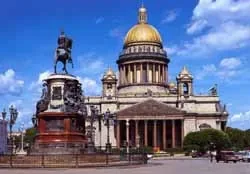
Moving along the main avenue towards the Neva River embankment, you begin to feel how the magical Pushkin city surrounds and envelops you. It rings with verses over the domes of St. Isaac's and Kazan Cathedrals, dives with lines into the dark water of rivers and canals. The Nevsky area has absorbed episodes of the genius's entire short life, from his youth to his last moments. So, if, having reached the Fontanka River embankment, you turn right and find house No. 20, you will find yourself right at the building where the Turgenev brothers, close friends of the poet, lived. Walking further to house No. 101, you can see the house of A. N. Olenin, the creator of a literary salon visited by Pushkin since his youth. Along with him, Zhukovsky, Krylov and Gnedich also visited here.
Next to Olenin's house is Voznesensky Prospekt, which below is crossed by Rimsky-Korsakov Prospekt, where in house No. 35 the literary-political circle "Green Lamp" gathered. This organization united progressive noble youth from 1819 to 1820 and maintained ties with the rebellious "Union of Prosperity". The representatives of the "Green Lamp" included Vsevolozhsky, Trubetskoy, Glinka, Tokarev, Delvig, Barkov. Pushkin also visited here, writing many poems under the influence of revolutionary ideas, for which in 1820 he was exiled to Yekaterinoslav (Dnepropetrovsk). The most famous place in the city associated with the poet's name is the building on Moika, 12. There is a museum-apartment here. This is the house that received Pushkin and saw him off on his last journey. Every exhibit of the museum is unique in its involvement with the fate of the creator. Unfinished manuscripts on the table, an inkwell with a gilded arapchonok, reminiscent of Pushkin's great-grandfather - everything here lives with memories of a bygone era and creates a special mood.
"Beauty will save the world"
If you pay attention to several quotes from the works of Fyodor Mikhailovich Dostoevsky, you get the impression that he and Pushkin lived in completely different cities. The great poet - in the grand imperial capital, and the famous writer in a "heap of dead stones", slums, tenement houses, well-courtyards, coffin-rooms and terrible drinking establishments. To look into the mysterious world of the writer, you should first stop at the intersection of Nevsky Prospekt, on one side of which goes Liteyny Prospekt. Here, in house No. 56, is the oldest Mariinsky Hospital in the city, which originally admitted the poorest residents. The building of this institution was designed by architect Quarenghi more than 200 years ago. Fyodor Mikhailovich was baptized in the hospital church of St. Apostles Peter and Paul.
In the opposite direction goes Vladimirsky Prospekt, in house No. 11 on which Dostoevsky lived from 1842 to 1845. This street is a kind of transition connecting the polished bourgeois quarter with Kolomna, the soul of old Petersburg. Kolomna sheltered literary heroes of many writers. At first glance the area is gloomy and unattractive, and even now, 150 years later, here and there you meet dusty traders with suitcases hurrying in the morning to Sennaya Square, or beggars cripples collecting alms at the gates of St. Nicholas Church. Kuznechny Lane approaches the center of Vladimirskaya Square, where the literary-memorial museum of F. M. Dostoevsky is located. As with Pushkin, apartment No. 10 in house 5/2 became the writer's last lifetime home. The apartment consists of six rooms: entrance hall, dining room, children's room, living room, the room of Anna Grigorievna, Dostoevsky's wife, and the writer's personal study, reconstructed from a photograph. It presents memorial items: on the table a pen with nib, a medicine box and a wallet, in the corner an icon in a silver frame. The bookcases contain books from Dostoevsky's personal library.
"Again Isaac in vestments of cast silver..."
Crushed and exalted to the skies by the ruthless twentieth century, Anna Andreevna Akhmatova became as integral a part of Petersburg as the granite embankments and the avenues rapidly running into the distance.
It is best to start a tour of Akhmatova's Petersburg with her monument, which is located near Moskovsky Station, on Vosstaniya Street, 8. This is a very successful work by sculptor Vadim Troyanovsky, made by him for the 100th anniversary of the poetess. Then proceed to Fontanka, 34, to the mansion of the Sheremetev counts (Fountain House), now the Akhmatova Museum. Here you will find a tour of the restored memorial rooms of the apartment of art critic N. N. Punin, in which Akhmatova lived for more than 30 years.
To conclude your journey through literary Petersburg, go have lunch at the art cafe "Stray Dog" on Arts Square, where meetings of the "Poets' Guild" were held from 1912 to 1915. The biographies of A. Akhmatova, O. Mandelstam, N. Gumilev, I. Severyanin, N. Teffi, V. Mayakovsky, V. Khlebnikov, V. Meyerhold, K. Balmont, A. Tolstoy, and many others are connected with the "Stray Dog".
BUDGET On average, a weekend (3 days, 2 nights) in St. Petersburg as part of a group will cost from 2,000 to 4,500 rubles. 7 days - from 5,000 to 11,000 rubles. Prices for St. Petersburg hotels largely depend on the traveler's choice. For independent tourists: the average cost of accommodation in three-star hotels and mini-hotels is from 3,000 rubles per day for a double room. The price of entrance tickets to museums is from 50 rubles. Exchange rate – $1 = 27.2 rubles.