
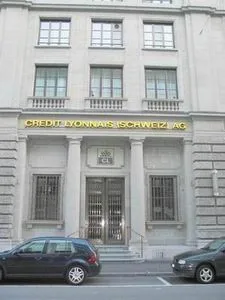
The European Union has reached an agreement with Switzerland that income received from funds placed on deposits in Swiss banks will now be taxed. As Газета.Ru reports, in return Switzerland will join the Schengen area.
The EU has been trying for about ten years to create an absolutely transparent fiscal space - without offshore zones, tax evasion and money laundering. For this, it was not enough for Europeans to agree among themselves; they had to convince third countries, primarily Switzerland, to join in some form. Bern, however, could not agree: this would destroy the secrecy of bank deposits, on which the country's economy largely depends.
But after many years of seeking compromises, the parties have agreed. Switzerland retains its banking secrecy and joins Schengen, while the EU receives taxes on dividends received by its citizens from deposits in Swiss banks. This will be done through the so-called withholding tax, well known in many offshore jurisdictions. Previously, in Switzerland itself, it was applied only to deposits in Swiss francs: according to the legislation of the world's banking capital, income received by an owner of funds placed in a bank account in local currency was subject to a 35 percent tax. However, the bank itself acted as the tax agent, transferring the necessary amount to the Swiss tax authorities from its client's account, while maintaining the taxpayer's anonymity.
Actually, the deal between Switzerland and the EU was not about Switzerland at all, but about Luxembourg. This country, which has long been a member of the European Union, also has a strong banking system, and therefore did not want the Alpine competitor to have an advantage. So the parties had to agree that deposits by Europeans in Luxembourg would also be subject to the withholding tax.
Now the EU and Switzerland must conclude several bilateral agreements. First, on Bern's accession to the Schengen Agreement, with the exception of the provision that provides for cooperation in combating tax evasion: this is not considered a crime in Switzerland for non-residents and will help the country's banks keep professional secrecy. Second, in exchange for this, Switzerland will introduce a withholding tax on accounts belonging to EU tax residents.
Bern has secured the right not to provide name-by-name lists of deposit holders. A similar concession was made for Luxembourg. Switzerland also had to agree to cooperate with the EU on other issues: customs duties, VAT, excise taxes on alcohol and tobacco, but managed to negotiate non-accession to any agreements affecting the taxation of income and profits of individuals and legal entities. In addition, Switzerland will have to pay, over five years, start-up funds to address socio-economic problems in EU countries - 1 billion francs ($774 million). After this period, Switzerland will pay $153 million annually.
It is expected that Switzerland will ratify the agreements within a year and a half, and the agreement itself will enter into force in 2006. However, it is unlikely that Europeans will have to pay taxes on accounts in Switzerland. The fact is that a similar agreement has been in effect between Bern and Washington for several years already: the American authorities agreed with the Swiss that Americans would be prohibited from anonymously conducting transactions with US securities using funds from accounts in Swiss banks. If this happens, bankers must report the identity of the depositor to the US. So, since then, when opening an account, the Swiss ask (without requiring either a passport or a residence registration) whether their client is an American or a US tax resident. And only if the answer is positive do bankers remind the client that they will inform the US tax authorities if he works through his account with the US stock market.