
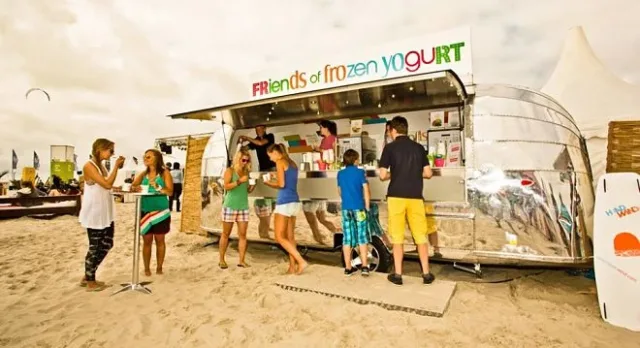
Yet, as 'DE magazine Deutschland' notes, today's street food is something more than just a fried sausage eaten at a counter. We owe the current revival of interest in street food to the USA. First, food trucks or 'food on wheels' literally flooded New York, and since 2013 a similar picture could already be seen in Berlin-Kreuzberg: 'Street Food Thursday', held weekly at the ninth market pavilion, now attracts several thousand guests. The same can be observed during Hamburg's 'Street Food Sessions' or Cologne's 'Street Food Festival' – unpretentious but high-quality food in public spaces.
Street food spots and 'food on wheels'
are conquering German cities
An ordinary hot food stand gives the cook freedom, mobility, and independence. And simple dishes guarantee guests regional specificity and careful hand preparation. Excellent examples are 'Banh Mi' from Vietnam – a baguette made of wheat and rice flour, filled with lightly fried meat, vegetables, and seasoned with cilantro. Or 'Gua Baos' – a Taiwanese version of a burger. Cheese noodles 'Käsespätzle', however, are no less in demand than pork that has been smoked for 14 hours.
During street food fairs, people not only eat but also show how it's done. After all, sandwich-making companies, 'camp kitchens', and regional burger stalls have existed in German cities since the early 2000s. But unlike simple fast food, street food is not just eaten; it serves to make the lunch break useful or to quickly refuel on the way from point A to point B. The main thing is the conscious enjoyment of eating.
Equally important is communication during and about food. Largely for this reason, many street food markets operate until late evening. Essentially, they serve the function of bars or restaurants. Only much more democratic, because the client's appearance and the size of their wallet do not matter here. On the street, only one thing matters – the feeling of hunger.