
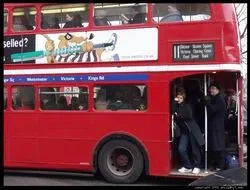
With their attempted attack, the terrorists clearly demonstrated to all residents of Europe: we will blow you up when and where we want, and you will not be safe anywhere. It would be logical to assume that the failed attempt to strike London and the three arrested terrorists should have given the British strength. However, the human psyche rarely obeys logic; fear is spreading across Britain.
The scene that a lucky few had the chance to observe on the lawn in front of Buckingham Palace is worthy of the brush of a Victorian-era artist: men in frock coats, women in wide-brimmed hats with feathers trembling in the light July breeze, nearby - a group of people in saris and burnouses à la Commonwealth, and in the center of the composition with an escort of Scottish halberdiers - Her Majesty Queen Elizabeth II of Britain, hostess of the traditional weekly Royal Garden Party, introduced back in 1860 by Queen Victoria. The Queen strolls along a path among rose bushes to the tea tent, dispensing gracious smiles to her subjects. Luxurious, traditional... so London. So British. "Rule Britain, God save the Queen." Thursday, July 21...
The majestic picture of the second half of the 19th century would have been ideal if not for the soundtrack accompanying it: with all the tactlessness characteristic of our time, the peace of the House of Windsor is disturbed by sirens wailing in the city, the roar of police helicopter rotors flying low over houses, distant explosions. The Queen is pale, and her green dress only emphasizes this pallor. But her hand holds the cup firmly, without trembling; she pays no attention to the inappropriate sounds and says nothing about terror or politics in general. The Queen drinks tea. She is doing her duty - like any of her subjects, in her place. She demonstrates calm to the whole world, and this is exactly how all Londoners try to behave - without fear and without panic.
But the truth is that nervous tension is growing behind the facade of British composure. On July 7, four bombs were detonated: three in the underground, one on a bus. Two weeks later, the terrorists tried to detonate four more, and again, as if mocking the British, three in the underground and one on a bus. The terrorists' mad "crusade" (both times the sites of the attacks formed a semblance of a cross on the city map), as if declaring: "We are here, among you, and you cannot hide from us. Hide, try to protect yourselves - we will find you all and blow you up."
Who were those four scoundrels who, without hiding from cameras, went to blow up peaceful residents of the British capital? Police arrested several people in London, Birmingham, and Leeds. Terrorists? Unknown. According to rumors, two more bombs were found in the underground, but these are only rumors... The young Brazilian killed by five shots to the head had nothing to do with the explosions, as Scotland Yard admitted - he simply got caught in the crossfire. Whom to believe, how to distinguish rumors from facts? Unknown.
Now Londoners get nervous when they see a wallet left behind on the street. Or a backpack standing on a station platform. Or an overstuffed shopping bag. Everyone feels the consequences of this tension, but above all, the Muslims living in the British capital. Londoners glance suspiciously in their direction, and it doesn't matter whether the dark-skinned person with Eastern features is wearing traditional Eastern attire or a shabby T-shirt and jeans. After all, those four who blew themselves up on July 7 along with some fifty Britons were not such traditionalists - one wore a white baseball cap, another a T-shirt with the inscription "New York," which in the context of subsequent events sounded sinisterly mocking...
The first attack, which claimed lives, shocked. The second, which caused no casualties, sowed fear. What can the third bring? And will there be one? Perhaps those bombs that the police seemingly found are actually the third, prevented attack? How many more will they foil and, most importantly, how many will they fail to foil? Terrorist attack, terrorist attack, terrorist attack - this word rattles over London like the rapid-fire chatter of a machine gun. It is on everyone's lips - they utter it, hear it, read it, feel it.
Should London from now on get used to living in constant tension? British newspapers are full of reminders of the "blitz times" - the German bombing raids during World War II. London Mayor Ken Livingstone also allowed himself to recall the recent past - the massive terror of the Irish Republican Army. After the July 7 explosions, Livingstone said: "London is a whole world in one city." Of course, he meant the positive aspect - the multicultural, open society of the British capital, tolerant, peaceful, free. But now this phrase can be understood differently - are the problems of the whole world reflected in London society? Are the underground explosions not a reaction to world politics? Is it not a retaliatory strike by Al-Qaeda, revenge for the occupation of Iraq?
The investigation suspects that the masterminds of the attacks are in Pakistan, but the version that the "puppeteers" who sent the four suicide bombers "on the job"... do not exist as such at all is not ruled out. A year and a half ago, after the explosions in Madrid on March 11, 2004, investigators were looking for that very "evil genius" commanding the terrorists. It was assumed that it was an Al-Qaeda emissary killed in Saudi Arabia, but this version raised doubts.
Today, Spanish criminologists are inclined to believe that there was simply no mastermind. There was a group of young people who had been brainwashed, zombified by hateful sermons, and it was not difficult for them to find a reason to "punish the infidels." If not Iraq, then Afghanistan; if not Palestine, then, at worst, dismissal by an infidel employer.
The same thing is now assumed by some London specialists: there were no couriers from abroad with the infamous "black mark" in their pockets, sending suicide bombers on missions at the will of Al-Qaeda. There were young guys, natives of Great Britain, experiencing a severe identity crisis. On the one hand, the Western way of life, Western morality and Western values, on the other - the strictly religious upbringing of emigrant parents, sermons in the mosque about "cursing the infidels". And also - the image of a "hero-martyr", who lays down his life for his brothers in faith, meticulously constructed by Islamist psychologists who received a good education at the best Western universities. "Second-generation terrorists are clever psychopaths, rational nihilists, who deify death and the longing for death, while precisely calculating whom, when, and with what effect they will kill," writes the Orientalist specialist Adam Gofnik on the pages of The New Yorker.
To make an explosive similar to the one used in London, one does not need to be a certified chemist or have access to closed laboratories. The explosive officially used by the terrorists bears the abbreviation TATP, but IRA militants gave it the name "devil's mother". It is made from materials that can be bought in any hardware store (sulfuric acid, acetone) and is known for its particular sensitivity to shocks.
To prepare a "son of Allah" who is especially sensitive to real and imaginary "blows", neither a training camp in the Hindu Kush mountains nor millions in subsidies from the malicious sheikhs of Saudi Arabia is needed. All that is needed is a small Islamic community like the one operating in Dewsbury (where one of the dead terrorists, Mohammed Sidique Khan, son of Pakistani immigrants, came from), the Tablighi Jamaat, which sends students to Pakistani Islamic schools. All that is needed is looming unemployment and a skillfully stoked resentment against non-believing neighbors who do not want to voluntarily accept the only true teaching of Muhammad. And the "human component" of the bomb is ready.
And even the fiery cross, traced twice in half a month by terrorists on the map of London, is explained quite simply and rationally from this standpoint: the cross shape is best suited to paralyzing the work of city transport.
Boris NEMIROVSKY.
«Rosbalt»