
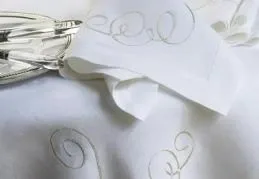
Thanks to a tablecloth, any feast can look festive
Every girl, regardless of which family she was born into, had a dowry, which necessarily included table linen, be it towels, tablecloths, napkins, or bed linen, which in most cases were woven by the bride.
Let's talk about napkins. The explanatory dictionary gives the following definition: a napkin is a cloth used for wiping lips; a small tablecloth. The history of napkins goes back to ancient times. Even in Ancient Greece, fig leaves were used as napkins for wiping lips after a meal. And in Ancient Rome, linen napkins were already used. A little later, in the Middle Ages, napkins gained popularity among Europeans. Especially in those countries where men preferred to wear long beards and luxurious mustaches.
Today, not only cloth napkins but also paper ones are used for table setting. Cloth napkins are usually not used for wiping lips; they are used to cover the chest to protect clothing or placed on the lap.
Another, undoubtedly important element of table linen is the tablecloth. Now in stores you can find a huge assortment of tablecloths of different colors and textures. But the most classic material for their manufacture remains cotton or linen. Linen is a natural, very dense, durable fabric that is good in every way, but has one significant drawback – it wrinkles easily. Therefore, modern tablecloths are made mainly from blended fiber fabrics, for example, linen with cotton or linen with synthetics.
Cotton, and in some cases linen, tablecloths with beautiful convex patterns are called damask. Such tablecloths are used on special festive occasions. As a rule, they are either white or any light tones.
Colorful tablecloths can be used for a tea or dinner table in an original style. On a bright, variegated tablecloth, plain dishes look best. Do not forget that tablecloths and napkins are an important decorative element of any table and should be chosen according to the occasion or purpose of the upcoming feast.