
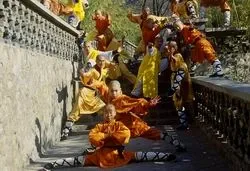
The British newspaper The Guardian reports that the monks, who previously “passively watched as their signature martial art brought millions of dollars to the film studios of Hollywood and Hong Kong,” are now planning to make feature films themselves, which, along with colorful fistfights, will also include an explanation of the spiritual foundations of kung fu and wushu.
The fact is that the monks are dissatisfied not only with the fact that money for such a promoted brand as the name of their shrine goes to people far from Buddhism, but also that the very super-idea of Eastern martial arts is distorted in order to attract the maximum number of viewers with popcorn.
The abbot of the monastery, Shi Yongxin, himself wants to try his hand as the producer of the first real Shaolin action movie. The planned budget of the film “The Legend of the Warrior Monks of the Shaolin Temple,” which tells the story of three dozen highly spiritual fighters who successfully resisted pirates in the 16th century, according to the plan of the spiritual mentor of Shaolin, will exceed $20 million, which, he hopes, will make it possible to attract not only ordinary monks but also famous actors to participate in the filming. The film is scheduled for release in 2008, and the monastery hopes to receive millions in profit from its distribution.
It seems that the issue of profits and protecting their brand has become one of the main concerns for the Shaolin monks in their secular incarnation. The world-famous monastery was one of the first in China to switch to capitalist tracks and actively uses its novices and monks to attract “non-Buddhist” funding. The monks demonstrate their famous wushu styles during performances, tour the world, and the monastery has established a division called Shaolin Culture Broadcast Company, which produces and sells cassettes with films about Shaolin.
And two years ago, the enterprising Shi Yongxin decided to monopolize the right to use mentions of his monastery's name in commercial products. This initiative was supported by the Chinese authorities, and soon a special company was created that received all rights to the “intellectual property” associated with the name of the Shaolin Monastery, and the responsibility to ensure that this property was not encroached upon in other countries. Moreover, the closest attention was paid to developed countries: the USA, Germany, Japan, and Australia.
In 2003, the company began its activities by registering 43 trademarks and 29 industrial designs using the name “Shaolin” in more than a hundred countries. This created a legal basis for suppressing the illegal use of the monastery's name in trademarks. Not surprisingly, within a few months the monastery received its first profit. According to Chinese fiscal authorities, the first income from transferring the right to use the monastery's name to one of the Taiwanese film studios amounted to 380 thousand yuan (more than $45 thousand), and from it, Abbot Shi Yongxin paid more than 20 thousand yuan in taxes to the local tax administration.
The new grandiose plans of the enterprising abbot, who skillfully combines commercial designs with regular statements about the need to preserve the spiritual foundations of Shaolin novitiate in their pristine and immaculate form, could very well turn the famous monastery into one of China's major taxpayers.