
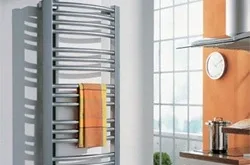
To prevent this, bathrooms are equipped with towel warmers, also known as design radiators.
Currently, design radiators are one of the most common and sought-after products on the country's market, as they are convenient, safe, and can fit into any interior. Design radiators can be divided into three groups:
- Steel tubular radiators. Suitable for any room. Made from round steel pipes;
- Floor-mounted convectors. Used for heating shops with display windows, as well as rooms with large windows;
- Towel warmers. They are the most common type. Replaced old II-shaped radiators. Manufactured in various shapes and sizes and suitable for almost any room and interior.
In addition, design radiators also serve as a radiator in the bathroom, constantly maintaining a comfortable temperature inside the room. Bathroom heating devices come in various types – water, electric towel warmers, and combined units.
Electric design radiators are designed for wall mounting and operate from a 220V mains supply. Such towel warmers can be installed in the bathroom as well as in the hallway or kitchen. At the same time, electric devices also allow heating the room and feature a pleasant appearance, manufactured in various color options. The advantage of this type of towel warmer is their relatively low market price, so most residents can afford this type of bathroom heating radiator.
Almost all towel warmers are made of steel or brass pipes. These devices are the least demanding to install. All they need is a moisture-resistant socket.
As for water design radiators, when installed in a hot water supply system, they experience enormous loads, as well as exposure to rust and scale that accumulates on the inner surface of the pipes. To extend the service life, foreign manufacturers of such equipment have started using plumbing brass and also equip water towel warmer models with a built-in heat exchanger.
_