
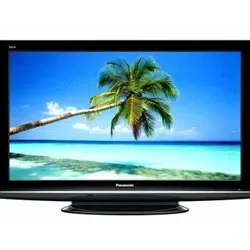
On such a screen, a movie about your vacation will look much more exciting
However, that is not the main thing. More importantly, LCD televisions quickly gained popularity. They have many attractive advantages, and that explains everything. LCD televisions have small thickness and weight. And this, without a doubt, plays a significant role. For example, LG televisions with these characteristics are in high demand. Such a TV can be placed anywhere: built into furniture, placed on a stand, hung on a wall.
The service life of such televisions is very long. 50-75 thousand hours – that is the operating life of televisions and monitors according to manufacturers. Decades! And power consumption is minimal.
Excellent contrast, color reproduction, exemplary image geometry and maximum detail, no flickering or glare on the screen – these are not all the advantages. LCD displays have no harmful radiation that negatively affects human health, which will be appreciated by people who care about their health. LCD televisions have excellent image quality. The viewing angle has increased, at which the contrast level does not decrease. For example, in new televisions it can reach 170 degrees, which allows you to enjoy a high-quality picture from almost any point in the room. True, LCD televisions with a good viewing angle are much more expensive.
One could go on listing the advantages of this type of television for a long time. However, let's not be disingenuous. LCD televisions also have their drawbacks. Image contrast is achieved only at the native resolution. A small color gamut (cathode-ray tubes and plasma televisions are still more effective in this regard). Uneven brightness and backlighting, resulting in visible gradient bands – another drawback of some LCDs.
However, every year LCD technologies improve, getting rid of the weaknesses inherent in older models. An example of the modernization of LCD televisions is the following fact. In older models, after some time of operation, pixels would permanently go out or light up. The reason was burnt-out transistors. Modern monitors do not have this problem. Nowadays, there are no longer restrictions on display sizes (monitors are produced not only in the traditional 4:3 format, but also in widescreen 16:9), and the viewing angle without reducing contrast has significantly increased.
It should be noted that nowadays, when LCD televisions were put into mass production, they are not very well protected from damage. Thoroughly inspect the TV when purchasing. But nowadays, LCD panels are considered the main direction in image transmission technology – and everyone will agree with this. The future belongs to them.