
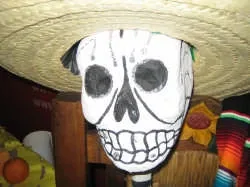
Some peoples are not afraid of death - they laugh at it
Co coffin with music
Night, stars, flowers. People dance to a catchy guitar. This is the Velorio ball. It is organized by Paraguayan Indians in honor of a glorious event, namely... the death of a beloved family member. In the center of a large room stands a wooden coffin decorated with fresh roses. The Indians dance around it until dawn. This is how they see off a loved one to a New Life.
In the birthplace of jazz, New Orleans, some claim that this musical style originated at funerals. It has long been the custom that in the American South, no important event in a person's life, including their passing, was without music. After the church service, the deceased was accompanied to the cemetery by a whole orchestra of saxophonists and trumpeters. The musicians played major-key melodies, such as lively marches, to make the farewell to the earthly world as cheerful as possible. Following the procession was a crowd of thousands of townspeople. And a mournful funeral turned into a bright show, a live jazz concert.
In Bali, an island of emerald hills, azure sea, and pink sky, funerals are a big family celebration. When a person dies, their soul is freed from heavy earthly shackles and inevitably goes to heaven. In the view of locals, hell simply does not exist. Mourning the deceased is the height of impropriety and almost a sin. Balinese hold lavish funeral processions. A long line of people stretches down the street, above which rises an impressive painted palanquin tower with the body of the deceased. The people have fun, joke, sing songs. They even specially hire performers to "energize" the crowd.
"Dead Souls" African-style
In Africa, the inhabitants of the afterlife... are also mortal. Spirits that are not worshiped by earthly descendants are simply expelled from the kingdom of the gods, condemning them to final death. That is why the cult of ancestors is so important for Africans.
The Yoruba people of Benin believe that the souls of the dead can also be traded. A sorcerer, making a deal with the devil, sells not his own soul, but someone else's!
In Polynesia, life in the afterlife is directly opposite to earthly existence. The dead wear clothes inside out, walk upside down, stay awake at night and sleep during the day. Otherwise, the life of the deceased is almost no different from that of ordinary people. The dead hunt, build houses, marry and give birth, even have children.
In the religious traditions of the Andean Quechua Indians, entry into heaven is largely reminiscent of customs red tape when crossing a state border. The guards of the afterlife check the "luggage" (jewelry, gold) with which the relatives have provided the deceased, then ascertain whether all burial rites were performed correctly. After that, they look into a special book of fates, in which all sinful and pious deeds of the person are recorded. Having verified the "reliability" of the deceased, they finally charge a fee... in cash (Indians always put a bag of coins in the coffin of the dead).
Can-can at a wake
On November 1, All Souls' Day, many peoples commemorate the dead. Some treat this date with due seriousness and spend most of the day in church or at relatives' graves, immersed in deep, often sad thoughts. But often on this day, as if wanting to tease treacherous Death, people organize grand carnivals and go on a spree.
In Mexico this holiday is called Dia de Los Muertos, or Day of the Dead. Market stalls and store windows are full of various toys and souvenirs with "afterlife" symbols: dried heads, stuffed dead people, skeleton dolls with accompanying coffins (they are very popular with local children), there are even radio-controlled models. People hang colorful ribbons and garlands in their homes, set a festive table—by the way, not only for the living. It is also customary to give each other sugar or chocolate name skulls and dedicate poem-obituaries. By evening, a carnival procession of costumed "evil spirits" begins, led by Catrina. This is Death itself, a bony old woman, but not in a gloomy cloak and with a scythe in her hands. Catrina wears a luxurious 19th-century dress with lace and a crinoline skirt. On her skull, Death wears a wig with curls and a wide-brimmed hat with lush feathers.
This "cheerful lady" is truly a folk heroine in Mexico; she can often be seen in paintings and engravings by such famous artists as José Guadalupe Posada, Diego Rivera, Frida Kahlo, Manuel Manilla, and others. The "optimistic" perception of death was passed down to Mexicans from their ancient ancestors—the Aztecs and Maya. The former combined bloody sacrifices of brave warriors and beautiful maidens with lavish feasts and fiery dances. The latter, holding "matches" of throwing a ball into rings, rewarded the winners... with execution. The Indians voluntarily went to death in anticipation of their union with the Sun.
In Haiti, on All Souls' Day, people on the streets hold a real sabbath. The air is intoxicating, drums rumble, rum and pepper vodka flow like rivers... Haitian followers of the Voodoo cult, with faces painted white, dance almost to the point of madness and engage in horrifyingly debauched amusements. They seem to transform into Baron Samedi, who personifies Death among Voodooists. His image is quite colorful: a black man in a black top hat with a black smoking pipe (sometimes with a snake around his neck). He drinks without drying out, engages in countless sexual affairs, loves to have a good time, for example, by arranging someone's absurd demise.
Baron Samedi is the chief among the spirits of cemeteries and graves of the Gede. Haitians honor him as one of the most important deities in the Vodou pantheon. And at the same time, people often joke about his earthly "weaknesses". Haitians, like other southern peoples, have a rare ability to treat death philosophically and with humor, without a trace of fear or trembling.