
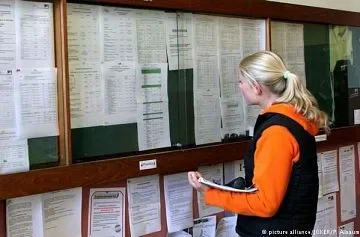
The life of foreign students in Germany is initially complicated by mysterious abbreviations at universities
B.A. and M.A.: bachelors and masters
As Deutsche Welle notes, 90 percent of all specialties at German universities have been converted to the Bologna system of education – bachelor's and master's degrees. Graduates of these specialties leave the university with a bachelor's or master's degree. Alongside Bachelor of Arts (B.A.) and Master of Arts (M.A.), there are other options.
For example, in chemistry one can become a Bachelor of Science, and in mechanical engineering – a Bachelor of Engineering.
s.t. or c.t.: when to come to the lecture?
You arrived at the lecture on time, but the hall is empty? In that case, you probably missed the abbreviation "c.t." in the schedule. This abbreviation – from the Latin "cum tempore," meaning "with time" – indicates that the lecture will start 15 minutes late. If the lecture schedule shows the abbreviation "s.t.," it means the lecture will take place exactly at the stated hour (from the Latin "sine tempore" – "exactly, without delays").
KVV: comments on seminars
It's hard to imagine what will be discussed in lectures with names like "Stochastics II." In this case, the KVV (kommentiertes Vorlesungsverzeichnis) will help you. This is a list of subjects with detailed comments on their content. The KVV also contains a list of required literature and information about exams at the end of the course.
BPO and MPO: plan everything!
A first-year student would do well to look into the study plan and exam plan – Prüfungs- und Studienordnung. Such plans exist for both bachelor's specialties – BPO, and master's specialties – MPO. By studying them, you will better understand how to best plan your studies, which lectures to sign up for first, and when to do an internship.
Credit Points: points for studying
German universities widely use a system with credit points. They are awarded based on the number of academic hours and the volume of material studied. A student collects "credit points" from the first day of study until exams are passed. Their number affects the final grade on the diploma.
JK32/102 or Wiwi-Bunker: gazebo or bunker?
Designating lecture halls at universities is a whole science. Beginners should always have a building plan with them. And the most common designations of lecture halls are recommended to be memorized from the first days of study. Moreover, students themselves often give their own names to many lecture halls – it's memorable and easy to use.
For example, at the Free University of Berlin, humanities students study in a hall they have dubbed the "rusty gazebo" (Rostlaube). And in Hamburg, economics students study in the "bunker" (Wiwi-Bunker).
STABI and UB: about books
Going to the library is an integral part of student life. The selection of books is wide both in state libraries (Staatsbibliotheken – STABI) and university libraries (Unibibliotheken – UB). By figuring out from the very beginning of your studies how to find and order a needed book in the electronic database, you won't have to spend much effort on searching later.
12979078: why does a student need a personal number?
The student registration number in Germany (Matrikelnummer) is roughly the same as a student ID number. You should always have it on hand to get a library pass or find your grade on the list of test results. The number is on the ID that students receive upon enrollment.