
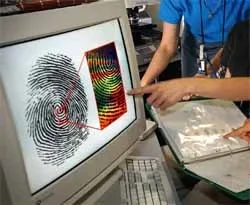
The program called VIS (Visa Information System), adopted by Brussels, will come into effect from the new year 2008. It will be introduced in stages. First, in the most problematic regions of the planet, which include Africa, the Middle East countries, and certain states of the Pacific region. Then, after 18-20 months, the turn will come to North America, Australia, and European countries outside the EU, including Russia and Ukraine. The program envisages complicating the procedure for issuing Schengen visas (today the Schengen area includes 15 European countries). All applicants will have to apply to diplomatic missions of EU states in person (today, for example, up to 80% of citizens can delegate the paperwork to travel agencies). Attached to applications will not only be their photographs but also fingerprints.
These biometric data will be entered into a common European computer database, which, according to the creators of VIS, will put an end to the 'unhealthy situation' where people refused at one embassy apply to another, and the runaround continues until they find a desired loophole somewhere. The introduction of VIS will cost the European Union €150 million. In addition, each EU member state must bear additional costs for training and hiring staff, as well as equipping consulates with fingerprint scanners.
As the Computer Inspection believes, the new electronic barrier has a number of significant drawbacks. According to Swedish experts, up to five percent of all visa applicants do not have the necessary papillary patterns on their fingertips, or these lines are so weak that it is impossible to identify a person from them. Consequently, it will be necessary to introduce a parallel tracking system, or simply refuse these five percent visas. Moreover, the electronics operate with a one percent error rate, so computers will perceive hundreds of thousands of law-abiding citizens as criminals listed in the European Union's 'blacklists'.
Finally, all EU member states will have to spend significant funds on hiring additional staff and expanding premises for consular departments. Today, the majority of employees in consular departments at EU embassies abroad are locally hired staff 'from the natives'. After a series of scandals with forged documents and trading in entry permits to the EU, it was decided to get rid of local employees and hire only citizens of the visa-issuing country.
There is another controversial aspect of VIS. It is an invasion of the privacy of third-country citizens, not restricted by existing legislation. Information obtained from a person during a visa application will 'wander' throughout the entire united Europe, ending up on the desks of police officials, migration service employees, and other authorities. While such actions regarding residents of EU member states are clearly regulated, citizens of other countries are not protected by law.
"We view such practice of collecting data on people with skepticism. First of all, it is necessary to clarify what information and for what purposes the police can use," commented the new EU visa rules the Director General of the Swedish Computer Inspection, Jöran Gräslund.
Which countries are in the Schengen area
A Schengen visa is valid in the countries that signed the Agreement on the Abolition of Passport Customs Controls in 1985 and subsequent states that have acceded to it. Today, the Schengen area includes Austria, Belgium, Germany, Greece, Denmark, Iceland, Spain, Italy, Luxembourg, Netherlands, Norway, Portugal, Finland, France, and Sweden. Thanks to this agreement, foreign tourists who obtain a Schengen visa can move freely within the above-listed countries. It is planned that another 10 EU states (Hungary, Republic of Cyprus, Latvia, Lithuania, Malta, Poland, Slovakia, Slovenia, Czech Republic, Estonia) will join Schengen by December 31, 2007. Schengen countries, except Norway and Iceland, are members of the European Union. Two EU members (the United Kingdom and Ireland) remain outside the Schengen area.
Aleksei SMIRNOV.
Novye Izvestia