
In Italy, before a meal, an enormous platter with wafer-thin slices of sausage is usually served as an appetizer. Experts claim that the thinner these slices, the more aromatic and tasty they are. So what is on such a "sausage platter"?
First of all, there will be dry-cured spiced salami. Pork and beef are generously seasoned with garlic, chili, fennel, and other herbs, and then the prepared mince is dried in the open air. Over millennia of history, dozens of salami varieties have appeared around the world: with all sorts of herbs, from different meats, and even with camembert cheese. Among the most famous Italian varieties are Genoese with red wine and black peppercorns, and the spicy one with the eponymous pepperoni pepper.
Another famous Italian sausage is associated with Bologna. "Bologna grassa" ("Fat Bologna") is what they say about this city in the Emilia-Romagna region. Many dishes associated with Italian cuisine were born here. Among them is mortadella - a cooked smoked sausage with large fat eyes. It is most often made from pork, but also uses beef, veal, and offal. Cut into thin, almost transparent slices, it is served as an appetizer; thicker pieces are suitable for pizza or become a filling for tortellini. Sometimes in Italian stores you can find mortadella-like "loaves" of sausage with cloves and cinnamon - a signature product of another city, Amatrice.
Your products will be preserved by hladon
• Today, refrigerators help us preserve meat and other perishable products. And it is important to have a reliable supplier that ensures the reliable operation of your refrigeration equipment. After all, refrigerators and air conditioners need quality refrigerants – freon, hladon, refrigeration oil. Therefore, it is very important to have a reliable supplier of these products, which will ensure the freshness and preservation of your goodies.
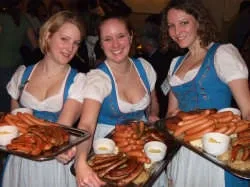
Germany is called the country of sausages and frankfurters. Describing all varieties of German meat delicacies would require a doctoral dissertation. There are thick long fried bratwurst, Schweinswurst - pork sausages, and about one and a half thousand other sausages. In Bavarian land, in Munich, the delightful Weißwurst - "white sausage" was born. Unlike most sausage relatives, which have a thousand-year history adorned with legends and lost in the depths of centuries, these German sausages appeared relatively recently - in 1857. They were invented in one of the beer halls on the central square of the Bavarian capital. The unusual white snack, especially with a special sweet mustard, not only pleased visitors but also became a true symbol of Bavarian cuisine. The secret recipe of the new delicacy is three-quarters veal and one-quarter pork. The meat is turned into a creamy mince by hand using special wooden mallets. Lemon zest, parsley, and white pepper give the delicacy special refined notes.
Guests of the Bavarian capital simply must order these most tender, slightly sweet sausages. Moreover, they should be eaten not with bread, but with a pretzel - a hot, piping hot pretzel with a golden crispy crust covered with large salt crystals. With such a snack, you won't notice how you finish a liter or two of beer. After all, it is customary to drink the hop drink here in Maas - huge liter mugs made of thick glass.
In Spain, they make chorizo - a spicy pork sausage of bright red color. Usually, traditional chorizo is rolled into a ring, but sometimes you can also find short thick "frankfurters". The characteristic color is obtained because they are generous with paprika: you should pay attention to the packaging - a spicier sausage will be indicated by picante, a milder one by dulce, because what is good for a Spanish stomach gives us gastritis. Gourmets will identify chorizo by the smell that appears after smoking the sausages in oak barrels. Residents of the Iberian Peninsula like to add it to beans, rice, and scrambled eggs.
Despite the fact that chorizo is associated primarily with Spain, its varieties are also made in Portugal and in the former Spanish-Portuguese colonies of Central and South America, and India. However, the Indian version is so far from the original that hardly anyone remembers its origin.
Sausages were invented not only in European countries. In the East (and also among Bulgarians, Greeks, Serbs, Croats since the time of Ottoman rule) pressed mutton or beef sausage with fat, sujuk, is popular. According to legend, it became flattened because nomads stored it under the saddle. Nowadays, no one turns to dzhigits for the production of such sausage, but the traditional shape is maintained. The minced meat seasoned with pepper, cumin, garlic from salted meat is placed in casings, then dried, air-dried, smoked. In Kazakhstan, Uzbekistan, Kyrgyzstan, sujuk is made from cheap parts of a horse carcass, while the nobler meat goes to the traditional festive dish - the local delicacy sausage kazy. Natural horse intestines are stuffed with the best pieces of meat with fat and spices and boiled, smoked, or air-dried.