
Refugees, migrants, asylum seekers – even experts sometimes confuse these terms. What is the difference between migrants and refugees? Who has the right to asylum in Germany, and who must leave the country? How does the deportation procedure for foreigners work? Deutsche Welle has compiled answers to these and other questions.
Migrants
The term "migrants" is used to refer to people who have changed their place of residence. This movement can occur both within a country and from one country to another. Migration is usually spoken of when a person makes the decision to relocate voluntarily – for example, to improve their living conditions, but they are not in danger.
Refugees
Unlike migrants, refugees are legally considered persons who are entitled to international protection under the Geneva Convention on Refugees. According to this document, any person who is persecuted in their home country "for reasons of race, religion, nationality, membership of a particular social group, or political opinion" and therefore must leave it may seek asylum in another country.
The convention does not yet apply to so-called "climate refugees" who have been forced to leave their permanent place of residence due to the effects of global warming.
Asylum Seekers
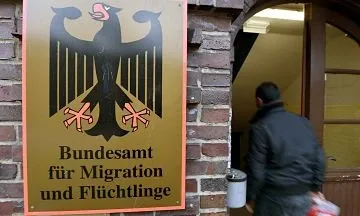
Asylum seekers are people who have submitted an application for asylum and are awaiting a response from the authorities of the host country. In Germany, the Federal Office for Migration and Refugees (BAMF) decides on granting refugee status. Until a decision is made, people can only live in refugee reception centers and are not allowed to work.
Who has the right to asylum in Germany?
In Germany, those persecuted for political reasons are protected by the country's Basic Law and have the right to political asylum. Those fleeing war and violence may be granted asylum on humanitarian grounds, which also allows them to obtain official refugee status. In both cases, the foreigner receives the right to stay in Germany for three years, after which they can apply for a permanent residence permit.
At the height of the migration crisis, citizens of Syria and Eritrea fell under these categories. However, in November 2016, the Higher Administrative Court of the federal state of Schleswig-Holstein ruled that Syrian citizens can only expect subsidiary protection. This status is granted for one year with the possibility of extension and does not include the right to family reunification during the first two years.
Which countries are considered safe?
Initially, applicants from so-called "safe countries of origin" have little chance of obtaining asylum in Germany. According to the law, countries are considered safe if "neither political persecution nor inhuman or degrading punishment or treatment occurs."
However, this does not mean that an asylum seeker from such a country will be immediately deported from Germany: if the foreigner provides evidence of political persecution, it is examined on a case-by-case basis.
In general, applications from citizens of "safe" countries are usually rejected. In 2017, heated debates erupted in Germany after the authorities recognized Afghanistan as a safe country of origin and began deporting Afghan asylum seekers to their homeland. This decision sparked strong protests from human rights activists.
What happens if an applicant is rejected?
Since 2016, officials at the Federal Office for Migration and Refugees have been processing applications from migrants who have little chance of obtaining asylum on an accelerated basis. Their applications are processed within one week. In the event of a negative response, the foreigner faces deportation from Germany: they must leave the refugee reception center within three weeks.
However, the BAMF decision can be challenged in court. At the same time, rejection of asylum does not automatically mean loss of the right to stay in the country. For a number of reasons, an applicant can legally avoid deportation.
For example, if the refugee has no passport or their state of health does not allow them to travel, they are granted a temporary suspension of deportation (Duldung). This also applies to minor asylum seekers who entered the EU unaccompanied by adults.
Who are "contingent refugees"?
According to German law, "contingent refugees" (Kontingentflüchtlinge) are refugees from crisis regions of the world who have been accepted by Germany as part of international humanitarian aid acts. Specifically, this refers to certain groups of foreigners who have received this right for humanitarian reasons or due to "political interests of Germany."
In 1975, about 30,000 Vietnamese who fled South Vietnam after the establishment of a communist regime there received the status of "contingent refugees." And since the 1990s, this status has been granted to emigrants of Jewish origin from the republics of the former USSR.
What does the Dublin Agreement entail?
The granting of asylum in the European Union is regulated by the so-called Dublin Agreement, concluded in 2003. Its main principle states: an asylum seeker's application must be examined in the first EU country whose border they crossed.
Recently, this rule has repeatedly become the object of harsh criticism – primarily from Italy and Greece, which have borne the main burden of receiving refugees.
In the fall of 2015, the EU launched a program to redistribute refugees: according to the European Commission's plan, 160,000 people who entered Italy and Greece were to be sent to various European countries. They were to be resettled across all EU countries according to quotas for each state. However, many EU member states use the Dublin Agreement as a pretext not to accept asylum seekers.