
The environmental picture of German cities is worsened by the use of private transport
Ten of the twelve German cities – Berlin, Bremen, Frankfurt, Hamburg, Hanover, Leipzig, Mannheim, Munich, Nuremberg, and Stuttgart – showed a result of 'above average' according to these criteria, and only two cities, Essen and Cologne, demonstrated average results compared to other European cities.
As 'Russkaya Germaniya' writes, by all criteria the German cities turned out to be very similar to each other, so that it was impossible to establish a connection with the final result of such factors as city size, its geographical location, number of industrial enterprises, and population income level.
German cities achieved the best results in economical water use and building insulation. Thus, the annual water consumption per person in Germany is 59 cubic meters, which is almost two times less than the European average. This is mainly explained by the excellent quality of the water pipe network. In Germany, only 8% of water is lost due to leaks, while in Europe the average is 23%. Thanks to effective insulation from K-Flex, Germany spends 20% less energy on heating premises than its European neighbors.
But in German cities, as it turned out, alternative energy is still poorly developed. Only 3% of energy is generated from renewable sources, while in European cities with the same income level, the share of renewable sources in energy production is 12%.
However, Germans significantly outperform their European neighbors in waste recycling. In German cities, waste per person is 528 kilograms (European average 512). At the same time, Germany recycles 48% of its waste, while in the rest of Europe this figure is several times lower – 17%.
At first glance, Germany has the worst carbon dioxide emissions. Here we have 9.8 tons of CO2 per urban resident per year, while in the rest of Europe it is only 5.2 tons. However, this rather indicates the size of industrial production in Germany. Moreover, the German government has the most ambitious plans for reducing carbon dioxide emissions. German cities plan to reduce emissions by 30% on average by 2020, while in other European cities the reduction will reach only 15%.
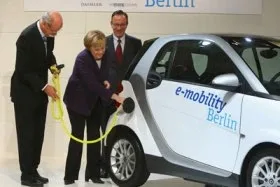
The environmental picture of German cities is worsened by the use of private transport. 50% of local residents drive to work, while the European average is noticeably lower at 38%. At the same time, Germany has one of the most developed public transport and bicycle path networks, so progress in this area is also possible.
For now, in the 'green' ranking, above German cities are Copenhagen, Stockholm, Oslo, Vienna, Amsterdam, Zurich, and Helsinki. The last places in the ranking belong to Bucharest, Sofia, and Kyiv. Russian cities are not included in the ranking, and among former USSR cities, Vilnius showed the best results, ahead of Riga and Tallinn.