
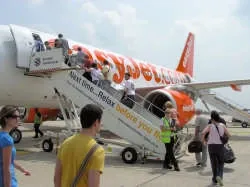
The advantages of this are obvious - you can choose a hotel from thousands of hotels in the city, rather than from two or three offered by tour operators. You can fly cheaper because you learn to track airline sales. And even the argument "I paid the money, handed over my passport, and everything was done for me" no longer works. For both independent travel and trips through a travel agency, in most cases you have to collect the same package of documents for a visa, and go to interviews at the consulate in the same way. Only when obtaining a European visa independently will you pay €35, while through a travel agency it will cost €70.
We recommend ten steps to learning how to travel independently.
Step one - gathering information
You need to pinpoint a place on the map where you desperately want to go. Or several places.
Having decided on the direction, we begin to gather preliminary information. Travel forums can be very helpful in this. What season is best to go there? Sometimes you have to choose between favorable weather conditions (when any moderately well-known place is crowded with tourists) and the opportunity to enjoy the sights in silence, peace, and... cold. Are visas needed and how to get them? Approximately how much might a hotel cost? And don't forget about safety: war zones are not the best place for tourism.
Step two - buying an air ticket
It is better to tie the exact travel time to the purchase of the air ticket. Almost all airlines have sales from time to time. You just need to determine who exactly flies in the desired direction and periodically visit their website. You can also consider an indirect flight: get to the nearest foreign point, and then transfer to a discount airline.
The optimal time to start searching for tickets is about three months before the 'X date', because some airlines sell everything at the last moment, while others, on the contrary, set low fares in advance, and closer to the departure date there may simply be no tickets left. Many airline websites now offer the option to choose a date 'plus or minus three days'. By shifting dates slightly, you can buy air tickets whose cost will be two to three times cheaper.
You should start by buying a ticket also because you may need to present it at the embassy, and foreign embassies are much more favorable to those who have not just a reserved, but a fully paid air ticket. There have been cases where officials called airlines to check if seats were available on the booked flight.
Of course, it may happen that the visa is refused. But if the ticket was purchased, for example, from a Russian airline, then according to the new air transport rules adopted last fall, the money must be returned in full if the passenger makes such a request 24 hours before departure. Moreover, no reservations in the fare conditions or internal rules of the airline are valid. Since last fall, all air tickets purchased at full price or through special promotions are refundable.
Step three - booking a hotel
You will also have to present a hotel reservation at the consulate. We choose and book a hotel via the Internet - there are many specialized sites on the web. It is better to use several such resources at once - the selection will differ, but the prices for the same hotel will not. You can use recommendations from travel forums and, after choosing a hotel, book directly through its website.
What to consider when choosing a hotel? You need to find a middle ground between price, location, proximity to transport hubs or the historic city center, and level of comfort. Carefully study the additional conditions: is breakfast included, is there a safe in the room, Wi-Fi, etc. Some hotels, for a certain number of nights, provide airport transfer or a free dinner, which also won't hurt. Be sure to read reviews of the hotel. But keep in mind that there are never exclusively positive reviews: there is only a difference between occasional complaints about cleaning and stories about guests being robbed on the way to the hotel. If you have to check out early, you can try to find a hotel near the bus stop to the airport or even choose accommodation in a town near the airport (Google maps is very helpful for orientation).
Wanting to find cheaper accommodation, do not neglect sites dedicated to booking hostels. On these same resources, there are also so-called budget hotels. You can save money by not having a bath or toilet in the room, or by skipping breakfast.
To book a hotel through a website, you need to enter your credit card number. The terms vary by system. Usually, money is not deducted from the account in advance, except for a small amount to check that the card is valid. For early cancellation (usually one to two days in advance), there is no penalty. When booking cheap hotels and hostels, a non-refundable deposit of 5-10% is often charged.
Step four - certificate from work
Unfortunately, there are not many countries on the planet that allow our compatriots to enter without a visa. In fact, the fears around obtaining entry permits are somewhat exaggerated. We gather the package of documents and simultaneously make an appointment at the consulate.
A certificate from work indicating salary is one of the mandatory items on the list. It is clear that the higher the income, the more reliable a person appears in the eyes of consular officials. Schengen countries welcome people with incomes above $600-800 per month, while British consulate staff believe that even people earning $1,000 per month cannot always afford a trip to their country.
Too high income also raises suspicions: there have been cases where a visa was denied on the grounds that a 19-year-old cannot earn several thousand euros a month.
Step five - bank statement
If before embassies asked to present cash or traveler's checks, now bank statements are more popular among officials. The meaning of this requirement is to confirm that the person has sufficient funds for their stay in a foreign country (at about €50 per day). Moreover, it is not at all necessary to present officials with information about all the billions in the account - it is enough to limit oneself to the phrase 'the account balance exceeds $2.000'. To tell the truth, the consulates have not solved the problem with this: our citizens, as before, borrow currency and deposit it into the account for just a couple of days.
Step six - insurance
Many countries will not let you in without insurance, so you will have to go to an insurance company and buy a policy. The insurance coverage for trips to European countries must be at least €30,000. Those who plan to ski or scuba dive will have to pay a little more by ordering a 'sports extension'.
Before purchasing a policy, carefully read which services the insurer is willing to cover: some risks (paragliding, pregnancy, etc.) no company will agree to cover.
Step seven - photograph
The requirements for the photograph must be read very carefully. There are still individuals who bring to consulates their own images cut out of family albums. Meanwhile, it is the 'wrong' photo that is one of the main reasons why documents may be rejected.
The photo must be new. It is better to tame voluminous hairstyles temporarily so that hair does not cover the face and ears. It is simpler to print out the requirements and bring them to the photographer: he will choose the right background and scale the image so that from the top of the head to the edge, and from the nose to the chin, there is the required number of millimeters.
Step eight - filling out the application form
The application form can be obtained online. On the internet (not necessarily on the consulate's website) you can also find a sample of how to fill it out. It is important to carefully follow all the specified requirements: print on both sides of the paper, fill out by hand or on a computer, in Russian or foreign languages. For some countries (for example, the UK), it is necessary to fill out the form on the website beforehand.
As already mentioned, the idea that obtaining a visa through a travel agency is simpler often does not correspond to reality. Those who decide to go to a travel agency will have to collect exactly the same set of documents. And likewise, if necessary, go personally for an interview at the embassy, provide fingerprints, and it will also cost more - travel operators usually include their expenses for receiving documents and courier work in the price.
Step nine - obtaining a visa
The main rule when dealing with any consul is not to deceive. You need to submit documents to the consulate of the country where you plan to spend the most nights. That is, if a traveler plans to fly to Vienna for five days, then spend a week on the French Riviera and end the trip with three days in Barcelona, then documents can only be submitted to the French consulate. But the set of documents must include copies of all flight tickets and hotel booking confirmations to 'justify' each day of the requested visa.
Attempts to go to an 'easy' embassy, for example, getting a visa to Finland as the main purpose of the trip, staying there in transit and then rushing to Germany for a week, can end badly. If border guards find tickets for further travel (and it's not that difficult for them), entry into the Schengen area will be closed for the next five years or so.
You should contact the consulate in advance: in some there is a long live queue, in others an appointment by phone, but only a month in advance, in still others, after reserving a time for the next day, you can get a visa in three days. According to the agreement with the EU on visa facilitation, applications for entry into European countries should be processed by consulates within 10 calendar days, but in some cases this period can be extended up to a month.
Step ten and last - drawing up an itinerary
This step can be skipped: some prefer not to plan anything and travel wherever their eyes take them. However, if you want to see 'almost everything' in a few days, it is still worth taking care of an itinerary.
We choose museums, exhibitions, concerts, theaters, shops that we would like to visit. As a rule, nowadays every such establishment has its own website. Links to these resources and much more useful for tourists can be found on the portals of city tourist offices (for example, Paris, Berlin, London). We find out how to get there, check the distance on the map, calculate the time spent on travel and at the 'venue'.
We also do not forget about special offers: on certain days museums are free, sometimes they close later than usual - all this information will come in handy. The fact that the websites are in foreign languages is not an obstacle. The same Internet is full of online translators.
Is the itinerary ready? Then finally, you should relax and get used to the idea that it will not be possible to carry it out 100% anyway. Some element of unpredictability is perhaps the most valuable thing in independent travel.