
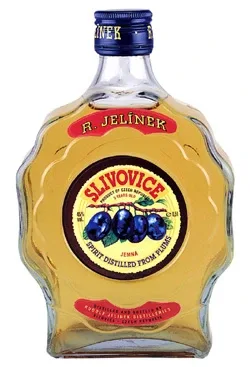
Slivovitz is the name of moonshine among the southern Slavs, Serbs, Croats, Czechs and Slovaks
What do they not make moonshine from! As Ostap Bender said, while selling 150 secrets of the homeland, that is, 150 recipes for making moonshine: “You can even make moonshine from an ordinary stool. Some people like stool moonshine.”
But we are not the only talented ones. Every nation in the world has its own moonshine. Originally, a strong “folk” drink was distilled from the most accessible material, what was at hand for the peasant – garden fruits or berries, grains, almost from stones. Over time, moonshine became a national idea, a symbol, the cunning secrets of making “local versions” were passed down only to heirs, recipes became more and more refined, experts – more and more ingenious... But the “main line” is too strong to yield to the pressure of civilization. Through moonshine you learn the history of a people, you feel its ancient power.
And when I come to different countries, I always try the local moonshine – no matter what it's called...
• By the way, we suggest an interesting idea to our readers. The New Year holidays are approaching, and many of you will go on foreign trips. And you will certainly bring home local souvenirs, including national alcoholic drinks. We advise you to visit the website Artlavka, where you can choose beautiful collectible decoupage cards intended for decorating bottles. Bottles decorated with unique labels with exclusive alcoholic drinks will make a wonderful gift for your friends and colleagues during the New Year holidays!
French state-farm
The French, although considered fans of fine wines, are not averse to drinking moonshine, which they make from apples (less often pears) and call calvados. This drink, whose homeland is considered Normandy, has been mentioned in the annals since 1553. Initially, calvados was made from what could not be sold: windfall or slightly rotten apples (remember “fruit and berry state-farm wine”?) But in the middle of the 20th century it became truly a “scientific drink”.
Calvados begins with cider, a low-alcohol apple drink (we would call it a kind of kvass). Officially, 48 varieties of apples are recommended for cider production. It is believed that the ideal mixture is: 40% sweet apples, 40% bitter and 20% sour. Sometimes a little pear is added for flavor.
After harvesting, the apples are left in the open air for a while to fully ripen. Then the apples are pressed, and the juice is poured into large vats and left for another month to ferment. The resulting slurry is distilled, and then left for several years in an oak barrel, from which a real miracle is born – a fine, rich, amber calvados. Like cognac, calvados only gets better with age (and more expensive, oh so much more expensive!) The age of the drink is usually indicated on the bottle.
Rich, with a long sweet-and-sour apple aftertaste, calvados lifts the mood and warms the soul. And if you order it as an aperitif, I beg you! – do not dilute it with water and do not ask for ice.
For my part, I can only add that I personally prefer to drink French moonshine between courses – it seems to “even out” digestion, clean the taste buds and prepare you for a new gastronomic pleasure...
After the first – do not snack
If you saw how abundantly huge, black, sweet-and-sour plums ripen here, you would understand – it is impossible to eat them all, it would be criminal to throw them away. They were eaten, put into pies, made into jam, but it was still impossible to cope with this fragrant mass. So the Slavic brothers began to distill a weak brew from plums, and later learned to distill it and obtain a drink with a strength of 45% (and with double distillation 75%) – slivovitz.
Traditionally, plums are first pounded in a large mortar together with the pits until a liquid mush is obtained. It is left to ferment for a week, and when the liquid stops hissing and foaming, it is filtered and poured into a distillation still. It consists of two large copper cylinders: plum mash boils in one, and alcohol vapor passes through a thin tube in the other to cool down and turn into liquid. A trickle of moonshine flows into the neck of a bottle placed in a tank – harmful impurities settle to the bottom of the bottle, while the lighter alcohol pours into the tank. It would be a sin not to try the first shot! From a simple glass or pewter shot glass (silver and crystal are too refined for such a matter), the liquid is thrown into the mouth, flows in a thin trickle down the esophagus and spreads intoxicating warmth throughout the body. However, the drink becomes most valuable only five years later, after aging in oak barrels: then even from a small glass the whole room is filled with a unique heady aroma. In the morning, slivovitz is added to coffee, and downing a shot or two before dinner is generally considered a sacred matter among the Slavic brothers. Moreover, it is not customary to snack on the first shot, while the second is chased with a piece of corn bread.
Waste-free production
The Italians also sought to get rid of unnecessary household leftovers. Since grapes were considered the main product of the northern regions, they, of course, made moonshine from it. Its homeland is the town of Bassano del Grappa, located near the foot of Mount Grappa, a little to the side of Venice. The Italians are a thrifty people – they made wine from grapes, and sent the grape pomace – skins, seeds, remnants of pulp and stems – to the production of grappa. From the distillation still came an oily, viscous drink with a taste of grape skin. Quite strange in taste, it nevertheless penetrated to the marrow of the bones, but instantly spread warmth throughout the body and warmed even in the coldest and dankest weather.
That was a long time ago... Since then, grappa production has changed, the drink itself has become refined and strong, and is considered by connoisseurs to be one of the best digestifs (i.e., an after-dinner drink), going perfectly with cigar smoking.
Depending on age and aging method, several varieties of grappa are distinguished. Young (giovane) grappa, also called white (blanca), is bottled immediately after distillation, which is why it remains colorless. It is somewhat sharp in taste. The opposite of young grappa is grappa affinata in legno, which literally means "having been in wood," but it is stored in barrels for a relatively short time - up to six months. Its taste becomes noticeably softer. Aged (vecchia or invecchia) grappa spends at least a year in barrels, and "riserva" (very old grappa - stravecchia) at least a year and a half. For aging grappa, they use not oak barrels, as in previous cases, but barrels made of Limousin oak or wild cherry. While languishing in the barrel, grappa acquires not only a golden hue, but also extra alcohol content: it usually contains 40-50% alcohol.
Nowadays, all drinks are aged in barrels for longer and longer periods to make the taste as soft as possible, and now the distillate spends 5 or even 10 years in barrels...
English diuretic
The classic English drink - gin - was invented by the Dutch physician Franciscus Sylvius in the 18th century as a diuretic. He simply distilled juniper berries with alcohol, producing an inexpensive diuretic medicine. English soldiers returning home from Holland after the Thirty Years' War (1618-1648) brought the gin recipe with them, and 100 years later the drink became considered classic English. Initially, barley was used for its production, but now more expensive grains are used (for example, London Dry Gin is made only from wheat). But the main ingredient of gin remains juniper berries - they are what give gin its legendary, dryish and bitter taste.
Gin is distinguished not by age, but by production technology. There are three main types. London Dry Gin is a dry gin of the highest quality, and the word "dry," as with wine, indicates the absence of sugar. There are also Plymouth Gin and Yellow Gin - the latter is considered the rarest, since the drink is aged in oak barrels that previously held sherry.
The British, who firmly hold on to their traditions, literally do not let gin recipes out of their hands: for example, only six people know the recipe for Beefeater gin, and five for Gordon's gin.
And while I am writing this article, in front of me stands a delicious homemade drink, Sloe Gin, in other words - a homemade sloe liqueur on gin. This is a true authentic moonshine, which only pedantic Britons are able to bring to completion. I give its recipe to the readers!
450 grams of sloe berries, 3 cups (710 mg) of gin or vodka, 1.5 cups (350 grams) of sugar. Wash the berries, dry them, and put them in the freezer for a couple of days (if the berries were picked after frost, freezing is not necessary). Put the berries in a large jar, pour in the gin or vodka, and infuse for six weeks, shaking at least twice a week. Pour 3/4 of the resulting infusion into a bottle (without berries), add the sugar, and leave for another two weeks, shaking it twice a day (the sugar should completely dissolve). After two weeks, mix the resulting sweet drink with the remaining quarter (remove the berries). Store the mixture for at least six months before consumption.