
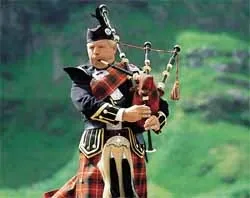
England is just one of the four provinces of Great Britain, which also includes Wales, Northern Ireland, and Scotland. The English indeed make up the overwhelming majority in the United Kingdom (nearly 90%). But over many centuries of living together on the British Isles, other peoples—the Welsh, the Irish, and the Scots—have not assimilated with them and sacredly honor their national identity.
Does this mean that one fine day the United Kingdom will break up into four independent states? “Yes,” nearly all analysts answer. True, opinions differ on when this might happen. “I think the timeline will become clearer by the end of this century,” Professor of Political Science at the University of Kent, Dr. Amelia Hadfield, told Vremya Novostei. “Although it is not excluded that the process could go faster. In this case, Great Britain as a separate state may forever remain in the 21st century.”
My conversation with Professor Hadfield took place right after the Scottish government announced its intention to hold a referendum on Scotland’s independence from Great Britain. The First Minister of the province, Alex Salmond, who is also the leader of the Scottish National Party, announced the start of a “national discussion” on this topic. He proposed considering three options for Scotland’s future: leave everything as it is, expand the powers of the provincial parliament, or proclaim independence. The wording of the referendum question is already prepared: “Do you agree that the Scottish government should reach an agreement with the government of the United Kingdom under which Scotland will become an independent state?”
The roots of the complicated relationship between the Scots and the English go back to ancient history. “In ancient times, much blood was shed here,” recalls Professor of the University of Edinburgh, Alice Brown. “For several centuries, the Scots desperately fought the English for their land. Eventually, in 1314, the King of the Scots, Robert the Bruce, defeated a numerically superior English army and founded an independent Scottish kingdom.”
After the death in 1603 of the childless Queen Elizabeth I, her distant relative, the Scottish King James—son of that very Mary Stuart whom Elizabeth had beheaded 16 years earlier—was invited to the English throne. Over the following century, England and Scotland remained formally independent countries, although they were ruled by one royal dynasty, the Stuarts. Finally, in 1707, the Treaty of Union was ratified, resulting in the creation of a new British state called the United Kingdom.
The idea of creating a constitutional union was very unpopular in Scotland at the time. Its opponents pointed out that the union would deprive the Scottish people of sovereignty and weaken the country’s traditional ties with continental Europe. However, through threats, bribery, and promises to pay Scottish debts, London managed to persuade the local parliament to agree. As a result, the English and Scottish parliaments were replaced by a common parliament in London. The treaty provided for a unified policy in foreign relations and defense, as well as the adoption of a single currency and the creation of an integrated customs space. At the same time, Scotland retained its own judicial system and state religion—Calvinism.
Soon, however, it became clear that Scotland had reaped considerable benefits from this “marriage of convenience.” England was developing dynamically, its fleet opened new markets on different continents for merchants and industrialists. As a result, Scotland found itself under the protection of one of the most powerful states of the time, gaining access to world trade and an advanced economy. Predominantly agricultural Scotland lived quite well behind the broad back of its southern neighbor on the island. Its malt liquor—the famous “Scotch” whisky—spread throughout the world, and ships built in Glasgow’s shipyards still ply the world’s oceans. In addition, within the framework of a single state, Scotland became a powerful source of human and intellectual resources for the British Empire. Among the officials who administered the numerous colonies over the next two and a half centuries, there were disproportionately many Scots.
So why have separatist sentiments arisen in Scotland in recent decades? “If we continue the ‘marriage of convenience’ metaphor, we can say that the English and Scots remained ‘Mr. and Mrs. Britain’ and lived in the same apartment as long as it suited them,” explains Professor Brown. “Since economic reasons prevailed when the marriage was concluded, they also gave rise to today’s problems. The issue became especially acute when huge oil reserves were discovered off the coast of Scotland. This discovery had a strong psychological effect. The Scots became confident that they could get by without England. Oil became the trump card of the separatists.”
Another important factor was the United Kingdom’s entry into the European Union. According to Professor Hadfield, this gave Scottish separatists confidence that even after leaving the protection of the English crown, their country’s security would be guaranteed by the EU and NATO.
In 1999, as a result of the devolution of powers to local authorities carried out by the Labour government, Scotland’s autonomy was significantly expanded. The new Scottish parliament has the authority to pass laws in the areas of education, healthcare, and regional development. Moreover, it is entitled to independently manage part of the taxes collected in the province.
Strangely enough, these measures did not diminish the nationalists' appetites. They continue to convince their compatriots that Scotland can do without London's support. But Christopher Winslow of the Scottish Labour Party is confident that without the annual subsidies of £11 billion ($22 billion) provided by London, the Scottish economy would quickly decline. "The fact is that the amount of subsidies we receive from the British government significantly exceeds the revenue from exports of whisky, agricultural products, and oil extraction. And independence would require a lot of additional spending, a significant increase in the bureaucratic apparatus," he notes.
The material cost of independence is indeed a significant factor. The Scots have already sacrificed several tens of millions of dollars to build a brand new, ultramodern parliament building. This money was taken from the budget allocated by London. The annual maintenance of MPs and their staff also costs a pretty penny. So far, taxpayers are not complaining. After all, it's their own national legislative body — it's worth spending money on. But will they want to take on new expenses?
"Real support for the idea of independence in Scotland is small," says famous British writer John McLaren, a Scot by nationality. "We are talking about 25-30% of the population. Neither today nor in the foreseeable future do the separatists have any chance of winning a referendum on this issue. The Scots are great pragmatists. They will agree to independence only when they are sure that they will benefit from it. And for now, that is not obvious. Could they vote for independence in the future? They could, but it won't happen soon."
As for Alex Salmond's statement, according to McLaren, it is a political trick. Its goal is to present Scottish independence as one of the possible scenarios and force other parties to participate in its discussion.
"The nationalists understand that the project they have published is unlikely to lead to a referendum in the near future," wrote London's The Times. "But Salmond also understands that gaining independence is a process, not an event. He hopes to convince the Scots during his first term as First Minister that he and his party can be trusted. And then he can present arguments for even greater autonomy and ultimately full independence for Scotland."