
"Fish Rooster" and Hybrid Berries
To begin with, let us go north – to the Finns. And well in advance – it would be nice to get to the "Little Christmas" Pikkujoulu, which is where the Christmas and New Year holidays in Finland actually begin. In general, across Europe it is very difficult to separate the wheat from the chaff, that is, Christmas from New Year. Therefore, we willy-nilly have to make leaps from time to time not only in space, but also in time.
So, Pikkujoulu. Wherever we direct our steps - to the current capital Helsinki or the ancient one, Turku, the lake district or northern Lapland, we cannot avoid tasting kaalivelli porridge. Although this brew, which symbolizes the coming summer abundance, can only be called edible with reservations. It is made from cabbage, rutabaga, carrots, pearl barley, and peas. And with milk at that. In short, a product of lethal force. But the Finns like it...
The Finnish Christmas meal is much more appetizing. While the fast continues - "nothing before the first star!" - it is no sin to try the famous "fish rooster", a kulebyaka kalakukko with fish and lard. And then you can break the fast - for example, with joulukastike: three kinds of meat boiled in one pot with two rings of blood sausage. Drink some vodka and have a bite of lipeakala - dried cod, soaked and steamed with potatoes.
Fun dishes, for enthusiasts - reindeer with lingonberry jam and salmon steaks - the Finns leave to tourists... And they themselves prefer flatbreads made from pearl barley flakes on lard - a sort of greasy Finnish shangi - and cloudberry jam. And sweet rice porridge for dessert.
We will find the same porridge in Sweden and Norway; it is the same all over Scandinavia. And it necessarily has its own raisin (or almond), in the literal sense. Whoever gets it will certainly get married in the new year. And if a person is already married, then luck will come in some other way...
True, in Sweden it is better to neglect the porridge and "hit" the famous smorgasbord - the Swedish table. Such as it should really be: a mass of sandwiches and other cold appetizers, of all kinds and tastes. Not a single holiday goes without it. Of course, Christmas and New Year are no exception. It is positively impossible not to taste gravlax - raw salmon fillet marinated in brandy or aquavit with pepper, salt, sugar, dill... Incredibly tasty - and extremely popular now in fashionable European restaurants. Well, and, of course, you cannot do without lutefisk - dried cod soaked almost to a jelly-like state. Unusual - but also very tasty.
The main decoration of the traditional Danish Christmas table is larded tongue and stuffed pig's head; the Norwegian - roast or baked goose. Iceland stands apart: its Christmas and New Year hangikjöt - lean, sea-smelling island lamb, smoked in the smoke of dried dung, and then carefully boiled and served with plenty of potatoes and peas with cream - a dish strictly for enthusiasts... And even pancakes with the mysterious "boysenberry", something between a raspberry and a blackberry, are unlikely to save the situation.
Goose with Apples and Whisky with Honey
Having drunk a mug of glögg - Danish mulled wine - in farewell, we set course further west, to the British Isles. This is where they love and know how to eat at Christmas and New Year! And they also say that English cuisine is simple and boring.
Let's start with Christmas - a traditional Christmas in the old, good English style. Above the large table of a large house hangs a wreath of pine branches, holly and mistletoe, decorated with red apples and candles. A beautiful Christmas tree awaits its hour. For children, under it there is already a paper "cornucopia" full of candies, sweet nuts, candied cranberries. On the branches are tangerines, apples, again nuts, and shaped cookies.
The treats for adults will be more serious. For appetizers - Waldorf salad of apples with celery and walnuts, game pâté, dried corn in butter. But the "highlight of the program" is, of course, the Christmas goose, specially fattened for the holiday and roasted with apples, onions and sage. In the past, the main dish was considered a boar's head - but times change, tastes and mores too... The goose is served with wild cherry jelly, red apple sauce, snow-white mashed potatoes, baked pumpkin. Rum punch - for adults, non-alcoholic cranberry - for children. And, of course, you cannot do without the flaming (literally - thanks to the rum sauce) plum pudding. Without it, Christmas is not Christmas.
Among the northern neighbors, the Scots, the Christmas table is also ruled by goose - but not roasted, but smoked. And of drinks, sowans is strongly recommended - a special barley brew with honey and cream. It is thick and cloudy, very specific in taste, but when you drink the traditional wooden cup to the bottom, you find some surprise at the bottom. For example, a coin. That's for wealth. Or a ring - for a wedding. But, frankly, we were no longer up for sowans - as soon as we crossed the threshold of a Scottish house, we, like all other guests, were immediately offered a generous glass of whisky and a piece of flatbread baked on Christmas Eve with a slice of ewe's cheese. Strong - it brings tears to your eyes. How can you not have a snack of kipper pâté - smoked herring - and wash it down with December ale!
By the way, had we come to a Scottish house not for Christmas but for New Year, we would have been served another drink - "Atholl Brose". Also whisky, but with oatmeal and heather honey. But for New Year we will return to England. We need to finally try all twelve kinds of sweets baked for the holiday by the mistress of the house!
"Modest" Fast and "Meaty" Turkey
And again it's time for us to hit the road. Over the Bay of Biscay, around the western tip of Europe, to Portugal and Spain. It's tasty there too - but first you need to take part in a classic Pyrenean ritual: with each strike of the clock marking New Year's midnight, eat one grape, each time making a wish. May at least one of the twelve come true!
And then you can sit down at the festive table. There we are awaited by a suckling pig roasted on a spit with sherry in Spain, and a dish of dried cod bacalhau with port wine in Portugal. In both places, there is an abundance of seafood, from langoustines and octopus to mussels and scallops, and surprisingly fresh greens. But still, the dishes traditionally served on the Iberian Peninsula at Christmas are much more interesting. Ardent Catholics, the Spanish and Portuguese, of course, fast before Christmas. But, unable to overcome their southern gluttonous nature, they desperately cheat. For example, if you call the Christmas Eve dinner not a dinner but a "colación" ("snacks"), it seems it's not really a dinner at all. Just a modest Lenten meal. Who cares that ten different salads will be served, the same number of fish dishes, not to mention pâtés and pies? And, of course, you can't do without traditional almond soup, honey-nut halva turrón, baked or roasted chestnuts.
But it's time for us to move on - across the Pyrenees, to France, decorated with Christmas lights. To Paris, to Paris! It welcomes gourmets at any time of year - and doubly so at the end of December.
It's better to get a place at a traditional home table: this holiday is, after all, a family one. If you can't, there's no need to be upset. Numerous restaurants and cafés are at our service. So first of all, you should take care not to make a mistake with the list of dishes. And it is strict and tested by years of practice.
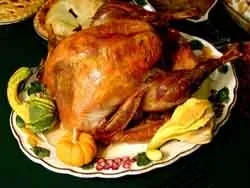
Let's start with oysters - it's their peak season now. Continue with the famous foie gras, goose liver pâté. Finally, the mighty concluding chord will be the réveillon - turkey stuffed with pork and mushrooms. Oh! We almost forgot saucisse au sang, traditional New Year's blood sausages!
For dessert - of course, cheeses, then the almond cake "Queen of Sheba" or the "Christmas log" bûche de Noël. If anyone remembers, earlier in our pastry departments something similar was sold under the guise of "oriental sweets"... And another familiar sign: the French also cannot imagine New Year without champagne. True, where we switch to vodka, they remain faithful to "humane" drinks - say, amber Sauternes or ruby Bordeaux.
Lentils and Česnica
No matter how good the Benelux is with Dutch sugar cookies, Belgian soft Christmas waffles, Luxembourgish veal sausage with truffles, our path lies further not to the North, but to the South. To begin with - past Switzerland (we'll try fondue some other time) to Italy. This is where it's worth lingering - at least to enjoy lenticchie con cotechino. It would seem, nothing special: lentils with pork sausages stewed in tomato sauce, but it's extraordinarily tasty. But this is the main New Year's dish. And when it's Christmas, on the table are the seven courses prescribed by Italian canon. Welcome are fish (in particular, eel), seafood (first of all, the famous "seafood cocktail" frutti di mare), rice boiled in almond milk, and - necessarily! - lentils or some other beans. They should bring luck and prosperity in the coming year to all who eat them.
Having tasted sweets - cupcakes and nougat - we move on, in a wide arc from the south to the north. The Balkans flash by in a colorful and appetizing round dance. Greece with turkey stuffed with liver and pine nuts. The countries of former Yugoslavia, where poultry, on the contrary, cannot be eaten either at Christmas or New Year – happiness will fly away. But on the table there is plenty of delicious baked vegetables and porridges cooked from all available grains at once, as well as special bread česnica, which should also not be eaten, but should be kept until spring. Bulgaria is similar to Serbia and Croatia in baked peppers, fried pumpkin, and "ritual" Christmas kalachi.
We will make a thorough stop in Romania. If, of course, you prefer meat dishes to vegetarian ones. It is worth trying sarmale - something like our stuffed cabbage rolls, tocana - veal stewed with onions and tomato, and drob - a dish made of lamb offal. But the top of the program is rich pastries with secrets. You need to eat them carefully: what if you bite into a coin (to wealth), a ring (to family happiness), or a pod of hot pepper (to the amusement of everyone around)?
Carp is no friend to pike-perch
After the Romanian meal, we fly through Hungary and Slovakia in some well-fed half-asleep state, our appetite wakes up again only in Prague: well, how can one not taste the famous carp? Although this fish on the Czech Christmas table is a relatively recent innovation, and before that its place was taken by mushroom porridge kuba. But now in the Czech Republic, before the New Year, two million specially fattened fish for the holidays are eaten. Let us also enjoy fried "kapr" (that's how the name of the fish sounds in Czech) with potato salad - of course, with a magnificent, strong and thick Christmas beer!
And we will go to Austria, where we will "catch up" with balkoch porridge with rendered lard, strong meat broth mettensuppe with homemade noodles, and pork with horseradish and sauerkraut. Well, and of course, the famous apple strudel for dessert - at Christmas, Austrian housewives make it even tastier than usual.
You think that our stomach holiday is over? Not at all! There is still one last difficult culinary test by Germany and Poland. The German Christmas meal may not be particularly refined, but it is hearty and abundant. Roasted goose. Smoked pork products in all possible forms - a boar was slaughtered quite recently, for the December Schweinefest. Twelve kinds of sausages and frankfurters. Smoked and salted fish. Mountains of sauerkraut and potatoes. Beer. Schnapps. Beer with schnapps.
Ah well, never mind. The main thing is not to imitate the Germans themselves and not to pile Everest-like mountains of food on your plate. They are people accustomed to "rich" food, so it's fine for them, but Poland still awaits us...
Twelve dishes, according to the number of apostles. No more and no less. You have to try everything - that is a must. That is what a Christmas table in the old Polish style is. Notably, in accordance with strict canons, there should not be a single meat dish among them. Perhaps that is for the best - even without meat, good luck coping with it all...
The dinner begins with fish appetizers (herring is a must!) and vegetable salads (for example, spicy pickled beetroot - ćwikła), then mushroom borscht with uszka. Then follows pike, pike-perch, or carp in grey Polish sauce. With the fish - peas with cabbage, then dishes of dried mushrooms (Poles are masters at them), barley porridge with prunes, buttered dumplings. Finally, the meal ends with pierniki (gingerbread), makowiec (poppy seed rolls), and something very sweet. For example, chocolate cake.
But we are no longer up to it. We are not up to anything at all. We want to get back to our native homes and raise a ritual glass of champagne to the chime of the Kremlin clock. And sit down at our own festive New Year's table. But that will be a completely different story...