
Kerch — the ancient capital of eastern Crimea
Kerch is located on the eastern coast of the Kerch Peninsula, on the border of two seas — the Black and the Azov. The climate of Kerch differs from that of Yevpatoria and Feodosia, and even more so from the southern coast, with lower temperatures — the average annual temperature here is +10.9 degrees. The summer is sultry, sometimes dust storms sweep into the city, and in winter — fierce storms, in spring and autumn cold winds blow right through it. But if you like to relax away from the noise and bustle of large resort towns, Kerch will become your favorite place.
The velvet sandy beaches, two seas — the shallow, and therefore quickly warming, Sea of Azov and the cooler Black Sea — clean air, as well as the therapeutic mud of Lake Chokrak and mineral waters help you have a good rest and improve your health. A large number of monuments and the Historical and Archaeological Museum (one of the oldest in the country) tell about the eventful past of this glorious land.
Kerch, one of the oldest cities in our country, has turned 26 centuries old. The city was founded by Greeks, settlers from Miletus, in the first half of the 6th century BCE. But the first settlement appeared much earlier, as evidenced by the non-Greek name — Panticapaeum, which translates from one of the local dialects as "fish path," because schools of fish from the fish-rich Sea of Azov went through the strait into the Black Sea.
The hilly terrain on the shore of a horseshoe-shaped bay turned out to be very convenient for fishing and trade. Once settled, people never left this place. Tribes changed, centuries passed, a small village became the capital of a powerful kingdom, and then turned into a backwater town, but life here was always present.
In ancient times, the Kerch Peninsula was inhabited by tribes of warlike Cimmerians, who were displaced by the Scythians. Information about the semi-legendary Cimmeria is scarce and sparse. Memory of it remains in the names of the cities of Cimmeric, Mount Cimmeria, and the Cimmerian Bosporus Strait.
Thanks to successful trade with local tribes and the export of grain to Greek city-states, Panticapaeum grew rapidly. Its population engaged in agriculture, fishing, cattle breeding, and various crafts developed — pottery, blacksmithing, leatherworking, casting, jewelry; warehouses, shipyards, and berths appeared. The cities surrounding Panticapaeum — Nymphaeum, Tyritake, Myrmekion, Porthmia, and others — submitted to it, forming the Bosporan Kingdom around 480 BCE.
Panticapaeum becomes a rich and lavish capital. Above the city, on a mountain named Mithridates, was the acropolis with a magnificent royal palace, temples, public buildings adorned with marble, mosaics, and paintings. And the city quarters descended lower — to the port, where the agora, the square where popular assemblies were held, was also located.
The first rulers of the Bosporus, the Archaeanactids, were overthrown as a result of a coup in 438 BCE, and power passed to the Spartocid dynasty, which ruled for more than three centuries. The famous uprising of Saumacus, which broke out in the Bosporus at the end of the 2nd century BCE, was the first mass popular liberation uprising in Crimea. Having existed for almost 900 years, the Bosporan Kingdom fell into decline and fell into vassal dependence on the powerful state of Pontus. Its ruler, Mithridates IV Eupator, harbored daring plans to conquer Rome. Panticapaeum became the main base where troops and food supplies were gathered for future campaigns.
But Mithridates' great plans were not destined to come true. His son Pharnaces betrayed his father, swearing allegiance to Rome; he was supported by military leaders who did not believe in the success of the king's enterprise, and by the people, tired of paying huge taxes to support the numerous army. From the palace on the high mountain, Mithridates watched as his son accepted the symbols of power. Unable to bear the disappointment, he decided to die, but the poison did not bring the desired death, as the king, fearing poisoning, had taken small doses of poison for many years. Then Mithridates ordered his only faithful servant to stab him with a dagger. In his memory, the mountain is called Mithridates.
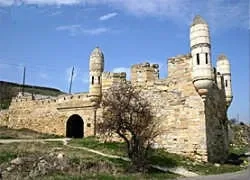
A few decades later, the Bosporus fell under the power of Rome. In the 3rd century, the powerful state began to decline. A wave of nomadic tribes of Goths weakened the Bosporus, and in the 4th century the Huns wiped it off the face of the earth, ending its almost thousand-year history. But another began: on the site of the magnificent Panticapaeum, a small Byzantine town of Bosporus formed. In subsequent centuries, it would change owners and names many times: the Khazars called it Charsha ("market"), it was part of the Russian Tmutarakan principality under the name Korchev, and under the Genoese it was called Cerchio. In 1475, the Turks captured Cerchio, renaming it Cherzeti. In a narrow part of the strait, they began building a new fortress, Yeni-Kale (New Fortress).
As a result of Russia's successful struggle against Turkey, Kerch with the fortress of Yeni-Kale became part of Russia under the Treaty of Küçük Kaynarca in 1774. Kerch Bay became the first base of the Russian fleet on the Black Sea. In 1790, off the coast of the Kerch Peninsula, a Russian squadron under the command of F. F. Ushakov defeated the Turkish fleet.
In the early 1780s, the Kerch iron ore deposits were discovered, and in 1846 the first blast furnace was built in the city. In 1855, an enemy landing force landed in Kerch, the city was plundered, and the iron foundry was destroyed.
In 1900, a metallurgical plant began operating in Kerch — the largest enterprise in Crimea. At the same time, a railway line connected the city with the main transport artery.
On November 16, 1920, Soviet power was established in Kerch. In the pre-war years, the Kamyshburun Iron Ore Plant, a fish processing plant, a cannery, and a ship repair yard were built.
During the Great Patriotic War, bloody battles took place on the Kerch Peninsula. Underground groups fought the enemy in the city, and partisan detachments operated in the Adzhimushkay and Starokarantin quarries. The Kerch-Feodosia landing operation at the end of 1941 and the landing near Eltigen in November 1943 entered the annals of glorious feats. For the courage and heroism shown by partisans, Red Army soldiers, and ordinary residents, Kerch was awarded the title of Hero City in 1973.
After the war, the city became a major industrial center of Crimea; here operated iron mining and metallurgical plants, diesel power plants supplying the city and its surroundings, fishing vessels departed from the piers of the Kerch port to the Atlantic and Indian Oceans, and a ferry and railway crossing connected Crimea with the Caucasus.
Today, many industrial enterprises of the city are not operating, but ecologists claim that this benefits nature. Kerch has not yet become a popular resort, but people come here for vacation, attracted by the rich and interesting history of the ancient city.