
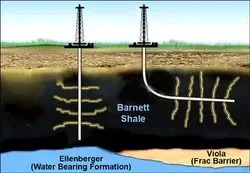
Horizontal directional drilling enables this process even under water bodies
So, the HDD method or horizontal directional drilling is a trenchless laying of pipelines, as well as various cables – for example, electrical ones.
Perhaps the most important device of horizontal drilling rigs is the drilling pump, which serves to pump and flush the slurry, which then enters the boreholes.
Drilling with HDD significantly reduces the time of pipe laying, as well as the volume of various approvals required for this type of work. In addition, HDD rigs operate autonomously and do not require an external power source.
Horizontal directional drilling differs from other pipe laying methods in that it allows this process to be carried out both in urban conditions and outside the city, including under water bodies and various types of vegetation. But the scope of HDD is not limited to this – it can be used in power line zones, under railroad tracks, and tram tracks. The method of horizontal directional drilling is also notable for making it possible to shape the trajectory of the borehole, bypassing all possible obstacles along the pipeline route.
How is horizontal directional drilling performed? Quite simply. The entire process consists of two stages: drilling a preliminary, so-called 'pilot' hole, its enlargement, and the actual pipe pulling. Upon completion of pipe laying, the contractor hands over all necessary documentation to the customer.
The obvious advantages of horizontal directional drilling are that after its implementation, infrastructure objects (road sections, forest areas) do not require restoration, which saves a considerable amount of money. HDD is quite environmentally friendly, preserves the natural landscape in its original form, and does not harm flora and fauna. Perhaps horizontal directional drilling is the most modern and progressive method of pipeline laying, which greatly helps in this difficult task.
Advertisement