
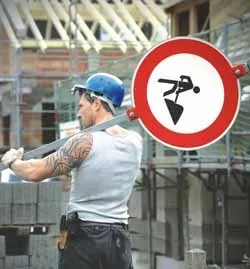
Last week the European Court of Justice issued a verdict in the case of the Finnish company Viking. This company several years ago decided to register one of its ferries, the Rosella, in Estonia and replace its predominantly Finnish crew with an Estonian one. However, the Finnish Seamen's Union intervened, preventing the new crew from signing a contract with the employer. Viking filed a lawsuit with the London High Court, accusing the trade unions (the Finnish union was supported by the International Transport Workers' Federation) of violating EU law through their actions. EU law guarantees freedom of enterprise: companies can register and operate freely throughout the EU. The London Court of Appeal had already referred the case to the European Court of Justice after the unions lost the case in the lower instance.
The European Court of Justice's ruling was ambiguous. On one hand, the court concluded that the unions' actions restricted Viking's right to free enterprise. However, it also confirmed the union's right to intervene if jobs or working conditions were threatened. At the same time, the court left it to the national court to determine whether such a threat actually existed. Based on the European Court of Justice's ruling, the London Court of Appeal must now make a specific decision in this case. Union representatives said they were pleased with the confirmation of their right to protest. Viking announced that it was 'extremely satisfied' with the court's decision, interpreting it as its victory.
If in the case of the 'Viking case' the unions could be at least partially satisfied, the same cannot be said about another landmark case. Last week, a ruling became known regarding Laval, a construction company from Latvia that had won a contract to renovate a school in the Stockholm suburb of Vaxholm and used its own workers. The Swedish Building Workers' Union demanded that Laval's workers sign a collective agreement with the company on terms traditional for Swedish construction firms, thereby preventing the company from continuing work. Laval insisted on its right to sign a contract according to Latvian standards: Latvian workers' wages are one-third of Swedish wages, with no full insurance. The Latvian company eventually left Sweden and later went bankrupt. The Swedish Labour Court, siding with the Swedish unions, referred the case to the European Court of Justice for a final ruling.
The court ruled that the Swedish union's actions in blocking work at Laval's construction sites were illegal. In the judges' opinion, they violated EU rules that guarantee the freedom to provide services in all EU member states. The court concluded that the Swedish unions had the right to protest to protect workers, but not to force the conclusion of a new collective agreement. The European Court of Justice also noted the complexity of Swedish rules regarding the minimum wage. The judges insisted that if they were enforced, it would hinder market access to Sweden. Union representatives naturally expressed disappointment with this ruling. European employers, on the other hand, supported it.
These two cases are not isolated. There is at least one other high-profile scandal over 'social dumping' involving migrants from the Baltic states and Poland. It also concerns ferry crews. But this time the ferry belongs to an Irish company. It announced its decision to lay off 600 Irish employees and hire Eastern Europeans instead. This case even affected the Irish Prime Minister.
Many in Europe believe that the EU, by focusing on creating a single market, is sacrificing the social achievements of recent decades and the fundamental rights of wage workers. Vice President of the Swedish Trade Union Confederation Wanja Lundby-Wedin stated, not without reason, that the European Court of Justice's rulings could undermine basic social rights: the right to collective action, freedom of association, the right to negotiate and conclude collective agreements. Commenting on the European Court of Justice's rulings, Danish MEP Poul Nyrup Rasmussen says that 'Europe is more interested in competition between workers than in raising standards for all families.'
Employers, however, are pleased. Also, an MEP, press secretary for employment of the Conservative Party of the United Kingdom, said: 'It is gratifying to see that the European Court of Justice protects a key principle of the single market: the unions must stop their attempts to block progress in this area and, thanks to this ruling, realize that they need to move with the times.'
It is obvious that in their desire to keep up with progress and develop the common European market, while trying to increase the competitiveness of their economies, EU representatives are not particularly concerned about preserving the welfare state system. They are willing to partially dismantle it. The court rulings create precedents that could mean a reduction in the level of social protection for residents of 'old Europe' countries.
At the same time, Eurocrats give little thought to the social consequences of such policies, which could be very unpleasant. First, unemployment could rise in 'old Europe' countries. Second, the exodus from Central and Eastern European states to the West will continue. The consequences of this for 'new Europe' countries could be catastrophic, but few are paying much attention to it now. And yet, in some of them, depopulation is beginning to take on monstrous proportions. According to some data, about 110,000 people have already left Latvia, a country with a population of just over two million, and hundreds of thousands from Lithuania, which has a population of 3.5 million.
Eurobureaucrats also do not consider that the accelerated construction of a single market, despite high social costs, does not help overcome the disparities existing between traditional and new EU countries. In essence, citizens of these countries working in the West are legally turned into second-class people, who are treated accordingly, saving on their wages and social rights. The forced creation of a pan-European market will only increase these disparities, turning the past EU enlargements into a time bomb.
The threats posed by the modern strategy of the eurobureaucracy were vividly defined by Brian Denny, press attaché of the organization 'Trade Unionists against the European Constitution'. In his opinion, 'the common European market is a mechanism that eliminates the control of national states over the movement of people and capital in the interests of corporate profits. It disfigures all forms of democracy, including rights to fair wages, working conditions, social protection, and collective bargaining agreements. This policy inevitably fuels the poison of racism and fascism, the last refuge of the corporate monster in times of crisis.' Figuratively and accurately.
Alexei TIMOFEEV.
IA Rosbalt