
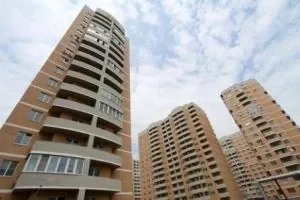
Its essence is that a person sells their existing home to a developer or realtor and receives an apartment of equal value in a new building via offset. The trade-in system is familiar from the automotive industry. The only difference is that when buying a car, the consumer trades in their old car at the dealership and immediately drives home in a brand new car. In the case of real estate, you have to wait until the new building in Moscow is commissioned and the apartment is renovated.
The trade-in scheme began to be used in the Moscow real estate market not so long ago. According to Alexander Ziminsky, Director of the Elite Real Estate Sales Department at Penny Lane Realty, demand for this service arose in 2009 during the economic crisis. This happened due to a decline in purchasing power. Moscow developers were seriously concerned about the market situation and decided to activate sales this way. Now the trade-in system is less popular. The number of such transactions, compared to 2010, decreased three times – from 15% to 5%.
The trade-in technology is simple only at first glance. A number of important conditions must be taken into account, without which the deal will not take place. First of all, the apartment being sold must be located in Moscow. Also, ownership must be registered on it, and at least three years must have passed since registration. It is not allowed to sell a room in a communal apartment or one's share in an apartment. Within the trade-in system, only full-fledged apartments are considered.
And finally, the most important condition: the apartment must be legally and actually free. That is, no one should be registered there and at the time of the transaction all residents must have vacated the premises. In this regard, only those who either have other housing or have the opportunity to temporarily stay with relatives or friends can buy an apartment in Moscow under the trade-in system. Moreover, the waiting time for moving into the new square meters, as practice shows, can last at least three months.
To summarize, we note that selling an apartment via the trade-in system has more downsides than upsides. The seller significantly loses in the value of their housing, since Moscow developers appraise their apartment at 10-15% below market value, thereby minimizing their risks. And another disadvantage is the lack of choice of the future location of the apartment in the new building.
Given all the downsides of selling real estate via the trade-in system, it can be predicted that this service will not become popular among the population. As practice shows, many people take a more thorough approach to selling their existing home and buying a new apartment.
Source – http://www.kvmeter.ru/articles/125027.html
_