
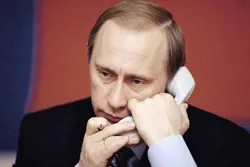
Last week, Russian President Vladimir Putin submitted to the State Duma a draft law amending Article 14 of the federal law 'On Citizenship of the Russian Federation'. Since the publication in 2002 of the presidential law, which significantly complicated the acquisition of Russian citizenship – including for former citizens of the USSR – more than a dozen attempts have been made to change it (14 times by deputies and twice more by regional parliaments). But only amendments submitted to the State Duma in 2003 by Putin himself reached the president's signature. At that time, they significantly expanded the list of conditions that, according to Article 14 of the law, give the right to be admitted to citizenship under a simplified procedure.
Two years later, the president decided to adjust this same article. As the chairwoman of the public organization 'Civil Assistance' Svetlana Gannushkina explained to Gazeta.Ru, the new draft law 'simply extends the validity period of the amendment to the fourth part of Article 14, adopted in 2003'. It concerns foreign citizens and stateless persons who arrived from states that were part of the USSR. According to the draft law, such citizens 'registered at their place of residence in the Russian Federation as of July 1, 2002, or who have received a temporary residence permit in the Russian Federation or a residence permit' can be admitted to citizenship without meeting some conditions (permanent residence in Russia under a residence permit for five years, a legal source of income, knowledge of the Russian language), if they declare their desire to acquire Russian citizenship before January 1, 2008.
'Back in April, the Federal Migration Service said that the amendment would soon be submitted to the State Duma, but, as usual, everything is stalling with us. That is why the draft law, which comes into force as early as the beginning of the year, was only submitted to the State Duma in December,' Gannushkina noted. When the State Duma adopts the amendment (no one doubts that this will happen), it will make life easier for many, the human rights activist believes. 'The temporary provision will primarily affect those who did not manage to gather certain certificates, but still we are talking about people who already live in Russia,' Gannushkina said.
Meanwhile, human rights activists believe that there is still much to change in the law 'On Citizenship'. 'Registration at the place of residence still appears, rather than permanent residence. Restoration of citizenship also raises questions. Those who for one reason or another once left the country had the opportunity to restore citizenship until 2002, but now everything is on a general basis, and such a norm should not be temporary,' Svetlana Gannushkina stated.
However, recently the Russian authorities have increasingly said that the legalization of citizens of former Soviet republics in Russia is now also of interest to the state. During the 'direct line' in September 2005, the president said that 'this is Russia's strategic choice – attracting to permanent residence in the Russian Federation those people who choose Russia as their homeland'. He then explained that the government would work 'persistently and carefully' to attract immigrants, but 'not create problems for the native population that already lives here'.
In addition, Putin said he intends to instruct the government to create 'a separate, special additional program for the return of our compatriots to Russia'. However, in the context of the demographic crisis and the continuous flow of illegal immigration, the Russian authorities have no other choice.
Alina Chernoivanova, Elya Vermisheva.
Gazeta.Ru