
The German weekly 'Stern' devoted its economic review to the peculiarities of this market. Its authors point to significant differences in prices, supply and demand, as well as the legal basis for conducting purchase and sale transactions in the ten new states of the European Union.
Czech Republic: five-year transition period
In the Czech Republic, fixed prices apply to many apartments. In the historical center of Prague, prices for office and retail space significantly exceed the city average due to their limited availability. Significant agricultural areas in Western Bohemia were acquired several years ago by Bavarian farmers through a Czech subsidiary. To prevent a 'sell-off', the country has introduced a five-year transition period during which foreigners are not entitled to directly purchase real estate here.
Malta: strict rules
The government of this island state has also introduced restrictions for foreigners. Despite the rise in real estate prices that has been going on for several years, about 25% of all houses and apartments remain empty. The reason is that the authorities have frozen rent at a minimum level by law. Some apartments can be rented for a simply ridiculous price - 75 euros per month. However, apartments for vacationers and holidaymakers can cost from 250 to 2,500 euros per month.
Poland: permission required
To purchase real estate in Poland, foreigners must obtain permission from the Ministry of Internal Affairs. At the same time, they risk experiencing the unpredictability of bureaucrats first-hand. Brokers in Lower Silesia even suggest a reverse movement: Poles will go to buy real estate in eastern Germany, where prices are significantly lower than, for example, in Wrocław. In Poland itself, the demand for standard apartments at reasonable prices significantly exceeds supply, while many luxury apartments in high-category buildings remain empty.
Hungary: the capital is getting more expensive
Due to market oversaturation, real estate prices in Hungary have been falling since 2001. Foreign investors expect that as a result of joining the European Union, they will gradually rise to the level of neighboring Austria, that is, by 30%. In Budapest, the maximum rental rates for residential space are 17.90 euros per month, for office space - from 14 to 18 euros. According to data from mid-2003, 20 to 25% of space stood vacant here.
Cyprus: many interesting offers
A similar problem exists in Cyprus: there are very many vacant houses and apartments. Prices for private houses here are 30% lower than in Germany. As for industrial and commercial space, brokers are counting on a positive effect from the development of economic ties with the Middle East region. There is one detail important for those who intend to purchase real estate in Northern Cyprus, that is, in the Turkish part of this divided island. If the Cyprus issue is resolved, owners of houses that belonged to Greeks before 1974 risk losing their property.
Slovakia: the market is 'overheated'
Real estate prices in Slovakia increased even before EU enlargement due to expectations associated with this event, including among brokers hoping to make a good profit. At the same time, market participants overdid it somewhat, and experts predict stagnation or even a fall in prices. In Bratislava, real estate prices have reached EU standards. Many properties here are even more expensive than in small border towns in Austria. In rural areas, demand is much lower than in the capital. A plot of land near a small town can be purchased for 5 euros per square meter. In the capital's suburbs - for 150 euros.
Baltic countries: high demand
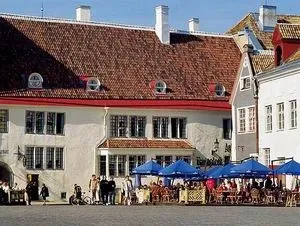
In Lithuania, Latvia, and Estonia, demand still significantly exceeds supply. For several years now, it has been possible here to obtain long-term loans for the purchase of real estate, which has an impact on the state of the market. The price per square meter in new capital city buildings reaches 1,000 euros. Brokers expect price increases, linking this to further economic growth in the region.