
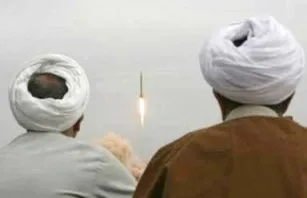
In the modern world, the vast majority of conflicts occur not between different countries, but within states
CURRENT CONFLICTS
World
War on international terrorism. The war is being waged by the United States and its many allies against international terrorist organizations. The war began on September 11, 2001 after the terrorist attack on New York and Washington... The UN and many countries of the world are taking part in the war.
Europe
Russia against Georgia. The conflict revolves around the issue of independence of Georgia's breakaway regions - Abkhazia and South Ossetia - which declared independence, recognized by Russia and Nicaragua. In 2008, the conflict entered a "hot" phase. The Organization for Security and Co-operation in Europe and the European Union play an important role in the settlement process.
Asia
Iraqi government and multinational forces against Iraqi insurgents and Al-Qaeda terrorists. The conflict began in 2003 after the occupation of Iraq by the US-led international coalition. Several dozen states are directly or indirectly involved in the conflict.
Israel against terrorist groups (Hamas, Hezbollah, Palestinian Islamic Jihad, etc.). The conflict of Israel with terrorists who do not want to recognize the existence of the Jewish state has been going on since 1975 and has mainly territorial and religious reasons. The UN, Syria, Lebanon, Egypt, Iran, Jordan, USA, European Union, Russia are directly or indirectly involved in the conflict.
Afghan government against the Taliban and Al-Qaeda. The conflict in Afghanistan has been going on since 1978. Its causes are numerous, mainly ethnic, religious and territorial in nature. After the overthrow of the Taliban regime and the coming to power of President Hamid Karzai, his main opponents became the Taliban and the remnants of Al-Qaeda. The UN, the NATO bloc, the USA, Iran, Russia, Pakistan, Tajikistan, Kyrgyzstan, Uzbekistan are taking part in the conflict.
India against separatists in Kashmir. The cause of the conflict is the struggle for independence. Hostilities have been ongoing since 1986. The UN, Pakistan and a number of other states in the region are involved in the conflict.
Sri Lanka against the Liberation Tigers of Tamil Eelam (LTTE). The conflict has been going on since 1978; in early 2009, Sri Lankan forces achieved major successes and practically took control of the main territory controlled by the Tigers (many countries consider this organization terrorist - in particular, it was the first to streamline the use of suicide bombers). The causes of the conflict lie mainly in ethnic and religious dimensions; officially, the Tigers are fighting to create an independent state of Tamil Eelam. India is involved in the conflict, and to a lesser extent the UN.
Latin America
Colombia against the Revolutionary Armed Forces of Colombia (FARC). Since 1964, the FARC has been fighting in the name of communist revolution; the conflict entered an active phase in 1978. The main causes of the conflict are ideological, social and criminal (drug trafficking). The FARC makes money in two ways: kidnappings for ransom and "protection" of drug traffickers. The FARC operates in Colombia, Venezuela, Panama and Ecuador. The United States provides military and financial assistance to the Colombian government.
Colombia against the National Liberation Army (ELN). The main causes of the conflict are ideological and criminal (drug trafficking). The ELN emerged in Colombia in 1965, riding the wave of popularity of Fidel Castro and Che Guevara. The conflict with the authorities began in 1978. It is a Marxist terrorist organization operating mainly in urban areas. The ELN engages in murders and kidnappings (very often of foreigners working for oil companies). The ELN received aid from Cuba for a long time, the Colombian government from the USA.
Africa
Democratic Republic of the Congo against tribal armed groups and foreign mercenaries. The central government is trying to establish its authority in remote areas of the country. The main causes of the conflict are ethnic and socio-economic. Neighboring African countries, the UN, the African Union and France are involved in the conflict, which has been going on since 1997.
Nigeria. Interethnic and interreligious clashes. Started in 1970. They have religious, ethnic and economic causes. In the northern provinces of Nigeria, the majority are Muslims who demand the introduction of Sharia law in the country. Clashes between Muslim and Christian extremists, pogroms and terrorist attacks occur periodically. In addition, various tribal armed groups are extremely active, trying to take control of the oil trade.
Somalia. Struggle of various factions. The conflict, which began in 1978, has ethnic and criminal causes. In Somalia, where there is no strong central government, various tribal and mafia clans are vying for power. The UN, USA, Ethiopia and Kenya are involved in resolving the conflict.
Sudan against the Sudan People's Liberation Army and the Justice and Equality Movement. This is essentially a conflict between the Muslim north of the country and the Christian-animist south (Darfur province), which is fighting for autonomy. The conflict has ethnic and religious causes. The first clashes occurred in 1983; in 2003 the conflict escalated significantly (the Darfur crisis was discussed at the UN and is now recognized by many experts as genocide). Involved are the UN, European Union, NATO, USA and many other countries.
Uganda against the Lord's Resistance Army. The Lord's Resistance Army is an extremist Muslim organization that claims power in the country. The conflict has been going on since 1986. Sudan is involved (supports the Lord's Resistance Army).
FROZEN CONFLICTS
In addition to these, there are several dozen conflicts in the world whose intensity has subsided for various reasons, but under certain circumstances, they may flare up again.
Europe
Georgia vs. Abkhazia and South Ossetia. Abkhazia and South Ossetia declared their independence, which Georgia does not recognize. In recent years, both warring sides have periodically used weapons. The UN, OSCE, Russia, the European Union, France, and the United States are involved in resolving the conflict.
Middle East
Israel vs. Syria and Lebanon. The last phase of this long conflict began in 2001 and was linked to the activation of the militant organization Hezbollah, based in Lebanon and supported by Syria and Iran. The conflict is over territories, control of water sources, and many other reasons, including religious ones. The UN, the United States, Turkey, the European Union, and the Arab League are involved in resolving the conflict.
Iran and Turkey vs. the Kurds. The conflict dates back to 1961; the Kurds, represented by various organizations – some of which use terrorist methods – seek independence.
Asia
India vs. separatists from Assam and Manipur. The cause of the conflict is a struggle for independence. Hostilities have been ongoing since 1982. Most separatists are united in the organization 'People's Military Group', which adheres to Maoist ideology. The UN and some neighboring countries are involved in the conflict.
India vs. separatists from Arunachal Pradesh, Tripura, and Nagaland. This conflict, little known outside India, has been ongoing since the early 1980s and has very complex causes. It is based on ethnic and religious contradictions.
Myanmar (Burma) vs. armed groups of various ethnic minorities. The latest wave of violence began in 2003; these conflicts themselves have a long history. They are explained by a combination of many factors: ethnic hatred, dissatisfaction with existing borders, separatist sentiments, control over drug trafficking routes, the struggle for democratic change in Myanmar, which is ruled by the military, etc. The UN, the Association of Southeast Asian Nations, the United States, and China are involved in resolving the conflict.
Nepal vs. Maoist insurgents. The conflict began in 1986 and has ideological causes. In recent years, peace has been established in the country, and the Maoists have entered the government.
China vs. separatists in Xinjiang. The struggle is between China and organizations of Uyghurs (Turkic Muslims) inhabiting Xinjiang (East Turkestan), who are fighting for independence.
Philippines vs. Abu Sayyaf. The Philippine Islamist terrorist organization has close ties with Al-Qaeda and other international Islamist terrorist structures. Its goal is to create an Islamic state in the southern Philippines (the population of the Philippines is mostly Christian Catholic). The conflict began in 1999. Malaysia, Libya, Indonesia, and the United States are also involved.
Philippines vs. the New People's Army. The New People's Army is the armed wing of the Communist Party of the Philippines, created in the 1960s. The army wages a fairly active guerrilla war, operating in most provinces of the country – since the start of the conflict, about 40,000 people have become victims of this war. In addition, the army engages in kidnappings and killings. Malaysia, Libya, Indonesia, and the United States are involved in the conflict.
Thailand vs. separatists. The separatists operate in the southern provinces of the country, populated by Muslims, and belong to a dozen competing organizations with various ideological doctrines. The causes of the conflict are religious and economic. The conflict escalated in 2003 and has been flaring up periodically since then. The separatists receive help from sympathizers in Malaysia.
Africa
The authorities of Côte d'Ivoire vs. armed opposition. The conflict began in 2002 and has been periodically interrupted by negotiations and truces. It is now exhausted, as the opposition has entered the government. French peacekeepers have been periodically involved in the conflict.
Central African Republic vs. insurgents. Instability in this country has persisted since 1979, when dictator Bokassa was overthrown in a military coup. Instability periodically erupts into armed clashes. The next phase of the conflict began in 2001, after another coup. France (the Central African Republic is its former colony) is actively involved in the situation.
Chad vs. insurgents. The situation in this country has long been extremely unstable and confused. Various tribal and power groups try to gain or defend power with weapons. In 2006, the UN warned that a genocide similar to that in Darfur could occur in Chad. France (Chad is its former colony) and the UN are involved in the conflict.
Ethiopia vs. Eritrea. In 1993, Eritrea gained independence from Ethiopia after a war that lasted three decades. In subsequent years, the two countries periodically fought, fortunately on a small scale. The main contradictions lie in territories that each side considers its own. The religious factor is also important – Eritreans are mostly Muslims, Ethiopians are Christians. The UN and the African Union are involved in resolving the conflict.
Zimbabwe vs. the opposition. Zimbabwe, once the 'breadbasket' of Africa, is now one of the poorest and worst-governed countries in the world. The state is torn by various contradictions: between dictator Mugabe and his political opponents, between different tribes, between black and white residents of the country, etc. The crisis has worsened in recent years. Attempts by the international community and individual states to influence the situation have been unsuccessful - Mugabe refuses to cooperate with them.
America
Haiti vs. various opposition factions. Haiti traditionally suffers from two problems: dictatorships and total anarchy. The ongoing conflict began in 2004 and has escalated into a form of 'urban war' and gangster attacks. Its main cause is the struggle for power and control over certain sectors of the economy. The UN, France, the US and Caribbean countries are involved in resolving the conflict.
Other materials on the topic:
REGIONS BECOME «HOT»
Based on materials from Washington ProFile.