
Geography of Study
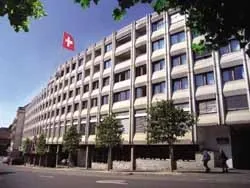
In 1893, the world's first specialized educational institution training professional hoteliers appeared in Switzerland – the Ecole Hoteliere de Lausanne (Lausanne Hotel Management School). Today, there are several dozen hotel management schools in Switzerland, among which the most famous are Swiss Hotel Management School (SHMS), Hotel Institute Montreux (HIM), Glion Institute of Higher Education (GIHE), Les Roches School of Hotel Management, Cesar Ritz College Switzerland, School of International Hotel and Tourism Management (HTMi).
The art of hospitality can also be mastered in Spain. This country should be chosen by those who want to thoroughly learn the Spanish language. In sunny Marbella, there is Les Roches Marbella (a branch of the Swiss school Les Roches School of Hotel Management). And in Catalonia – the School of Tourism and Hotel Management EUTDH at the Autonomous University of Barcelona.
Those who want to grasp the subtleties of French cuisine and perfectly master the language of Dumas should pay attention to the famous Parisian school Le Cordon Bleu, which trains extra-class chefs as well as general specialists in the hospitality sector. A branch of Le Cordon Bleu is located in London.
How Much Does Tuition Cost?
Education at all European institutions training hospitality specialists is paid. In Switzerland, for example, the cost of one semester averages 20,000 Swiss francs (including meals and accommodation).
However, future hoteliers begin to offset the high cost of education while still students, through internships that are very well paid. For example, in Switzerland, an intern can earn from 2,050 to 2,450 Swiss francs per month.
Study Programs
Everyone can choose a program and duration of study according to their taste. In Switzerland, for example, in two and a half or three years (depending on the school) one can obtain a Swiss Higher Diploma in hospitality, and after another year, a bachelor's degree. There are also Postgraduate Diploma programs (for students with higher education), MBA programs, short-term internship programs. One can study as a general specialist or focus on one of the specialized programs.
Among the subjects studied are hotel management, food and beverage operations, front office operations and management, housekeeping management, human resources management, as well as foreign languages: each student studies two European languages (in addition to English, the language of instruction) of their choice.
Great attention is paid to practical classes. In all educational institutions, training is divided into two stages – six months of theory, six months of practice. In Switzerland, for example, practice takes place in such luxurious hotels as President Wilson, Grand Ambassador, Beau Rivage Palace. This is a fundamental difference between European hotel education and domestic education, where traditionally priority is given to theory. Most teachers in European educational institutions have substantial experience working in large five-star hotels.
Where to Live and Relax?
Hotel management schools are usually located in the most beautiful resort areas of Europe, so they offer excellent conditions not only for fruitful study but also for student recreation. As a rule, students live in hotels at the schools themselves, in comfortable double rooms equipped with everything necessary: soft Italian furniture, TV, refrigerator, bathroom. A single room is available for an additional fee. The school grounds have student canteens, restaurants, cafeterias, and even SPA centers. Students have excellent conditions for sports: modern fitness centers are at their service, and most schools have student football, volleyball, and basketball teams.
Friends around the World
Studying hospitality in Europe is an excellent opportunity to make acquaintances around the world. Leading hotel schools attract students from many countries – China, Korea, Indonesia, the USA, Latin American countries. After graduation, the connection between alumni does not break: most schools have alumni associations that correspond, call each other, periodically meet, and help each other in career building. It is also not uncommon for international couples to form during their studies.
How to Apply
In all European hotel schools, the admission process is roughly the same. There are no entrance exams as such, but the prospective student fills out special application forms in advance, which are specific to each institution.
Separately, we must mention the language proficiency requirements. They are quite high (450-550 points on TOEFL; some institutions accept IELTS and FCE certificates). Instruction is in English, and students with language problems will find it difficult to keep up with their studies and communicate with classmates. Therefore, English must be improved in advance. This can be done either through special courses preparing for international exams or at the European hotel schools themselves, most of which offer language training programs for applicants.
Documents should be submitted at least six months before the start of studies, otherwise, there is a risk of missing the beginning of the first semester. You can prepare them on your own or with the help of educational agencies, which can also assist in obtaining student visas.
Expert Opinion
Graduates of European, in particular Swiss, hospitality schools have not only good theoretical training but also excellent practical skills. They have a perfect command of English, and sometimes several foreign languages, which is highly valued on the labor market. Finally, holders of European diplomas are familiar with advanced technologies in the hospitality industry. It is no coincidence that Swiss hotels are considered a benchmark of quality, notes Maria Zivtin, coordinator of regional projects of Hospitality at the recruitment holding Ankor.
However, many young specialists who are accustomed to receiving high salaries during internships in Europe find it difficult to adapt to domestic realities. Their salary expectations are usually 2-2.5 times higher than what our employer can offer. In addition, they want to become managers immediately and are not ready to start from line positions, which also makes employment difficult.
But career opportunities for graduates of European hotel schools are much broader than for graduates of our specialized educational institutions. The students are more independent and determined. They lived for a long time without parental care, in a foreign country, and organized their own education. They clearly formulate their goals and know how to realize them; they are sociable and positive. Often large chain hotels require a Swiss diploma as a mandatory condition, especially when it comes to recruiting top managers.