
It is worth explaining right away that in almost 100% of cases, the disintegration of a country, despite all globalization and interpenetration of cultures, occurs along ethnic and/or religious lines. And states fall apart, as a rule, due to the escalation of conflicts between different peoples or religious communities.
Europe
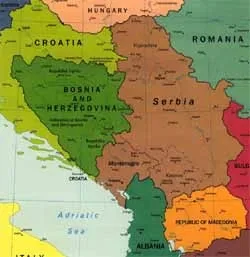
The hottest region of the Old World for 20 years now has been the Balkans. The most uncertain prospects for development are for Bosnia and Herzegovina – the leadership of the Serbian autonomous region within it has recently been increasingly loudly declaring the right of Bosnian Serbs to self-determination and is planning to hold a referendum on secession from BiH. It must be said that if the plebiscite actually takes place, its result will almost certainly not be in favor of a unified country – sociological surveys show that up to 95% of Bosnian Serbs favor the formation of their own independent state.
The situation is no easier in neighboring Macedonia – Albanians living in the west and north of the country are demanding independence. NATO peacekeepers managed to quell the armed interethnic clashes that began in 2001, but the desire to divide Macedonia into parts among local Albanians has not disappeared – now they are trying to do it legally by passing a law on the federalization of the country along ethnic lines through parliament.
However, closest to independence is the region of Kosovo, which still formally remains part of Serbia. According to most experts, Kosovo, populated by Albanians, will become an independent state as early as spring 2007.
In addition, Spain and Belgium have potential chances of disappearing from the political map in their current form (for all the seeming fantasticalness of such forecasts) – in both countries, the positions of local nationalists are strengthening every year, demanding statehood for their ethnic regions, such as the Basque Country and Flanders respectively. By the way, we must not forget that the Basques have not yet renounced armed struggle for their sovereignty, and in Belgium, 'separatists' are getting more and more votes in elections every year.
Asia
In this part of the world, the greatest concerns are raised by Iraq and Afghanistan. These states have actually already disintegrated due to ongoing hostilities and foreign occupation. Thus, Iraqi Kurds refuse to recognize documents issued by the Baghdad government and have long established border posts on the borders of Iraqi Kurdistan. The situation is similar in Afghanistan – many areas in the south and east of the country are controlled by Pashtuns loyal to the Taliban movement, while the northern provinces are held by Tajiks and Uzbeks relying on the support of NATO troops.
The fate of neighboring Uzbekistan also looks uncertain, where religious radicals have plans to proclaim an Islamic state on the territory of the Fergana Valley, which occupies about a third of Uzbekistan's territory.
Africa
As for Africa, here, of course, there is a wide field for a variety of assumptions and forecasts by political scientists. In recent days, increasingly alarming reports have been coming from Somalia. The interim government of this country, trying to rein in the uncontrolled warlords, initially brought Islamic courts to its side. However, the latter soon got out of control, and now Somali politicians have to call for help from the entire international community, including even their historical foe Ethiopia.
Also in a state of semi-disintegration are such ethnically diverse countries as Liberia, Sierra Leone, Côte d'Ivoire. And the largest state in Africa – the Republic of Sudan – is constantly shaken by the confrontation between the Arab and Negroid populations, most clearly manifested in the westernmost Sudanese region – Darfur, where, in addition, considerable oil reserves were recently discovered. UN experts even speak of genocide of the black population, hundreds of thousands of residents of this region have become refugees. Similar strife has engulfed neighboring Chad, where representatives of different races also cannot find a common language.
In principle, the 'arc of instability' runs from west to east across all of Africa, covering a number of countries with mixed populations, including Mauritania, Niger, Ethiopia. And if we add to this the mutual extermination of representatives of different tribes in the 'racially pure' ('black') Rwanda and Burundi in the 1990s, the scale of a possible catastrophe of statehood over a very large part of the African continent seems truly biblical.
Alexey ANDREYEV, Anatoly POMORTSEV.
Novye Izvestiya