
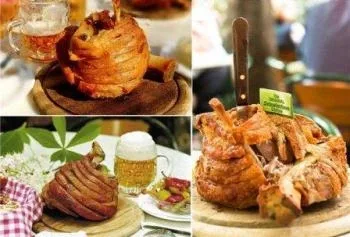
A key feature of Viennese dishes is their excellent taste, high calorie content, and lack of spiciness. Therefore, many hotels in Vienna offer their guests national cuisine, allowing them to experience the true Austrian atmosphere.
In many restaurants, cafes, or bars of the Austrian capital, you can try traditional Viennese schnitzel, sausages, goulash, roast beef with onions, Kaiser's omelet, apple strudel and other sweet pastries, as well as unique Viennese pancakes.
Most Viennese dishes were originally invented by peasants, and over time they were refined to such an extent that they satisfied even the refined tastes of emperors and their entourage. These dishes did not bypass the Belvedere Palace, built in the 18th century. Its inhabitants and guests once enjoyed various culinary masterpieces.
It is known from history that such dishes as beef roast with onions or Viennese rump were prepared not only by imperial cooks for special celebrations but also by ordinary working people. Austria is especially famous for a wide variety of pastries such as horns, dumplings, rolls, cones, and of course, buns with original fillings.
Austrians have learned to turn any simple dish into a delicious culinary work of art, using certain tricks and inventing elaborate names for them. For example, among first courses, the soup loved by Franz Joseph I is world-famous, and thus named after him. It is prepared from artichokes, potatoes, leeks, and celery fried in butter, then pureed and mixed with cream. When served, each plate is topped with smoked tongue cut into strips and truffles.
The hallmark of Viennese cuisine is, of course, the tender and aromatic sausages, which can be enjoyed both on the street and in cafes. There are so many street food stalls offering Austrian national dishes that no tourist will refuse a tasty and satisfying treat, especially when paired with a glass of beer or a mug of fragrant mulled wine.
Austrians have also turned the popular English roast beef into a unique national dish. Its distinctive flavor comes not only from special preparation but also from a signature seasoning called Apfelkren, a combination of sharp horseradish with the mild taste of apple.
Skillful smoothing of spiciness underlies many Austrian dishes. This is the secret of their unique taste. For example, instead of hot pepper, goulash uses anchovies. Plain mashed potatoes become extraordinary when wine vinegar, grated onion, olive oil, and anchovy paste are added.
Viennese cuisine also includes numerous game dishes, whose taste is exquisitely complemented by original dressings and sauces. For example, for cold game, a sauce called Ribisel is prepared, consisting of fresh currants and crushed breadcrumbs.
The trick in preparing Viennese schnitzel lies in using meat from a young calf, cut into incredibly thin portions and served with lemon slices and a handful of capers. One of the delicacies on the restaurant menu in Vienna is cauliflower baked in yeast dough mixed with wine. Potato goulash Viennese style, seasoned with garlic and a bouquet of aromatic spices, is also renowned for its taste.
A special place in Viennese cuisine is occupied by pastries and other sweet flour products. It is almost impossible to resist the famous apple strudel or the chocolate Sacher torte, the highlight of which is a tangy apricot layer. Austrians suggest washing down any dessert with a skillfully prepared Viennese coffee, whose aroma will be remembered for a long time. In this case, it is also appropriate to try a soft local wine.
_