
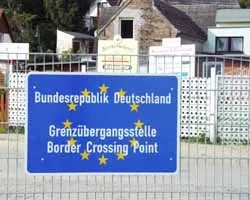
The nature of visophobia
It so happens that our tourists experience two kinds of emotions toward consulates: beginners - a persistent fear mixed with awe of "what if they don't give it," while seasoned travelers feel bitter irony with a sense of inevitability. Consular obstacles for them are a necessary "evil" on the way to achieving their desired goal.
Travel agencies and intermediaries do their best to reinforce the myth that it is unrealistic to get a visa on your own. Who more often and more willingly than they tells horror stories about consulates? That the rules are all different and unclear, and that going to consulates cannot but cause fits of terror in a normal person. It's fine - we are capable, we'll figure it out! For the lazy and incapable, we report that travel agencies price their services at amounts 2-5 times larger than standard consular fees. For example, with a Schengen visa costing €35, it is offered for €110-170 depending on the "difficulty" of the country, provided that you buy only the visa, without a full tour package. At the same time, all that a travel agency does for the traveler in the best case is to take the carefully prepared package of documents to the consulate and stand in line.
Such a high cost of courier services is explained by the risks that the intermediary company takes upon itself: without the ability to thoroughly check the provided package of documents, they risk losing accreditation at the embassy if their client proves unreliable. It is worth noting that reputable travel agencies are extremely reluctant to undertake visa processing without the rest of the tour package, or at least a hotel voucher.
The basics of bureaucracy
The most important thing for consulates is compliance with their rules, and the smartest thing for a tourist is to treat the collection of papers, no matter how stupid they may seem, as a ritual. This is not even a rule, but a law. If he complies with it, the tourist will get happiness in the form of a visa.
In fact, the visa application process is not exactly rocket science. The procedure is determined in the consulate building, where the rules are posted on the walls. There are many different types of visas, but we will consider only tourist versions, regardless of the exact wording of their names in each country. Essentially, we are interested in a nonimmigrant visa for a short stay in the destination country for the purpose of "tourism." Of course, the conditions for obtaining an entry permit vary from country to country, both in terms of validity (short-term visa, for three months, six months, a year) and the number of trips (single-entry and multi-entry), and the requirements for applicants. Let us note right away that the embassy is not our story; visa matters are handled by the consulate or the consular section at the embassy.
Rule No. 1 - about two months before the trip, you need to familiarize yourself with the list of documents required for submission to the consulate. The easiest way to do this is at the consulate itself or on the Internet. On the official website!
Today, most consular services have their own regularly updated Internet resources, which not only contain information on where and at what hours to apply, but also a full list of required documents and even an application form in PDF or Word format. The latter can be printed out and filled in leisurely, thoughtfully, at home, or at least practiced on. It would not hurt to call to make sure that the application form has not become outdated and is still accepted (with the exception of forms printed on self-copying paper).
Some consulates post tips on how to fill out the application form correctly and provide explanations for specific questions. For example, those born in the USSR, i.e., all citizens born before 1991, must indicate the correct country in the "place of birth" field - the USSR, not Ukraine, Russia, etc. Such advice really helps deal with bureaucratic pitfalls. To find the right website on the Internet, you need to enter in your search query: "Embassy (country name) + official website."
What comes first: hotel booking or proof of income?
Consular offices located in our country are divided into two categories.
For the first, the most important thing is an invitation confirming hotel reservations in France, Italy, Spain, etc. (or a tourist voucher). Any hotel can send us a written confirmation of the reservation (we will write about this in detail in one of the following issues). But there are nuances that need to be clarified at the consulate in advance. For instance, in some places a fax with all the hotel details is enough (Switzerland, Italy), while elsewhere an original with confirmation of prepayment is required (Germany).
Therefore, it is always necessary to ask the hotel to send the booking confirmation on letterhead with a logo and contact details. For particularly picky officials, it is better to do this via the consulate's fax number, so that no complaints about the paper can arise (although it is worth noting that there are also those who ask to bring all documents in person and not send anything by fax).
In some cases, it is necessary for the confirmation sent by the hotel to clearly state that the hotel, as the inviting party, fully assumes financial responsibility for the tourist's stay in the country (Austria, Germany).
For the second, the most important thing is the applicant's financial well-being and reliability. Such consulates operate on a "presumption of guilt" principle, and the tourist faces the task of proving that he does not have the absurd intention of immigrating. Try to provide all possible documents that refute such an assumption. This is especially important at the consulates of the United States, Great Britain, Australia, and Canada.
Only with the help of a solid financial dossier can one convince the consul that, by issuing us a tourist visa, he will not cause irreparable damage to his country.
Here you will need bank statements, various certificates of property ownership and, most importantly, a proper certificate from work. Thus, a salary of around $500 a month and above is what suits the Schengen area today. By the way, if you cannot obtain an official certificate of such amounts, try writing an unofficial letter from your place of work - it is better than nothing. You should not try to deceive consular staff; false information leads to a visa refusal. It is simpler to think of another source - a sponsor. Thus, housewives do not need to fake documents; it is better to bring a certificate from their husband's work and a guarantee letter in which the spouse undertakes to pay expenses.
Obtaining the necessary papers!
Generally speaking, no consulate asks for any extraordinary documents. Here is their average list.
The following will almost always be required:
* 1-2 completed and personally signed visa application forms;
* 1-3 photographs (requirements vary);
* passport (most countries require a passport valid for at least three months after the end of the visa validity, but there are exceptions – for example, the UK and Australia require a passport valid for at least 6 months);
* internal passport with residence registration (original and copy);
* medical insurance policy - insurance for those travelling abroad (original and copy);
* state fee for processing the visa application;
* confirmation of hotel payment or booking;
* travel tickets or reservation;
* documents confirming financial solvency and strong ties to the home country (variations: a certificate from work about salary, a bank statement from a credit or debit card showing an amount sufficient for living in the country for the duration of the trip, tax returns, property ownership documents, etc.).
All consular offices reserve the right to request additional documents if necessary.
Schengen subtleties
The first thing an independent traveller must remember is that, alas and alack, Schengen was made not for us but for them. When removing internal borders, Europeans thought about the welfare of their own citizens, not about the benefit of outsiders. Of course, a Schengen visa opens possibilities for free movement across Europe for the tourist, but it still needs to be obtained.
In the application form, you must state that you plan to travel outside the country during your journey; then it may be possible to obtain a multiple-entry Schengen visa rather than a single-entry national visa.
If you do not announce your intentions, the visa officer may decide to issue a national visa, which is good in all respects, but with it you cannot go anywhere except the destination country. As for the first entry rule, which states that a foreigner must enter the territory of the tempting space called “Schengen” through the border of the country whose consulate issued the visa, it has many exceptions: it is waived when travelling by bus, train, private car, or on a transit flight.
Second: a Schengen visa is issued for exactly the amount of time requested, with rare exceptions. Therefore, if you need to have extra days of stay in the country, you must also provide the consulate with a hotel reservation covering that period.
Another important point: all previously held single-entry visas in the passport must be definitely closed! Make sure that border guards do not forget to stamp them, especially on exit, otherwise problems may arise in the future. You cannot have two valid Schengen visas at the same time. One of them must be closed. It is also recommended to cancel unused visas (for example, if you were unable to travel). Details of the procedure for cancelling open visas can be obtained at the consulate.
Remember: all consulates want one thing - to let into their country a loyal, law-abiding, reliable and solvent tourist. These are the qualities you need to demonstrate. And then the sticker that opens the doors to a new world will become a worthy decoration of your passport!
Specifics of some countries
THE FRENCH love a weighty file - they want photocopies of all filled pages of all passports, including old ones. They also prefer already purchased plane tickets.
THE BRITISH do not need tickets - a copy of the waiting list is enough, but they like a paid hotel more than a booking.
THE GERMANS believe that even a document proving preliminary payment for a hotel room is not enough to issue a visa. For an individual traveller, it is obligatory to contact a travel agency, and the travel bureau must have accreditation with the consulate and German partners. In general, for Germany it is necessary to buy a hotel accommodation voucher from a travel company.
THE ITALIANS AND SPANIARDS are very fond of making verification calls to the visa applicant’s workplace and, at the same time, welcome individual travellers.
THE FINNS treat the all-Schengen rule with the greatest reverence, according to which our tourist must stay at the hotel he indicated in the documents when applying for a visa. The hotels themselves are obliged to provide this information to them and, believe me, they do.
JAPAN AND NORWAY require travellers to provide a stay plan and tourist itinerary.