
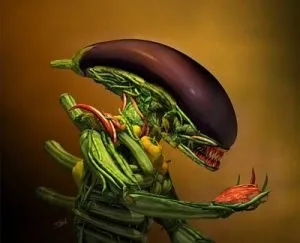
Visitors will surely enjoy two parallel exhibitions at the Vienna Museum of Art History: the 16th-century inventor Arcimboldo is juxtaposed here with the modern inventor Bernard Pras. At the Prado Museum, as usual, they are occupied with national art: 'Goya in the Years of War' opens there. The Paris Doll Museum offers an interesting exhibition 'Awakening of the Five Senses', you can stop by here with children. As well as the exhibition of model railways in British Derby.
Read more about these and other April events of interest to travelers in the next issue of 'Exhibitions of Europe' from Gazeta.Ru.
AUSTRIA
Exhibition 'Oskar Kokoschka. Late Work', April 11 - July 13, Vienna. The exhibition of works by Austrian artist Oskar Kokoschka (1886–1980), created between 1934 and 1980, is a continuation of the artistic project of the Vienna gallery 'Albertina' 'Late Work of Great Artists'. As part of this project, exhibitions of Pablo Picasso and Egon Schiele have already taken place. 'Exile and Finding a New Home' is the subtitle of the exhibition, which reflects a new stage in Oskar Kokoschka's life – a period of wandering and emigration. After his paintings were presented at the 'Degenerate Art' exhibition in Nazi Germany in 1937, the artist was forced to leave for England. In 1953 he moved to Switzerland, where he would remain until the end of his life. About 140 works from this period of emigration will be presented at the exhibition at the Albertina. In the artist's late work, landscapes and large compositions on classical themes predominate ('Thermopylae', 1954), and during these years series of lithographs ('King Lear', 'Odyssey', 'Saul and David', 'Trojans') and sets for the operas 'The Magic Flute' and 'A Masked Ball' were created. //www.albertina.at
Exhibitions 'Arcimboldo' and 'Bernard Pras – Arcimboldo of the 21st Century', until June 1, Vienna. At the end of last year, the Luxembourg Museum in Paris successfully hosted an exhibition of one of the most mysterious artists in the world – Giuseppe Arcimboldo (1526–1593). He 'composed' human portraits and allegorical figures from a variety of objects – flowers, fruits, vegetables, shells, animals, books. Now this collection has moved to the Vienna Museum of Art History, but it runs there in parallel with an exhibition by contemporary artist Bernard Pras, who is often compared to Arcimboldo. His 'composite' photographic portraits ('Einstein', 'Louis XIV', 'Salvador Dali', etc.) are truly Arcimboldian in their inventiveness, skill, and originality, and they are created based on installations of objects that carry symbolic meaning and are an important part of the personality, according to the artist. Visitors will be curious to compare Pras's installations and finished photographic portraits, as well as these two exhibitions. //www.khm.at //www.pras-bernard.com
BELGIUM
Art Fair Art Brussels, April 18-21, Brussels. 'European platform of contemporary art' – that is how the organizers position this art fair, which has existed since 1968. Contemporary art at the fair will be presented by 178 galleries from 25 countries and independent artists. 25 thousand visitors will have to sort through this. Some galleries traditionally exhibit only works by young, promising artists. In addition, various performances are held at Art Brussels, including so-called one-man plays. A ticket to the exhibition costs €15, and on April 18 there will be a 'free entry for ladies' event. //www.artexis.com //www.artbrussels.be
Exhibition of works by Jean Cox, until June 15, Antwerp. The Royal Museum of Fine Arts Antwerp has opened an exhibition of Belgian artist Jean Cox (1919–1980), whose name is associated with the era of artistic groups in search of a new imagery in 20th-century painting. In 1945, Cox organized the group 'Young Belgian Painting', then joined the international artists' association CoBrA (an acronym from the names of cities Copenhagen, Brussels, Amsterdam), which existed from 1948 to 1951, then led an art group in Boston, and after returning to Belgium in 1974 – the Antwerp artists' association De Zwarte Panter. Among his contemporaries, Jean Cox was always distinguished by his search for new interpretations of classical subjects in the modern 'terrible' world – the Homeric epic, ancient mythology, gospel subjects. The exhibition of the artist's works in Antwerp consists of 5 sections: 'The Artist's Life', 'The Creative Process', 'Female Images', 'Orpheus', 'The Iliad'. //www.kmska.be
GREAT BRITAIN
Jubilee exhibition of Pompeo Batoni, until May 18, London. A jubilee exhibition of paintings by Italian artist Pompeo Batoni (1708–1787), prepared for the master's 300th anniversary, is running at the National Gallery in London. Batoni's work, which came during the turbulent era of Baroque and Classicism, maintains independence from the contrasting tendencies of these movements and marks an important stage in the history of 18th-century painting. The exhibition will present works by the artist from European museums and private collections in all their genre diversity. These are paintings on gospel, allegorical subjects ('Time Destroys Beauty'), mythological ('Hercules at the Crossroads', 'The Flight from Troy'), as well as series of portraits. In the mid-18th century, Pompeo Batoni became one of the most fashionable European portraitists, and his allegorical portraits such as 'Marchesa Merenda as Flora', 'Isabella Potocka as Melpomene', etc. were especially popular. This fame also extends to his historical painting, which will also be presented at the exhibition. //www.nationalgallery.org.uk
29th Model Railway Exhibition, April 19–20, Derby. This exhibition, rare in the modern world, has been held for a quarter of a century, and its popularity grows year by year, as it is nostalgically attractive to adults and always relevant to children. The exhibition in Derby, which will take place at the Assembly Rooms, will feature about 100 newest and retro model railways – carriages, steam locomotives, electric locomotives, special equipment, and 'structures.' In addition, there will be sessions demonstrating models in action with various special effects. //www.mmrg.org.uk //www.assemblyrooms-derby.co.uk
GERMANY
5th Berlin Biennale of Contemporary Art, until June 15, Berlin. In early April, another review of contemporary art opened in Berlin – the 5th Berlin Biennale. The main event this year was a large exhibition of 50 contemporary artists from different countries under the general title 'When Objects Don't Cast Shadows' at the Institute of Contemporary Art. Among other art venues of the biennale are the New National Gallery (Neue Nationalgalerie), where installations and media art will be presented, Skulpturenpark Berlin Zentrum, located near the Berlin Wall, and the Schinkel Pavilion, which will host an exhibition of contemporary design. As part of the biennale, a series of concerts 'My Nights Are Better Than Your Days' will take place – these are performances, music and theater evenings. //www.berlinbiennale.info //www.neue-nationalgalerie.de
European Media Art Festival EMAF, April 23–27 (exhibition will continue until May 25), Osnabrück. The theme of this year's European Media Art Festival is 'Identity.' As usual, at this contemporary festival, film criticism has selected only new works from recent years for demonstration – about 200 experimental works in which 'moving images' are projected, contextualized, and evaluated differently than in the more familiar and static system of cinema or television. Based on the festival results, three awards will be given in the categories of 'Film' (experimental films, music video), 'Installations,' and 'Performances' (interactive installations, color-sound objects, live acts). After the festival ends, the installation exhibition can be seen until May 25 at Kunsthalle Dominikanerkirche. //www.emaf.de
SPAIN
Exhibition 'Wartime in Goya's Works,' April 15 – July 13, Madrid. This year, the main spring exhibition at the Prado Museum in Madrid is dedicated to the 200th anniversary of the tragic events of 1808, when King Charles IV of Spain was overthrown, and in July the War of Independence against France began. The exhibition is devoted to how these events were reflected in the world of painting and in the life and work of Francisco Goya (1746–1828). In 1799, Goya received the title of First Court Painter, but in the same year he created his most famous series of engravings, 'Caprichos,' consisting of 80 sheets and dedicated to human madness and folly. The struggle against the French occupation, the fall of the old regime, and the crisis did not leave Goya indifferent, but the thinking artist found himself in an uncertain situation: as a Francophile, he supported the reformists, but saw the atrocities of Napoleon's army and the cruelties of war. In those years, Goya turned to engraving and in 1810 began work on the series 'The Disasters of War,' and a little later created two large historical paintings – 'The Uprising at Puerta del Sol' and 'The Execution of the Madrid Rebels.' These paintings will become the conceptual center of the exhibition at the Prado. Interestingly, after the return of King Ferdinand VII to Spain, Goya retained his position as court painter, but after the repression against liberals began in 1823, the artist became a 'voluntary exile' and died abroad – in France. //www.museodelprado.es
ITALY
Monographic Exhibition of Sebastiano del Piombo, until May 18, Rome. At the Palazzo Venezia in Rome, an exhibition of the Italian artist Sebastiano del Piombo (1485–1547), a contemporary of Titian, Raphael, Giorgione, and Michelangelo, is being held with great success. Little information has been preserved about the artist's early, Venetian period, as his name became popular only after his move to Rome in 1511. From 1511 to 1520, Sebastiano del Piombo created a series of portraits ('Portrait of a Violinist,' 'Portrait of a Young Woman'), which allowed him to compete with Raphael himself, after whose death in 1520 Sebastiano became the best portraitist. In 1520–1527, the artist developed an individual, unprecedented monumental portrait style. 'Portrait of Pietro Aretino,' 'Portrait of Andrea Doria,' 'Portrait of Pope Clement VII' – all of them are characterized by the dramatic individuality of the model. In the 1530s, the artist turned to Gospel subjects; in most paintings of this period, there is a search for massive, simplified forms, excluding secondary details ('The Carrying of the Cross,' 'Pietà'). The exhibition presents 35 paintings and 18 drawings by the artist, as well as 3 paintings by Michelangelo, since it is known for certain that Michelangelo sometimes created drawings for Sebastiano del Piombo's paintings. //www.galleriaborghese.it //www.wantedinrome.com
Exhibition 'Rome and the Barbarians,' until July 20, Venice. Until mid-summer, the Palazzo Grassi in Venice is hosting a cultural exhibition 'Rome and the Barbarians,' dedicated to the history, daily life, culture, and art of the late antiquity and early Middle Ages. The main philosophical aspect of the exhibition is the idea of catastrophe and continuity of this complex historical period, the idea of the birth of new Western European art. The Venetian exhibition features archaeological and artistic objects from many museums in Europe, Africa, and the USA. Many of them are on display for the first time. //www.palazzograssi.it //www.vivaticket.it //www.guidevenezia.it
NETHERLANDS
Exhibition of John Everett Millais, until 18 May, Amsterdam. The Van Gogh Museum in Amsterdam and the Tate Gallery in London have organized a joint exhibition dedicated to the work of one of the founders of the Pre-Raphaelite Brotherhood, the English artist John Everett Millais (1829–1896) and his 'followers' – contemporary artists. In general, Millais is considered a 'one-painting artist', since all his other work sparked numerous controversies and contrasting evaluations. His early works were not accepted by the respectable public ('Lorenzo and Isabella', 'Christ in the House of His Parents'), and they had to be defended by the influential critic Ruskin, while his later creations from the period of a 'comfortable' academic career were not accepted by the youth, who were seeking new paths in painting. The Amsterdam exhibition displays about 100 works by Millais, including his famous 'Ophelia'. It is precisely this painting that serves as the occasion for a kind of 'dialogue' with contemporary artists, who presented to the audience photographs and video installations of a new understanding and vision of the image of this mysterious Shakespearean heroine. 'I, Ophelia' – that is the name of this section of the exhibition. \/\/www2.vangoghmuseum.nl
FRANCE
Exhibition 'The Awakening of the Five Senses', until 28 September, Paris. Exhibitions at the Musée de la Poupée in Paris are very successful not only with children but also with adults. Firstly, the Musée de la Poupée itself is famous for its unique collection of over 500 exhibits of different 'ages' – from the early 19th century to the present day. Secondly, the exhibitions held at the museum are always educational thanks to historical, cultural, and scientific aspects presented in a simple and accessible form for children of different ages. Recently, the museum opened an exhibition dedicated to the role of dolls and toys in the development of children's five basic senses. Five sections feature toys (from 1850 to the present day) that can stimulate and develop sight, hearing, touch, smell, and taste. Visitors are allowed not only to look at the exhibits but also to touch them, and sweets similar to the 'exhibition' ones can be tasted in a special section. \/\/www.museedelapoupeeparis.com
Monographic exhibition of Lovis Corinth, until 22 June, Paris. The Musée d'Orsay, together with German and Swiss museums, has prepared its main spring exhibition – a monographic exhibition of the German painter Lovis Corinth (1858–1925). The exhibition is dedicated to the 150th anniversary of the artist's birth and is called 'Between Impressionism and Expressionism', which corresponds to Corinth's creative path. Having played a major role in the Berlin Secession, of which Lovis Corinth became president in 1911, and having gained fame in the 1910s as one of the main German Impressionists, at the end of his life the artist created a series of paintings within the aesthetics of Expressionism ('Red Christ', 'Portrait of Bernt Grönvold', 'Ecce Homo'). The exhibition presents paintings on biblical themes, landscapes, genre scenes, portraits and self-portraits, nudes, as well as etchings and lithographs by Lovis Corinth. \/\/www.musee-orsay.fr