
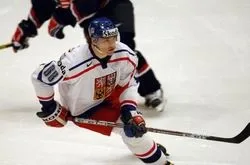
America and Russia are not friends
A very large number of NHL players have settled in Russia, whose championship everyone unanimously began to call the strongest in the world. The season in Russian hockey really went well, and the country's national team also got the opportunity to attract almost all the strongest professionals under its banners. But will Russians be able to continue to enjoy live the play of Yashin, Kasparaitis, Kovalev, Jagr, Heatley, Khabibulin, Gonchar, Datsyuk, Semin, Frolov, Zherdev, Nylander, Sykora, Elias and other stars?
Much in this matter depends on how successful the next negotiations between the NHL leaders and the players' union will be. After all, in the balance of power that existed before the start of the just-concluded season, the players' positions were stronger. But they apparently did not count on such stubborn reluctance of club bosses to part with big money in the future (it was the financial issue that became one of the stumbling blocks in the negotiations). And the protracted lockout turned out to be in the League's favor, whose clubs mostly managed to save considerable sums on salaries and bonuses, and in addition, they received the right to hire so-called strikebreakers from the new season.
NHL stars, of course, do not like this, and they have already made serious concessions. But the NHL bosses, having turned out to be not timid ten, began, in simple terms, to twist the arms of the recalcitrant: they tightened their demands even more, making it clear to the players that the longer they persist, the worse it will ultimately be for them. After all, many did not go to Europe this season and devoted the year to rest. But time is passing, the age range in which a hockey player is in demand on the market is shrinking, and they need to bring money into the family.
In other words, the NHL is wearing down its players. At the same time, former hockey players - the great Wayne Gretzky, for example - have made it clear that they do not understand representatives of the current generation of stars. Gretzky (owner of the Phoenix Coyotes) even stated that he is ready to begin recruiting players who are not in the union - the aforementioned strikebreakers: "My club does not really like the idea of replacing 700 NHL players with alternative labor. But if the League makes such a decision, we will certainly obey it."
It is not surprising that the negotiation process between the NHL and the NHLPA has revived. The League's demand is a salary cap for players of one club at $37.5 million (for many clubs it is higher than $50 million), as well as a strict correlation between player salaries and League revenues - 54%.
The union needs to do something to save face and its significance, because in the event of failure of the next negotiations and continuation of the lockout for another season, the current bosses may be fired. What is the NHL union for if hockey players are playing in Sweden, the Czech Republic, Russia, Switzerland, Finland? The answer to this question may be received at the end of May, when the annual meeting of union members will take place in Toronto.
... The mess in the NHL is extremely advantageous for Russia. The Russian Hockey League can retain many leading hockey players and once again delight fans of the fastest game in the world with an abundance of stars. Especially since over the year the attitude towards Russia from the rest of the world has improved a little. Bears, it turns out, do not walk the streets in this country, and other tall tales turned out to be just tall tales. Although, naturally, when seasoned NHL players encountered Russian reality, they had, to put it mildly, a culture shock. Russian journalists, especially those who had seen the inner workings of the NHL with their own eyes, wrote a lot about this. No less interesting are the materials of special correspondents from North American publications who visited the Russian Federation. Hockey reporters who were left without their usual work for a year had to cover many kilometers to once again meet the heroes of their stories. As it turned out, everyone's impressions were very vivid.
Six months ago, Zagranitsa already wrote that one of the main factors that scared NHL players from traveling to Russia was the extremely strict regime of life of local hockey teams. Even Russians, who knew about it firsthand, upon returning to their homeland, were indignant (some even left), which gave reason to call the Russian league a league of strict regime. Foreigners, of course, heard from Russians a mass of stories about the harshness of the rules in their country, and therefore even the temptation to earn big money during the lockout (in Russia, stars were offered the highest salaries in the world) could not push many of them to move to this country. North Americans know perfectly well what a hotel, a palace, and a training rink are. But an overseas hockey player does not live on a base. Moreover, he has no idea what that is. And anyone who wants to explain to a native of the USA or Canada the principles of life on a base will need a lot of time and effort. As well as to explain what propiska and registration are, and what cucumber brine might be useful for. Although over time, the factor of staying at bases and the stricter regime was somehow managed, and the most genuine NHL stars with foreign passports went to our eastern neighbors.
The Russian Hockey League approaches its North American sister, perhaps, only in the level of hockey players' salaries. In everything else, the NHL is head and shoulders above. Both in major matters (for example, team support) and in minor ones (for example, working conditions for journalists). Let's start with the latter. North American journalists, heading to Russia, were prepared for the conditions of their local colleagues not being as good as their own. But what they saw exceeded all their expectations. One Russian commentator compared them to owners of a shiny "Cadillac" who had to switch to a rusty moped: "And could they have been different, if after working in Toronto at the World Cup in the energy-brimming and state-of-the-art Air Canada Centre, five days later you find yourself in a tiny, hermetically sealed 'cradle' with frosted glass, which in the Voskresensk ice palace 'Podmoskovye' is proudly called the press box? Into which you cannot even dream of carrying past the guards a cup of cola bought in the lobby. And which a couple of weeks later, after visits to all Moscow arenas, will seem like a paradise just because they thought to install a table..."
In every American palace, a separate tier is allocated for the press box, accessible only with accreditation. At each seat, of course, there is both an electrical outlet and a dedicated phone line. Generally, speaking about the presence of such things in America is as absurd as mentioning the existence of ice and hockey goals on the rink - it's all so self-evident. Even in Luxembourg, at a tiny provincial stadium in Niederkorn, where the Russian youth football team met the hosts, there were outlets! They were installed in advance, without any requests or scandals, into tables specially set up for a single match.
To summarize the situation in one phrase - in most palaces there is absolutely nothing. At some arenas, even tables are not provided for journalists. You have to hold the printed starting lineups, if anything, in your teeth. Such an attitude can only be called negligence - especially since any club would incur less material expense in providing journalists with basic working conditions than the lowest-paid Super League player earns in half an hour.
A separate topic is the over-vigilance of sports facility workers, who from the entire great and mighty language can utter only one phrase: "Not allowed!" And consequently, organizing interviews with hockey players right in the locker room, as is customary in the NHL, is as realistic as flying to the Moon. You have to catch athletes in the lobbies, prying them away from relatives, or near buses, competing with autograph collectors. After all, work is work, and the editorial office demands interviews with the heroes of the match. And where else can you get them if, literally two minutes after the final siren, the Voskresensk grannies - workers of the ice palace 'Podmoskovye' - with agility enviable for their respectable age, shove everyone out into the street and instantly lock the doors from inside? "What press conference? What interviews? What reports, sonny, our working day is over!"
American journalist John Manasso from Atlanta visited Kazan, where one of the main symbols of the "Atlanta Thrashers" - Ilya Kovalchuk - plays. But despite all the interest in the "Thrashers" players playing in Russia, Manasso did not ignore in his notes more general things. Such as, for example, the structure of the Russian hockey league and the life of its players.
"Revenues from ticket sales and television contracts amount to a crumb of the multi-million costs of maintaining clubs, most of which, as a rule, fall on the shoulders of one or another local industry or factory. Hence the team names: 'Khimik' - in honor of the chemical plant in Voskresensk, 'Lada' - the car manufacturer in Tolyatti, 'Metallurg' - in honor of the metalworking industry in Magnitogorsk and Novokuznetsk. Created during the communist era, the Super League continues to resist with all its might the invasion of the laws of a market economy - except for those according to which the best players go to those who pay more.
So, while Switzerland - the choice of most North Americans - or Finland, or Sweden, or the Czech Republic offer a more comfortable standard of living, Russia, lacking such conditions, lures with top-class hockey and big contracts. The largest arena of the Super League is in St. Petersburg and seats about 13,000 spectators - a figure that in the NHL would be in last place with a huge gap from the second-to-last. Several Russian clubs are in the process of building arenas with a capacity of around 10,000 - to comply with the rule coming into force next season, according to which all Super League arenas must seat at least 5,000 fans."
The absence of a need to earn money can be both admirable and infuriating: access for journalists, as well as the sale of club merchandise, are in a prehistoric state here. This league has virtually no formalized access rules for media workers, except for post-match press conferences of head coaches. With rare exceptions, reporters are not allowed to attend practices, they are not allowed into dressing rooms, and therefore access to hockey players can at best be described as unsystematic. While waiting for players, journalists, bickering with security guards, are forced to set up bivouacs in lobbies and parking lots. When asked how long he had not played in Russia, defenseman of the New York Rangers and Kazan's Ak Bars Darius Kasparaitis grinned: "Twelve wonderful years. Many comfort indicators typical of the NHL are indeed absent here. For example, local clubs do not have equipment managers who would carry players' bags and try to fulfill any player's wish. The responsibility for clearing pucks from the ice after practices falls on the shoulders of one of the young hockey players. If anything can genuinely excite a Russian hockey player, it is, of course, refereeing. This looks quite cynical. Players talk about bribing referees as if it happens at every step."
Another North American - Michael Farber - after visiting Russia, also reduced all the advantage of the Russian hockey league over other European championships to the financial factor: "It was money that became the main lure for NHL players. Czech Jagr's antipathy to communist rule was so great that in his youth he carried a photo of Ronald Reagan in his wallet, and in memory of the Prague Spring he has played his entire career wearing number 68. However, in November he left the team of his native Kladno after playing only 17 games. National loyalty does not pay bills; they are paid by a contract from Avangard. Canadian Brathwaite may use a successful season with Ak Bars as a springboard back to the NHL as a backup goaltender, but for him, too, the main part of Russia's attractiveness was a salary exceeding his last year's income in Columbus. Russian Kovalchuk, who would now be playing his fourth season with the Thrashers, will probably earn more in Kazan than he would have in Atlanta..."
It is interesting what will happen if the lockout lasts another year and even more NHL players come to Russia?