Money
Unsinkable Island
Continued. Beginning: THE COUNTRY OF RISING DEBT<\/a><\/strong><\/p>
Old age is no joy <\/strong><\/p>
The main expenditure item of the treasury is social benefits for citizens of retirement age. Out of 92.4 trillion yen ($1.15 trillion), 31 percent goes to this, and another 25 percent goes to government loan payments.<\/p>
In the country, about 22.9 percent of the population is people aged 65 and older. With an average life expectancy of 82 years, the birth rate is 1.21 newborns per woman, which does not ensure population replacement. In other words, Japan has fewer and fewer working hands and more and more recipients of government benefits.<\/p>
This creates a host of problems. For example, the outflow of funds from pension funds due to the increase in the number of pensioners is gradually reducing the resources of domestic investors, who will buy fewer government bonds. And then how to refinance the huge government debt? The Public Pension Fund alone, together with Japan's Post Bank, holds 35 percent of the country's total debt, and they are no longer able to lend more to the government.<\/p>
By and large, the authorities have no painless ways left to solve the problem of exorbitant government debt. Additional pumping of trillions of yen into the economy to stimulate growth, together with tax cuts, will lead to an even greater expansion of the debt hole – they will have to borrow abroad when the wallets of local investors run dry. This will lead to higher borrowing rates, since foreign financiers will not be so loyal and will demand a risk premium. According to IMF calculations, if government bond yields rise by 100 basis points, interest payments will double and amount to 4 percent of GDP. Default is scary to even think about.<\/p>
The most painful but perhaps the only way out of this situation is austerity in everything and total savings together with tax increases. The corresponding program has already been announced and is now being implemented with difficulty by the state. But as the authorities state, fiscal policy will be tightened, even despite protests.<\/p>
Deputy Finance Minister Fumihiko Igarashi stated that the state will have to raise the sales tax from 5 to 17 percent. Measures to limit government spending together with tax increases, according to officials' calculations, should reduce the country's budget deficit to 7.4 percent by 2015 from the current nearly 10 percent.<\/p>
In addition, the government hopes that the tax increase will cover a large part of the nearly $244 billion allocated for the reconstruction of areas affected by the March disaster.<\/p>
The Unsinkable Island <\/strong><\/p>
The "Great Earthquake" on March 11 and the subsequent tsunami effectively divided modern Japanese history into two periods: before and after the disaster. The country, which had experienced two nuclear explosions and the devastating Kobe earthquake in half a century, once again faced a large-scale calamity that nonetheless united the nation in the face of danger. Of course, the topic of radiation and Fukushima does not disappear from newspaper front pages (every now and then they find a radioactive can of juice or something like that somewhere in Tokyo), but residents make it clear through their demeanor that life goes on and there is essentially nothing to fear.<\/p>
Civil responsibility is demonstrated by a simple fact: after Fukushima, the government asked the population to reduce electricity consumption by 10 percent, and the Japanese went ahead and reduced it by more than 20 percent.<\/p>
Many economists suggested that after the tsunami, the Japanese economy could emerge from its long lethargic sleep thanks to reconstruction work. This prediction partly came true: Q3 figures were indeed good – growth of 6 percent compared to the same period last year. However, this surge has a short-term effect: the country still does not have many industries capable of awakening the "Asian dragon." Everything in Japan is already developed to the limit, and on top of that, the global crisis is weighing on demand. As a result, experts forecast Japanese economic growth of 0.4–0.8 percent for the year. But this is still better than the eurozone's 0.2 percent.<\/p>
All hope rests on the automotive industry, in which the Japanese are very strong, and on the tourism industry, which suffered greatly from the March disaster. Tourists who had already booked trips began to cancel them en masse after March 11, and crowds of foreigners fearing radiation flowed out of the country. As a representative of the Japan Tourism Ministry told Itogi, after the Fukushima tragedy, the flow of foreign visitors decreased by 50-60 percent, and only now, after the disastrous summer months, is it gradually recovering.<\/p>
In an attempt to somehow revive the tourism market and overcome the negative news, the ministry even approved a program to pay for 10 thousand trips to the country for well-known foreign bloggers. Nevertheless, it is unlikely that more than 6 million people will visit Japan by the end of this year, compared to 8.6 million a year earlier.<\/p>
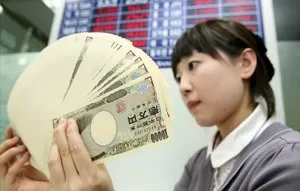
The main problem is not only that foreigners are still afraid of radiation, but also the expensive yen, which reduces the attractiveness of a country with one of the richest cultural heritages in the world. Four years ago, the average exchange rate was 118 yen to the US dollar, but in 2010 it was already only 89. Today it is 78 yen. This makes visiting the country too expensive. Unsurprisingly, according to the Economist Intelligence Unit, the capital Tokyo is the most expensive city in the world.<\/p>
The problem of excessive strength of the national currency may take a back seat. According to a number of experts, the dollar has entered a medium-term phase of strengthening, which will lead to its rise against the yen. 'I believe that the Japanese national currency quotes have reached their maximum values against the dollar, and now over the next year or so it will weaken. The first significant target is 85 yen per dollar, then 95 yen,' forecasts RBC-TV expert Stepan Demura.
Finally, the Land of the Rising Sun can become not only a source of industrial orders for developing economies, but also a global exporter of knowledge and experience. And the Japanese have something to learn from, including for our modernizers. Having a territory more than 45 times smaller than Russia's, and virtually no natural resources, the Japanese economy is more than 3.5 times larger than Russia's, and moreover, it has its own global reserve currency. It is strange that there is not a single Japanese on the advisory scientific council of the Skolkovo Foundation...
Konstantin POLTEV.

