
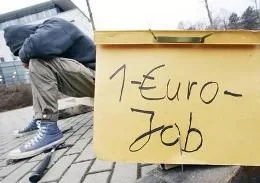
Germans compensate for the decline in income associated with the crisis through illegal side jobs
"The crisis spurred it on. Many employees, especially due to the introduction of shortened working hours, felt a noticeable decline in income, which they had to compensate for," says Schneider. Moreover, people simply had more time to take on side jobs. The professor estimates the total turnover from illegal employment at €253 billion, and for the current year, due to rising unemployment, he forecasts further growth of 7-9 billion euros.
Taxes not paid on these huge sums bypass the state treasury, for which Friedrich Schneider blames, among others, bankers and top managers: "The self-service mentality characteristic of many leaders of the German economy seriously damages citizens' tax morale. Today, people often feel that those responsible for the ongoing disasters get off scot-free, while the little man becomes a criminal for an illegally hired cleaner or laying tiles on a weekend."
Nevertheless, Friedrich Schneider also sees certain advantages of illegal labor activity: "Every medal has a flip side." Of course, the state loses 20 to 25 billion euros per year due to illegal workers, in unpaid taxes and social contributions. Nevertheless, money earned 'under the table,' which the earner would not have otherwise, does not go into a savings book – but is spent immediately. "This is a good stimulus program that helped stabilize sharply declining consumption in 2009," the economist is convinced.
To prevent the state from suffering such significant financial losses, Schneider proposes a number of measures. One of his main recommendations is to expand the possibilities for tax refunds when using domestic services. In addition, the professor recommends abolishing value-added tax on certain construction work for one year – for example, renovating old houses. According to Friedrich Schneider, if the state takes such measures, the wheel of the German economy will spin significantly faster.
Maxim SMIRNOV.
Russkaya Germaniya