
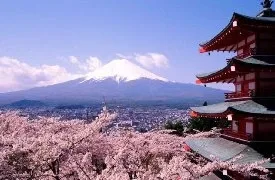
It is better to admire Japan without the usual stereotypes
Tourists going to Japan have an extensive set of stereotypes that they try to blindly follow. But there are things that are better not to do...
1. Do not play pachinko
Although gambling is not welcomed in Japan, the yakuza, of course, found a way around the restrictions and invented "Japanese pinball". You play with heavy metal balls that formally cannot be exchanged for money. But for these balls you get "prizes", which can then be "sold" around the corner in a special shop, of course having nothing to do with the gambling establishment. There is nothing dangerous about going to play pachinko, but do not expect local "casinos" to even remotely resemble the huge halls of Las Vegas. The places for playing Japanese pinball are more like the recently existing "game rooms" near metro terminals: stuffy, noisy, dim, and smoky. You also cannot influence the course of the game in any way. After the throw, the ball uncontrollably flies through the labyrinths inside the machine until it stops.
If you want to be surrounded by many screens and annoying noise, it is better to go to karaoke. Karaoke bars, by the way, also have nothing in common with what you can find in Russia. The entire space is divided into separate booths, and everyone present in the establishment does not have to listen to how you torment your friends' ears. Everything is quiet, peaceful, and private. Often drinks are even included in the cover charge.
2. Do not climb Mount Fuji in "peak season"
During the official climbing season, the peak of which falls in August, you will not only have to stand in a long line just to get a chance to move to the summit, but also later admire photographs full of people of all nationalities, behind which the mountain itself is not visible.
Better choose a quieter time: September or October, when there is still little snow and the ascent is safe. Later, in November or December, you may simply not be allowed on the slope until they verify your mountaineering training. April-May is not suitable due to rains. If the urge for adventure is strong and your health allows, try the Fuji Mountain Race — essentially a race up the mountain.
3. Do not drink at the Park Hyatt hotel bar
The bar at the top of the hotel, made world famous by the film "Lost in Translation", is worth visiting only for those who freeze at the mere name of Scarlett Johansson or Bill Murray. For everyone else, there is no need to pay $40-50 for a small plate of cheese and fruit.
Better look for a less famous place, because you can admire the city views from many points. The first thing that comes to mind is the gallery and coffee shop on the roof of the Roppongi Hills shopping center
4. Do not dress up as a geisha
There are quite a few places that offer to make you a "real geisha". In any of them, for $100-300, your face will be smeared with white paint, your hair will be styled into a geisha-appropriate hairstyle, and your body will be wrapped in a silk kimono. All for a couple of photos that you can show your friends when you get back. Alas, no matter how hard the makeup artist tries, he cannot do anything about your European appearance, and you will still look extremely ridiculous in traditional Japanese attire. In some particularly advanced establishments, they will even allow you to go out into the street fully dressed up to hear the shouts of passersby: "Get the camera out! A real geisha!"
5. Do not travel around the country with the goal of seeing the best cherry blossom bloom
Even if you happen to be in Japan in April, when the trees are covered with a pinkish-white hazy blanket, do not immediately set off on a trip across the country in pursuit of the best place to have a picnic and quietly admire the cherry blossoms. Many do this, starting their journey from the south of Okinawa in March and ending in Hokkaido in early May. In fact, the cherry blossoms look the same everywhere, and it is not worth spending time and money on such a trip.
Better go to the nearest park to your hotel, spread out a mat, uncork a bottle of Asahi, and admire the slowly falling petals. Surely there are more beautiful trees in Japan, whose petals are pinker and larger. But the essence of the holiday is in quiet contemplation, not in hustle and comparison.
6. Do not limit yourself to Hiroshima when exploring Japanese World War II history
The standard tourist route includes the Hiroshima Peace Museum and the Paper Crane Memorial. Of course, both are worth visiting, but then...
— Take a train to Nagasaki and visit the Peace Park. Did you know that the original target of the American pilot who dropped the bomb on Nagasaki was the town of Kokura, which was saved by heavy cloud cover, forcing the command to change the planned mission.
— Visit the Kamikaze Museum in the town of Chiran, Kagoshima Prefecture. Thousands of letters written by pilots going to their deaths to their families are no less impressive than thousands of paper cranes.
— Take a walk in Tokyo to the Yasukuni War Memorial, created in memory of all those who fell in that war.
7. Do not look at Japan through rose-colored glasses
Most tourists who come to Kyoto, despite the urban landscape surrounding them, persistently look for traces of "old Japan", which they are sure must have been preserved here. And finally, stumbling upon the Buddhist temple Honen-in and finding there a monk sweeping the gravel-strewn paths, they exclaim with satisfaction: "Yes! It exists! I found it!" But a few minutes to admire the sight is enough, and the tourist leaves. He returns to modern and interesting Kyoto, which, however, he does not see around him, because his brain continues to draw pictures of "old Japan" for a long time.
Those who find themselves in the country for the first time are usually impressed by stories and legends about mysterious temples, wise monks, and brave samurai. But the truth is that Japan has long been a different country, even though it keeps signs of its past, it already has little in common with them. And it will be much more correct to try to see the country as it is now, not allowing thoughts to carry you far into the past.
Source: Turist.ru