
Visiting Marco Polo
They come here to spend their honeymoon, vacation, or holidays, and idle crowds fill the embankments and narrow streets all year round, unexpectedly leading to tiny squares - each with its own cathedral. You can wander the city for days on end, but the most attractive landmark of the city is St. Mark's Square.
The atmosphere here is quite democratic - and aristocratic. During siesta, from 13:00 to 16:00, the carved arches encircling the square are covered with silk curtains, and in the evening they are replaced by round spheres with a magical glow. Under the arches are the city's most expensive jewelry and souvenir shops and antique stores.
However, you can just thoroughly study the shop windows and then head off, for example, to the La Fenice Theater, where Verdi's operas premiered with fantastic success. The theater's name is symbolic and means "Phoenix" in Italian: it first burned down in 1836 and was completely rebuilt; after the 1996 fire it languished in scaffolding for a long time, but today its doors are open to opera lovers. They gather in a café on a tiny square near the theater long before the performance, arguing about the merits of modern prima donnas in all European languages.
If you wander through the historical streets a bit longer, you can find Mozart's house or the Corte del Milion, where the large Polo family once lived and little Marco played ball with his friends. But you should hurry: every year Venice sinks into the sea by a few millimeters. Following the "New Venice" project, the municipality intends to pump the water out of the canals and begin major repairs before the sea salt completely corrodes the piles on which the historical buildings stand.
Free hits
If you are lazy and incurious, you can spend all your days in Venice only on St. Mark's Square and completely forget about the realities of everyday life somewhere in the Lake Ontario area or the village of Pykhtino. And although you will have to pay for orange juice in a café as much as for a decent lunch, the silver tray, ashtray, ice spoon, and a pile of snow-white linen napkins will elevate any tourist to the rank of a millionaire of moderate means.
In each of the three cafés on St. Mark's Square - Caffè Florian, Caffè Quadri, or Caffè Lavena - orchestras entertain visitors with original arrangements of opera and pop hits. You can only listen to them while sitting at a table (no recordings exist), and pay separately for the music. Or you can listen for free by settling on the nearby steps with a thermos and sandwiches - any manifestation of human weakness on St. Mark's Square is met with understanding. I once witnessed the police chasing a thief, and the crowd just smirked; the sergeant mildly scolded the poor fellow, as if it were all happening on an operetta set. Perhaps it is all about the sense of performance: it does not matter whether you are being chased or you are the one chasing - for those charmed by Venice, the footlights are invisible.
On a motorboat with a breeze
Snobs seeking to escape the hustle and bustle or fame are awaited on a separate island by the luxurious Cipriani. Neighboring crowned heads is pricey, but guests have their own motorboat at their disposal around the clock. At the Excelsior hotel you can try your luck: during the Venice Film Festival, it is teeming with celebrities and movie stars, and the chance of running into DiCaprio or De Niro in the elevator increases every day. At the Hotel des Bains on the Lido, where Visconti shot "Death in Venice", each room even comes with its own private beach cabana, where, shut off from the whole world, you can dream to the sound of the waves. However, high society prefers the luxurious hotels around St. Mark's Square: Danieli, Europa & Regina, Bauer Grunwald, whose pretensions must be matched with your wallet and attire.
However, it is much more practical to choose a cheaper hotel near the station - that is the best way to get to know Venice better (a double room with all amenities and breakfast can be had for as little as a hundred euros; in the St. Mark's area the same accommodations will cost twice as much). You can also find even cheaper lodging in the bedroom community of Mestre. This Venetian Podlipki is a ten-minute ride from the city station, prices are half as much, conditions are quite acceptable, and trains run every ten minutes.
Every day you will have to cover all four kilometers of the Grand Canal to reach the center - St. Mark's Square. And this is not just a sea ride along the "Champs-Élysées of Venice" - it is a panorama of all the city's advantages within the framework of a discounted ticket: every 24 hours, three, or seven days, you can buy a ticket that will cost less than buying a ticket each time you decide to use the water tram, the vaporetto. Fare inspectors are a very common occurrence in Venice, so the best routes are the first, second, and fifth. They make stops most often - so it is easy to slip away from the inspector and not miss the museum you need.
Visiting Desdemona
Along the Grand Canal there are seven churches and two hundred palaces - to suit any tourist interest. If you want to show off among intellectuals, you should visit the Accademia: besides Caravaggio's canvases, pay attention to the ceilings. Ca' Pesaro is an excellent collection of nineteenth- and twentieth-century artists and sculptors; in Ca' Rezzonico you will find the gilded throne of Pope Pius IV and ancient Chinese green lacquer furniture, as well as amusing Venetian scenes by Pietro Longhi and frescoes by Guardi and Tiepolo, and also the interior of an old pharmacy with intricate distilleries and syringes. Admission is about $10; student and other discounts do not apply.
For several centuries, the palazzos on the Grand Canal belonged to the Venetian nobility: in one of the Mocenigo family's palaces lived Giordano Bruno, and later Byron, who, out of love for Venice, once swam the entire four kilometers. And in the Palazzo Contarini Fasan, legend has it, Desdemona lived - it was here that the famous drama unfolded.
Today many palaces have turned into museums and galleries, among them the Palazzo Venier dei Leoni - the Museum of Modern Art. Once the Venier family kept lions in the inner courtyard, today sculptures by Brancusi, Ernst and Giacometti stand there. In the 1940s, the eccentric Peggy Guggenheim took a fancy to the palace - and bought it from the authorities, harboring future geniuses. Dalí, Magritte, Picasso, Kandinsky, Chagall, Klee - the walls of the palazzo are adorned with paintings by the most famous artists of the 20th century.
Peggy knew a thing or two about life: just step out onto the little balcony-jetty in front of the palace, look at the Canale Grande at your feet and imagine the taste of morning coffee amid all that beauty. It is impossible to leave - you keep wanting to return, if not to the museum, then at least to the little restaurant attached to it. Peggy's whole life and her friends' lives are presented here in photographs by Man Ray and James Abbe hung on the walls - you can fantasize as much as you like about 'bohemian life'. Peggy also did not want to part with the cozy palazzo: she is buried in a corner of the garden next to Toro, madam Batterfly, Gipcy, Sir Henri - her fourteen Bolognese dogs.
The Guggenheim Museum is easy to recognize from afar - right in the middle of the balcony-jetty, Marino Marini's bronze 'Angel of the City' raised his arms to the sky, rejoicing in life with incredible expression: down with gloom, long live life!
Dwarfs and Columbines
Not all palazzos are given over to museums today: in the evenings, through the pointed window arches, you can observe the lives of true Venetians. Whether on the orders of the municipality or out of national pride, the owners of luxurious real estate have done away with curtains, and in the flickering light of Venetian crystal chandeliers you can make out the lacquer of ancient paintings, the gleam of carved mirrors and ceilings of unseen beauty. This daily free tour gives you new feelings of belonging to the fairy-tale splendor of Venice.
With no less pleasure, the route to San Marco and back can be covered along either bank of the Canale Grande, watching the life of always busy squares. It is impossible to get lost - on every corner an arrow carefully indicates: Per San Marco! Or - Al vaporetto! The signs seem to have been made a couple of centuries ago, and even then they worked as a billboard: around every turn you can stop short at an unexpected angle or a colorful scene. Especially during the carnival, extravaganzas in the spirit of Fellini (it was on his initiative in 1979 that the famous tradition was revived) happen at every step. In just one day I counted three families of harlequins in different parts of the city, met a pot-bellied dwarf in a gilded mask and huge boots - puffing a cigar, he climbed a steep little bridge, trying to break free from the shackles of fog and alcohol. He was accompanied by a two-meter-tall Columbine transvestite: a flying wig, crazy eyes - a real gift for a director. This amateur theater of masks can be watched for a full 12 days - people express themselves on the Venetian stages until Wednesday of the first week of Lent. And always in wonderful scenery: carved arches, graceful bridges, crooked alleys just invite adventure.
Kiss under the Sighs
In recent years, due to the high cost of living, the number of local residents has fallen from 200,000 to only 50,000. A true Venetian will never walk between the columns of Saint Theodore and the Lion of Saint Mark on Piazza San Marco, for that is a bad omen: once, convicted criminals were executed here. But visiting crowds throng at this spot, the 'GUM by the fountain' around the clock, and are simply not superstitious out of ignorance.
If you climb up to the belfry of the Campanile, all of Venice lies before you from a bird's-eye view! You can come down lower and walk around St. Mark's Basilica from the inside. Here it is worth admiring the famous golden altar and touching the gilded bronze horses on the balcony that encircles the cathedral. At the entrance to the basilica there is a warning: shorts and décolleté are forbidden! This isn't Broadway, but a Catholic church, an elderly attendant chuckles to the Americans. Tourists laugh and step out of the line, and no one is offended.
If you want to feel the intensity of passions in medieval Venice, you should go down into the cellars of the Doge's Palace. The Venetians loved contrasts: straight from the majestic hall where the council of doges approved the sentence, the unfortunate convict entered a narrow corridor where he could barely pass. Over the enclosed Bridge of Sighs he went to the dungeon, filling the night with cries and moans. Thanks to this grim ceremony, the bridge got its 'romantic' name. However, it is believed that if you kiss once under its arches, love will never leave you.
Barcarole from a Loudspeaker
'Ah, fairy tales for tourists!' grumbles the city's only homeless man, who for many years has been registered on a bench under the arches of the Doge's Palace. In a captain's cap, picturesquely dirty and always merry, with the majesty of a doge he refuses everyone who wants to photograph him. Like all Venetians, he is impassive and ironic genetically under the influence of alternating fortunes and misfortunes. If your city was to be conquered by the Turks, buried by the Austrians, swallowed by the French, and it is still free, cheerful and continues to delight crowds of tourists, you inevitably become philosophical. And you will love these crowds and adapt to them - any souvenir seller will astonish you with knowledge of at least three European languages besides his native one and will gladly show you the way.
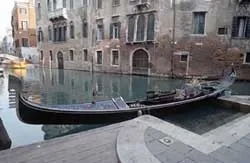
Just not Venetian waiters: secretly hating the brainless tribe of tourists, they will certainly try to cheat you. You can avoid this nuisance by pointing your finger at the «menu turistico» - the prices, although higher than European ones, are reasonable. During the day you can have a snack anywhere, but in the evening it is better to sit by the water in a small restaurant near the Rialto Bridge. Not only is this the most ancient place in Venice and the cheapest souvenirs are sold there, you can watch a gondola of stunning beauty gliding along the water every evening, and its passengers - ladies and gentlemen in luxurious crinolines and camisoles play exquisite melodies for you. This elegant gift from the municipality will cost you nothing, although in general a gondola is not a cheap pleasure. But even for a hundred euros, you should not expect beautiful arias from the boatman: enterprising gondoliers have long had tape recorders for the amusement of tourists, to which they bawl out hits in all languages.
A Pass for Brodsky
In the life of Sergei Diaghilev, the gondola was a common thing: even to his own funeral at the San Michele cemetery he went in exactly this way. He spent every autumn in Venice - and always in the company of his favorites: first Nijinsky, then Massine. His last favorites, Lifar and Kochno, even wanted to crawl to the grave on their knees, but Coco Chanel pulled them up short: «Stop clowning around!» She had the right to give orders: in the safe of the great impresario only promissory notes were found, and Coco, rushing in at the last moment, took the organization of the funeral into her energetic little hands.
At San Michele, near the Diaghilev rotunda (plot Per greco XIV), ballet shoes from all countries never run out: dancers believe that this brings good luck. And nearby, on plot Per evangelico XV, at the pedestal of Joseph Brodsky, life is in full swing: coins, pens, paints, paper, matches, a notebook with hasty lines of verse, and even tickets for the Paris metro. Everything in Venice is like that: at first you gasp as if in a museum, but it turns out that everything here is well familiar to you.
Best months - May and October
During major holidays (the regatta in September and the carnival in February), as well as in the velvet season, prices double, and it is better to worry about a hotel in advance. In winter, Venice is flooded by high tides, and St. Mark's Square can be crossed only by wooden plank bridges. The best months are May and October: not too hot, no rain, few tourists. A flight to Venice's Marco Airport, then bus No. 5 will take you in 20 minutes to the railway and bus station - and off you go along the Grand Canal! If you travel by car, choose the A4 motorway (west-east), A13-A4 (south), A27 (north), but in Venice you will have to leave your car in the parking lot at Piazzale Roma. The time difference is minus two hours.
Affordable prices regardless of the season, all amenities in the room, and a continental breakfast are guaranteed in hotels near the station. Before checking in, inspect the room. At the same price, there may be differences: view from the window, number of beds, floor (elevator), availability of radio, refrigerator, TV.
Best souvenir - Venetian glass
Before your eyes, a master glassblower on the island of Murano (vaporetto No. 52) will craft an original trinket to your order. Solid items, a dinner service or glasses, will cost more. The chicest thing is a necklace of twisted threads of Venetian beads, airy Venetian lace. For these, it is better to go to the island of Burano, where family factories are located: cheaper, a richer selection, the danger of fakes is excluded. Famous carnival masks are preferably bought in workshop-shops (Il Cannovaccio on Castello, 5369), and in the shop Murano Art Shop on Frezzeria, 1232. During the carnival, costumes and masks can be rented.
Grigliata mista for the gourmet
A truly Venetian dish is seppie alla veneziana - shellfish with corn. Do not be afraid of the black color of pasta nera and risotto nero - traditional Italian noodles and rice acquire an amazing taste thanks to the shellfish. Gourmets should look for grigliata mista - different kinds of fish grilled right before your eyes. An exotic dish of Venetian cuisine is granseola - the meat of a spider crab with butter and lemon juice, cooked right in its shell. Among meat dishes, experts recommend fegato alla veneziana - beef liver in an unusually tasty sauce of parsley, onions, and olive oil.