
Photo: Ukrinform
The agreement signed in Schengen, a small town in Luxembourg, has a complicated history. In 1985, Germany, France, Belgium, Luxembourg and the Netherlands signed the Schengen Agreement. It provided for the gradual elimination of borders between these countries. In 1990, the five participating countries adopted another document regulating the rules of the Schengen Agreement in practice. It only came into force in 1995. By that time, the circle of participants had also expanded. Since 2001, the Schengen Agreement has been in effect in all EU countries except Ireland and the United Kingdom, which have adopted only certain provisions of the agreement. The advantages of free movement in Europe also persuaded non-EU countries – Iceland and Norway – to become members of the agreement. In 2005, Swiss citizens voted in favor of 'Schengen' in a referendum. However, its provisions have not yet fully come into force in that country.
Citizens of countries not party to the agreement also enjoy the possibility of free movement within the European Union. But only those who have obtained the appropriate visa. The advantages of such a visa are obvious: by obtaining permission to enter one of the Schengen countries, a traveler can also visit all other countries party to the agreement. Schengen visas are issued for short-term stays in the EU of up to three months.
Citizens of former Soviet republics (with the exception of the Baltic states, which recently joined the EU) must have a visa when entering the Schengen area. The visa is issued at the embassy of one country and allows travel to other countries of the agreement as well. That is, having obtained a visa for Germany, its holder can also visit Belgium, Denmark, Finland, France, Greece, Iceland, Italy, Luxembourg, the Netherlands, Norway, Austria, Portugal, Sweden and Spain.
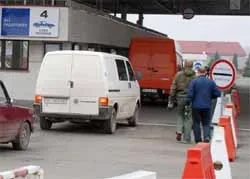
Soon the circle of Schengen Agreement countries will become even wider. Estonia, Lithuania, Latvia, Malta, Poland, the Czech Republic, Slovakia, Slovenia, and Hungary, which joined the EU in 2004, are waiting in line for the right to become full members. Only Cyprus does not have such a prospect, since the status of the Turkish part of the island remains unresolved. It is expected that the newcomers will enter the Schengen area no earlier than the end of 2007. By then, the conditions for opening borders in the EU for these countries must be met. Those who want to enjoy all the benefits of 'Schengen' must guarantee the protection of their borders, which are also the external borders of the EU. To do this, it is necessary, in particular, to ensure the functioning of the special information system SIS II, which allows the border services of all EU countries to exchange information. SIS II will work with biometric data. Its implementation is progressing with difficulties, so the end of 2007 may not be a very realistic date for eliminating controls on all internal borders in the enlarged EU.
For all the obvious advantages of expanding the Schengen area, it will also bring difficulties for those who remain outside it. Having obtained permission to enter one of the new EU countries, they will be able to move practically all over Europe. However, the procedure for issuing visas to the new 'Schengen' countries will obviously become stricter. // Deutsche Welle
Vatican also intends to join Schengen
The Vatican intends to join the Schengen Convention on the visa-free movement of citizens. 'This decision is driven by the threat of international terrorism and the need for close cooperation between different states in combating this phenomenon,' said the Prosecutor General of the Holy See, Nicola Picardi.
Speaking about cooperation in this area with the Italian authorities, Picardi emphasized that this work should not be limited only to procedural frameworks. 'The fight against the phenomenon of international terrorism requires new forms of cooperation that, without infringing on freedoms, would strengthen the security system,' he said. In his opinion, it is necessary to intensify the exchange of operational information and strengthen preventive measures aimed at people's security.
Picardi did not explain what would change for tourists visiting the Vatican if it joins Schengen. Currently, tourists in the Vatican can freely visit St. Peter's Basilica and the square of the same name, as well as the Vatican Museums. Entry to the rest of the state's territory, which is guarded by Swiss Guards, is forbidden to all except its citizens. In the Vatican, as in any other state, all necessary administrative bodies operate, and its residents have their own passports.
Currently, the Schengen Agreement on visa-free movement of citizens across Europe is implemented by 13 old EU members (except the United Kingdom and Ireland), as well as Norway and Iceland. Switzerland is preparing to join this decision. The new EU members have ratified this agreement, but cannot yet implement it. // RIA Novosti