
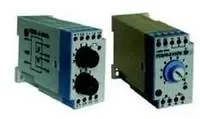
RSV Relay
Generally, the development of any electronics, such as a contactor coil, which leads to the improvement of technological properties, has invaluable strategic value. This is especially true for space developments, for future operations of these devices in conditions of high radioactivity.
When the silicon transistor was invented fifty years ago, it was a veritable revolution in electronics that completely changed communication technologies and had enormous significance for transmitting various data, as well as for processing and storing information. However, at that time there was an opinion that the miniaturization of switches, as well as microcircuits, could lead to limitations in all parameters of these devices.
All known solid-state devices, relays, switches are particularly sensitive to radiation, which makes their operation in severe temperature conditions extremely unreliable. This is because the physical properties of silicon change significantly at both low and high temperatures. It has long been clear that all these devices, including the RSV relay, need global improvement.
When these devices are used in space equipment, qualities such as energy consumption, relay reliability, and size play a major role. Moreover, these indicators are more important than when using ordinary relays in household electronic appliances or even in the military industry.
NEMs differ from ordinary switches in that they are characterized by low current values in the off state, since their main conducting elements are physically completely isolated from each other. Thus, carbon nanotubes possess remarkable mechanical and electrical properties, giving them great advantages in the design of NEM nanotubes.
They also feature high rigidity and withstand large mechanical loads, and their low weight and chemical inertness allow them to operate in low-power switches with low electrical losses. The first tests of these elements in memory devices showed their great advantages over conventional relay designs. This became especially evident when operating in devices designed for extreme conditions – not only severe temperature but also radiation regimes.
_