
Dubai's "bubble" could trigger a new wave of global crisis
So is this an overture to a new crisis or a nervous breakdown of an economy that hasn't recovered from previous shocks? Apparently, both. A nervous breakdown because the threat came from where it was expected, and therefore it was a surprise to no one. And a new crisis, with frayed nerves, can apparently be triggered by any "sneeze." Especially since the intrigue around Dubai World was unfolding more suspensefully than any detective story.
What were they afraid of?
Even a guest not particularly versed in macroeconomics could guess that Dubai's "bubble" had inflated to critical proportions. The floors of residential skyscrapers and mega-hotels rose at an astonishing speed, despite the crisis already shaking the West. The city on the sand grew with new artificial islands, taking mile after mile from the gulf. The free construction labor force from Malaysia and India worked day and night on the "projects of the century." Americans, Britons, Germans – and of course, our own – Russians and Kazakhs provided demand. Penthouses and apartments – from one million dollars and up. In the homeland of millionaires, it would be a sin to lose face. The mechanisms and gears of this engine seemed destined to run forever.
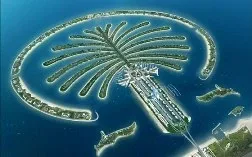
The failure occurred at the output: people stopped buying Dubai real estate. Last year already, villas on Palm Jumeirah, the most luxurious project launched by the main hero of the current stock market panic – the Dubai World fund – were being given away practically for free, with payment starting five years later. The fairy tale, alas, began to follow a horror story script...
Thoughtful analysts reassure: the management of Dubai World did not directly declare a refusal to pay current obligations, and their volume is estimated at only $3.65 billion. The fund merely hired the consulting company Deloitte LLP to study the possibility of its restructuring. It is too early to talk about default under these conditions. After all, many companies that are not even facing bankruptcy carry out such procedures, which are routine from a financier's point of view.
So why panic? The thing is that as part of assessing the scale of this restructuring, the Dubai government intends to ask creditors to postpone debt repayment at least until May 30. And everything would be fine if the total debts of the state fund did not amount to $59 billion. It is precisely this "context," according to The Wall Street Journal, that stunned investors, for whom the worst period of the crisis seemed already behind them.
A great deal is tied to the Dubai World fund, which is personally overseen by the emirate's ruler, Sheikh Maktoum. Among other things, the fund owns the port operator DP World, the British shipping company P&O, the investment company Istithmar, and Dubai's main developer, Nakheel. It was Nakheel's debt obligations that caused the panic. Real estate prices have nearly halved this year. The company's revenue from hotel operations no longer covers interest payments on loans. As experienced accountants say in such cases, a cash gap has emerged.
Nakheel was supposed to repay debts next month. And this payment was seen by many investors as a kind of "litmus test" – a test of Dubai's ability to pay its debts amid the real estate crisis. And then suddenly a request for a delay, in which creditors saw very ominous symbolism: the very "bubble" that ruined the American bank Lehman Brothers a year ago has burst in Dubai, and the beginning of the global crisis is dated from its bankruptcy.
According to sources cited by The Wall Street Journal, the financial risk associated with the situation around Dubai World is most exposed to banks in the neighboring emirate of Abu Dhabi, as well as British lenders RBS, HSBC Holdings, Barclays, Lloyds Banking Group, and Standard Chartered.
But that's not all. "The most negative consequence of the Dubai government's announcement is a significant blow to confidence in the UAE and the region, including the Gulf states," says Richard Fox, an analyst at Fitch Ratings. Is it any wonder that the cost of insuring against default on debt obligations of Gulf countries rose sharply at the end of the week, and swaps on Dubai's obligations jumped by 90 basis points in one day?
Rating agencies, mindful of past mistakes, reacted very promptly. Standard & Poor's placed the ratings of four Dubai banks on review, noting their high exposure to risks. Moody's downgraded the ratings of all six Dubai state-owned companies that issue debt.
Only the dollar was lucky: its exchange rate rose sharply against almost all major world currencies except the yen, amid increased demand for assets considered most reliable. But more on that later.
Who will beat whom?
Dubai will certainly find the three-plus billion. And therefore, it does not leave the impression that the global investment banks, which immediately started talking about the impending default of the emirate's fund, were too agitated. Interestingly, foreign media report that the emirate's state fund intends to ask creditors to defer interest payments on current obligations, but none of them provide a reference to the head of Dubai World, Sultan Ahmed bin Sulayem, or his subordinates, or any official document on this matter. This means, analysts suspect, such a leak of information from investment banks can be seen as nothing other than pressure on the emirate. "Oh, you decided to refinance your debt? Then we'll declare a default on you. Or accept our terms." The question is who would be worse off from such a default.
But the situation is indeed ambiguous. According to Royal Bank of Scotland, the largest creditors of the United Arab Emirates today are British banks. Out of $87.3 billion in debt obligations to Europeans, $49.5 billion falls to credit institutions registered in the British Isles. Among them, for example, are RBS, HSBC Holdings, Lloyds Banking Group, Standard Chartered.
Meanwhile, the Arab sheikhs themselves today hold large stakes in American banks. Such as Merrill Lynch and Morgan Stanley. It was the Arabs who last year came with their money to help the US when the mortgage crisis erupted there. Its nature was roughly the same as the current real estate crisis in Dubai. What if the emirate now starts getting rid of its existing assets? Whether to cover cash gaps or simply out of resentment at the injustice of the financial world, it doesn't matter. The main point is different.
Conspiracy theory enthusiasts can now well assume that Dubai World, simply through carelessness, unwillingly became a hostage of a fierce struggle in which British and American banks, affected by the crisis, are waging a war of survival against each other. And the bankers didn't make a mountain out of a molehill by chance.
And as in any war, there may be innocent victims. This can be judged by the behavior of global financial markets, which reacted to the news from Dubai with a sharp fall. In Europe, the decline in indices last Thursday exceeded 3 percent, the largest in 7 months. Asian markets fell throughout Friday.
In trading in Hong Kong, shares of British HSBC and Standard Chartered fell. Securities of Japanese Mitsubishi UFJ Financial Group, Mizuho Financial Group and Sumitomo Financial Group also dropped. But the share prices of American credit institutions remained virtually unchanged. The US currency also rose. That also plays into the hands of overseas bankers.
“This is a ‘flight to quality’ since nothing is clear regarding the turmoil in Dubai. Until we get additional information, the sell-off of risky assets will probably continue,” says Nordea Bank analyst Tina Salthvedt.
The situation now resembles a pendulum. It is possible that it will swing the other way. This, for example, is not excluded by Russian Prime Minister Vladimir Putin. On Friday, while in Paris, the head of government expressed the view that what is happening in Dubai is one of the post-crisis spikes, and not at all a harbinger of a second wave of crisis. “We have always said, and I want to repeat now, that the exit from the crisis will be difficult. Fluctuations are possible. And this (situation in Dubai. – Itogi) is one of these fluctuations,” he told journalists.
...Faced with the reluctance of investment bankers to refinance Dubai World’s debts, the fund’s management now apparently intends to use state assistance. The head of Dubai’s finance committee, Sheikh Ahmed bin Saeed Al Maktoum, stated that “the government’s intervention in the situation was clearly planned and reflects the company’s special financial position.” The emirate’s government has already raised $5 billion from two local banks. This amount is the second tranche received under a $20 billion borrowing program. That should be enough to prevent a default. So there is hope that the seesaw on financial markets will not rock the global economy too much. It is still weak after the shocks it has suffered. It might even “go Dubai.”