
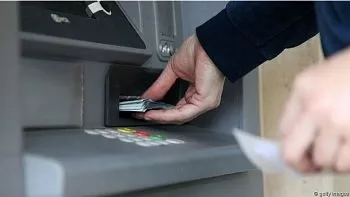
In the largest Western countries, between 46% and 82% of payments were made in cash
Read the beginning of the article:
CASH DOES NOT GIVE UP (Part 1)
IRRATIONAL CONNECTION
Psychologist Eric Ulmann from the Paris School of Management conducted several experiments to determine how different people's feelings are toward different types of money. "I am interested in human intuition and economic irrationality," he says. "There is this irrational feeling that if money is tangible, it is more yours, and you feel that you own it to a greater extent. The more you touch a particular dollar, the more it becomes yours."
Ulmann tested the truth of his ideas on people by asking participants to analyze a set of several scenarios. In one scenario, participants were told a story about Ted and Donna. Forty years ago, the narrative says, Ted's great-grandfather stole a thousand dollars from Donna's great-grandfather. Subsequently, Ted inherited this money. According to one version, Ted inherited tangible money – a stack of bills in a box that his great-grandfather gave him. In another version, the great-grandfather deposited the money in a bank account for Ted. When Donna learned that the money was with Ted, she asked for it back.
The participants were then asked whether Ted should return the money to Donna. Those who heard the story about tangible money, in which Ted ended up with a box of bills, tended to say that he should give the cash to Donna. Participants who were told the story where the money resided in Ted's bank account, not in a box, felt that the money was "no longer quite" the same money that was stolen. They were less inclined to demand that Ted return the money.
This way of thinking is not just about dollars in a box; it also touches on broader issues of theft and fairness.
Another researcher found that people are not as negative toward "white-collar" crimes (fraud, deception, forgery, electronic and computer scams), i.e., when it does not involve stealing physical objects. At the same time, "blue-collar" crimes (common crime), particularly theft of physical items, are viewed much less favorably.
Other research has established that people are more likely to cheat when they are defrauding with substitutes for money – tokens, chips, and the like – than when they are manipulating real money. If you leave a can of Coca-Cola unattended, it is more likely to be stolen than a forgotten dollar.
Of course, there is a limit to everything. "If your bank takes money from your account, you will still feel that you have been robbed," says Ulmann. But when the two amounts are the same, there is a clear difference in the feelings we have toward real money and its digital surrogates. "This reveals something very interesting about the human mind," he says, "and about the complexities we experience despite our logical constructs."
Could this mean that we are capable of resisting a complete abandonment of cash? There is evidence supporting this theory.
In the United States, a wave of protest arose against the ban on small coins. Despite the fact that their value is lower than the cost of production, some Americans were not ready to part with coins. On the other side of the world, in Australia, discussions about withdrawing the five-cent coin from circulation raised concerns about possible loss of income for charities that receive it as small change. Consumers, in turn, were alarmed by the possibility of rising costs due to rounding up prices.
Historical experience shows that there is also the sense of reliability and security that cash instills, with which digital currencies cannot adequately compete. Anyone who has seen the film/musical (or read the book) about Mary Poppins knows what chaos can erupt if a mass bank run suddenly occurs. During financial crises, people prefer to keep their money in their own hands rather than in an online bank.
It is possible, of course, that in developed Western countries like the United States, attachment to cash is stronger than anywhere else. "Different cultures show different levels of attachment to their currencies," says Nicholas Christin, a researcher at Carnegie Mellon University in Pittsburgh, Pennsylvania. "As for the United States, this attachment is very strong." According to Christin, this is explained by the fact that the U.S. national currency has remained relatively stable, while other countries have seen ups and downs in the value of money. Perhaps this makes Americans feel a stronger attachment and trust toward their banknotes than other people.
MOBILE CHALLENGE
While discussions about future technologies short-sightedly focus on America and Europe, the most advanced innovations in the monetary sphere are occurring elsewhere. In some developing countries, cash payments are rapidly being replaced by digital payments via mobile phones.
If in the United States in 2025 you will still probably be able to buy coffee with cash, in Kenya such a transaction stands a good chance of being impossible. In 2007, Kenyans began switching to a mobile payment system called M-Pesa. Today, it covers 17 million Kenyans, or more than two-thirds of the country's adult population.
Users top up their accounts and transfer money by sending text messages. Recipients go with their phones to merchants and money changers to receive cash. Everything is done without banks. (The letter M stands for "mobile," and the word pesa means money in Swahili. The mobile phone money transfer system was developed by the British company Sagentia and implemented in East Africa by mobile operator Vodafone — Ed.)
"Kenya does mobile payments better than anyone else," says Benjamin Mazotta, an expert on cash use at Tufts University in Massachusetts. "With M-Pesa, you can not only make large payments but also pay for food, clothing, and school fees. Today, with M-Pesa, you can do many things that five or ten years ago would have seemed like a fairy tale."
But in places like the US or Europe, a system like M-Pesa might have a hard time catching on. The technology owes its success to the fact that it is used by Safaricom, the country's largest mobile operator, which is far ahead of all others. In other countries, competition is much fiercer. If every operator decides to introduce its own mobile payment system, it could be extremely inconvenient and an imperfect way of transacting.
Take Apple Pay, for example. Apple has run into one obstacle after another trying to get its payment system adopted, both in the US and elsewhere. Apple has fought a tough battle to strike a deal in China, where a single company controls all interbank transactions.
Nor should we forget that M-Pesa is a system designed to move cash from one place to another, not to eradicate physical money. Users still hand over cash to M-Pesa retail agents to top up accounts and receive cash from another sender from them.
As much as advocates of new technologies believe they can globally replace cash with digital transactions and bitcoins, the truth is more complex, and the difficulties cannot be overcome by technology alone. Our psychological attachment to money, the infrastructure at banks' disposal, and the need to create systems compatible with a host of service retailers and users all make the process of moving away from cash more of a marathon than a sprint.
Read the continuation of the article:
CASH IS NOT GIVING UP (Part 3)